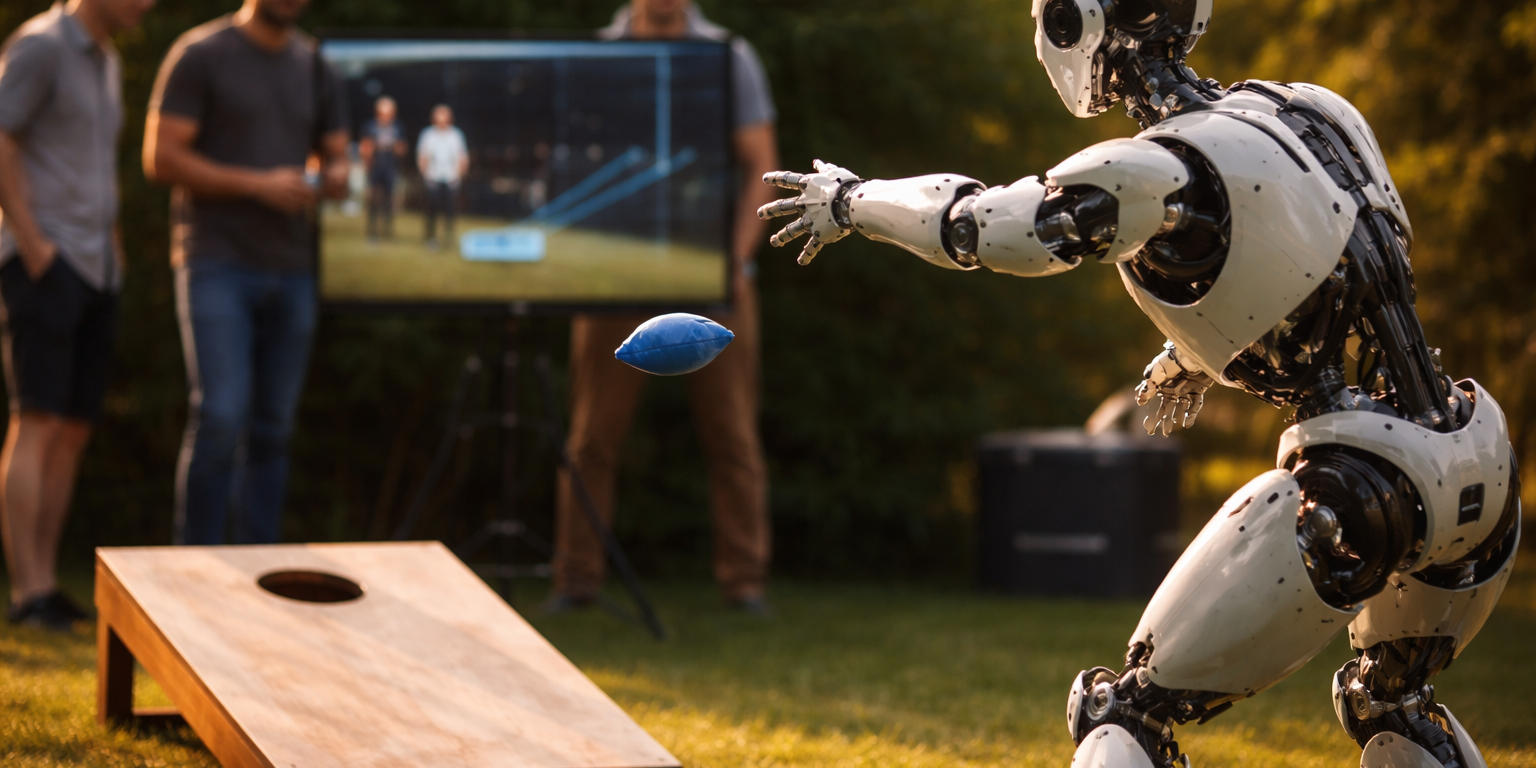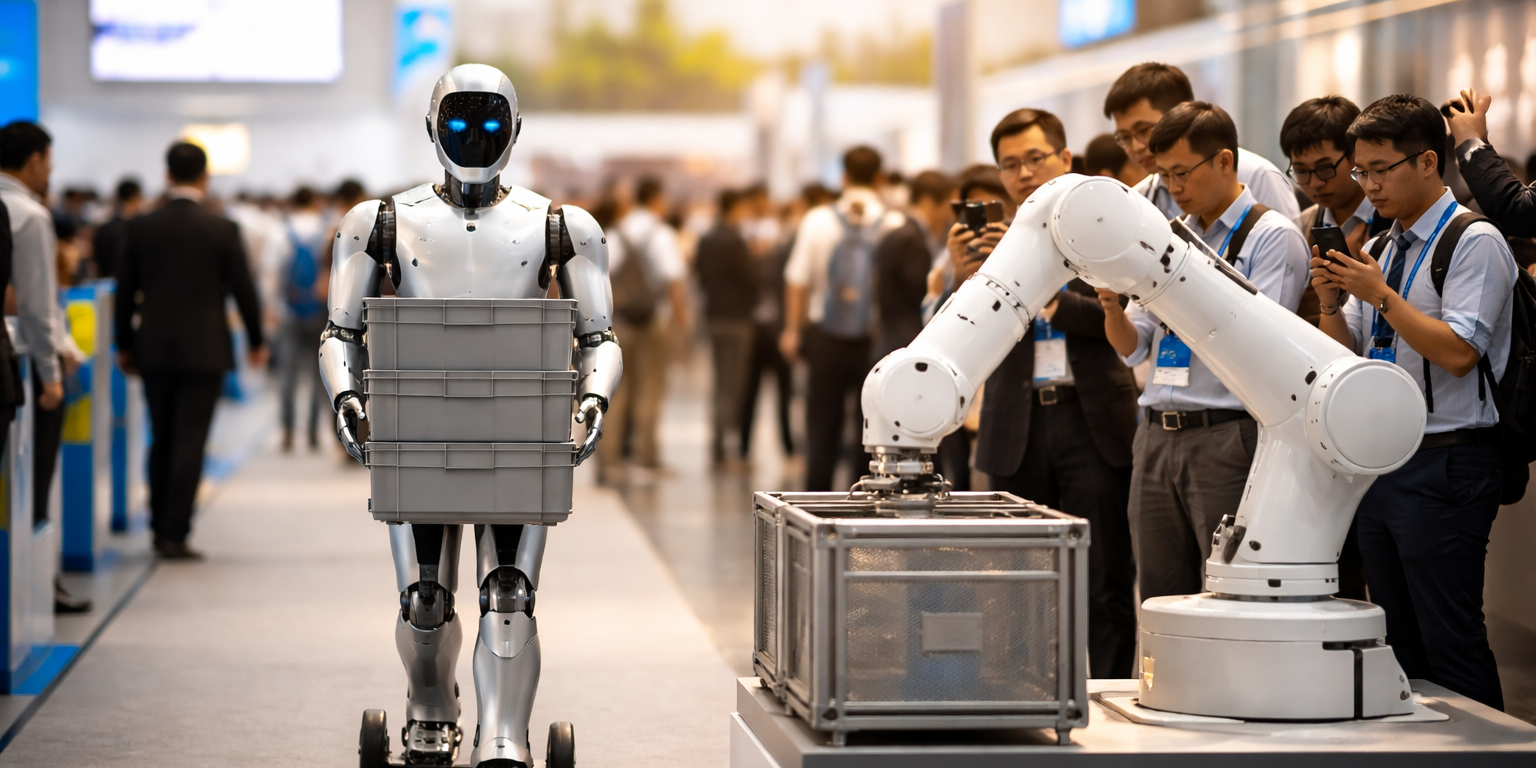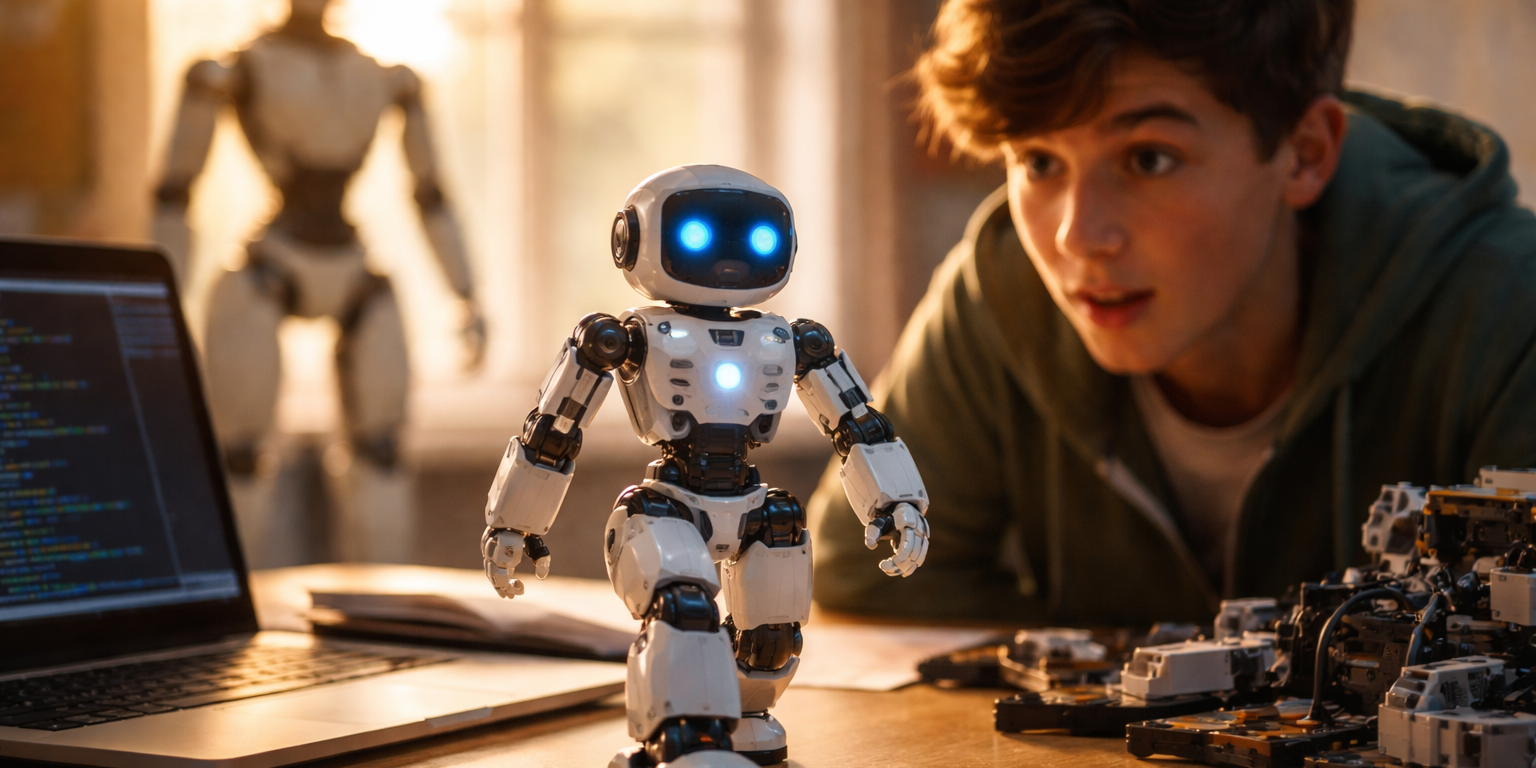
A humanoid robot for $299 is not a product category so much as a provocation. That is the price of FF Nova Mini, one of two machines FF EAI Robotics Ecosystem Inc. and Faraday Future Intelligent Electric Inc. unveiled on October 15, 2026, alongside the $2,490 FF Nova. The larger unit is pitched as an entry-level embodied AI humanoid. The Mini is explicitly an education tool, designed to teach the fundamentals of Physical AI to students and newcomers. Both ship into a broader family the companies call FF Robot World 2.0, organized around the phrase "One Brain, Multi-forms, Multi-capabilities." The announcement also bundles a curriculum and developer programs, which tells you where the companies think the real value sits.
The price points matter because of where the humanoid market has been. For the past two years, headline humanoid hardware has clustered in a band that starts in the low five figures for research-oriented platforms and climbs steeply for full-size, industrial-grade machines. Chinese manufacturers have pushed hard on the low end, and Unitree's compact humanoids became a fixture in university labs precisely because they were cheap enough to buy in quantity. A sub-$2,500 humanoid from a US-branded company enters that conversation directly. The companies describe FF Nova as America's first embodied AI humanoid in its class, a framing that is as much about positioning as engineering. A $2,490 sticker price almost certainly implies compromises in actuation, payload, and runtime that the announcement does not detail.
Those unstated specifications are the first thing a robotics engineer will look for, and their absence is conspicuous. Nothing in the announcement as summarized addresses degrees of freedom, actuator type, battery life, onboard compute, or whether the robots walk, roll, or stand on a fixed base. Those details determine whether Nova is a credible development platform or a sophisticated toy. The "One Brain" language hints at a shared software and model layer running across multiple robot forms, a design philosophy that echoes the approach of companies building general-purpose robot foundation models. If the brain is genuinely portable between the Mini, the Nova, and larger Robot World 2.0 machines, developers could prototype on a $299 unit and scale to heavier hardware without rewriting their stack. That is a compelling pitch. It is also an unproven one until the software is in developers' hands.
The education angle deserves more attention than it usually gets in humanoid coverage. Hardware sold at a loss or thin margin to build an installed base of trained developers is an old playbook, from Raspberry Pi to Arduino to the Lego Mindstorms line that seeded a generation of roboticists. A $299 humanoid paired with a structured curriculum could do the same for embodied AI, creating a pipeline of students fluent in one company's tooling. For Faraday Future, a company better known for electric vehicles than robotics, the strategy offers a way to build credibility and community quickly without matching the capital intensity of industrial humanoid programs. The risk is execution. Curricula, developer support, and software updates are expensive to sustain, and education hardware lives or dies on documentation quality and community momentum rather than on spec sheets.
What to Watch
First, look for a published specification sheet for FF Nova covering actuator count, compute platform, battery runtime, and payload, since pricing claims mean little without them. Second, track shipping dates and availability for both robots over the next 30 to 90 days, along with any pre-order volume the companies disclose. Third, watch for details on the developer program, including SDK access, simulation support, and whether the "One Brain" software is open to third-party models. Finally, monitor how competing low-cost humanoid makers, particularly Unitree, respond on price and education bundles as the FF Robot World 2.0 lineup reaches buyers.