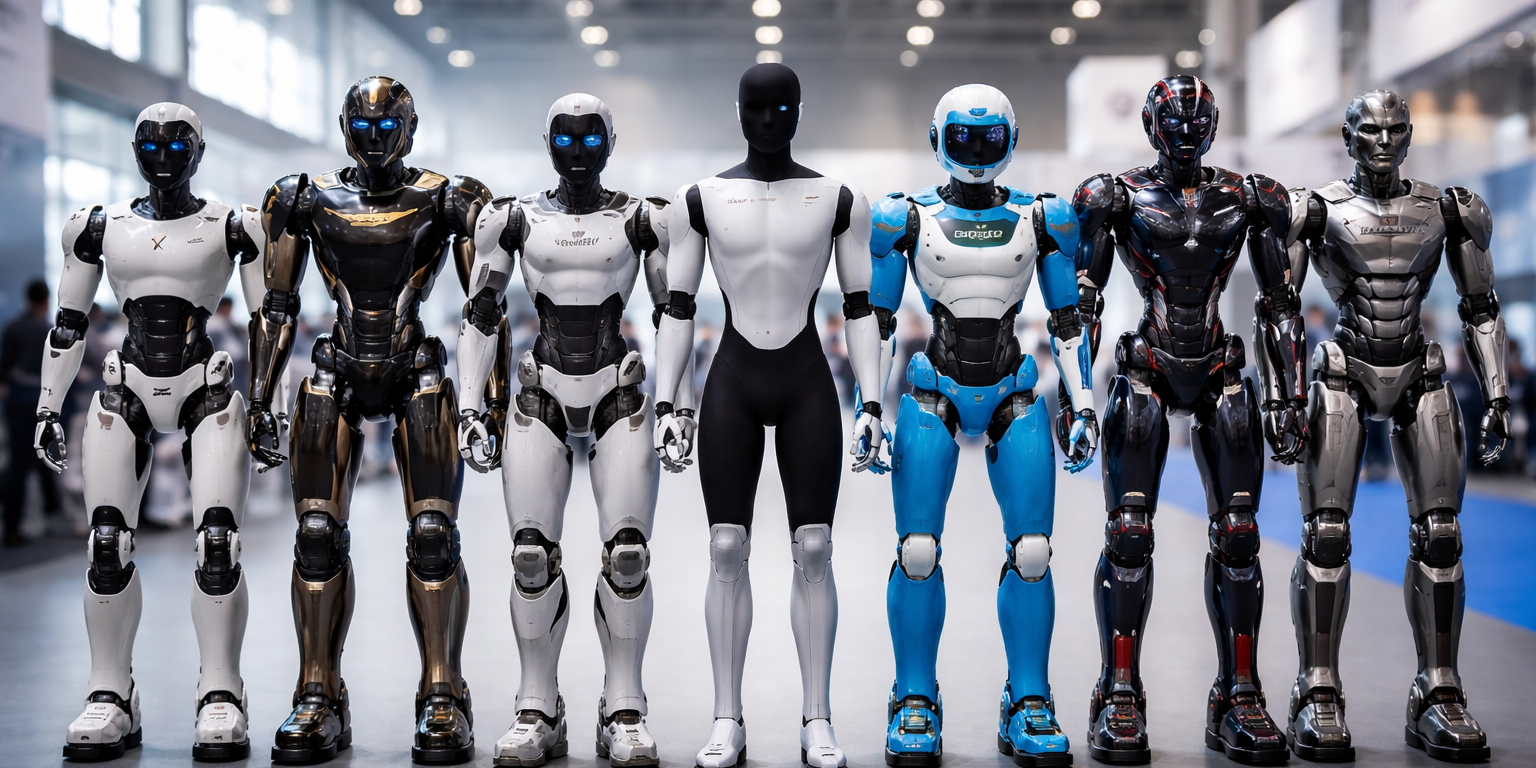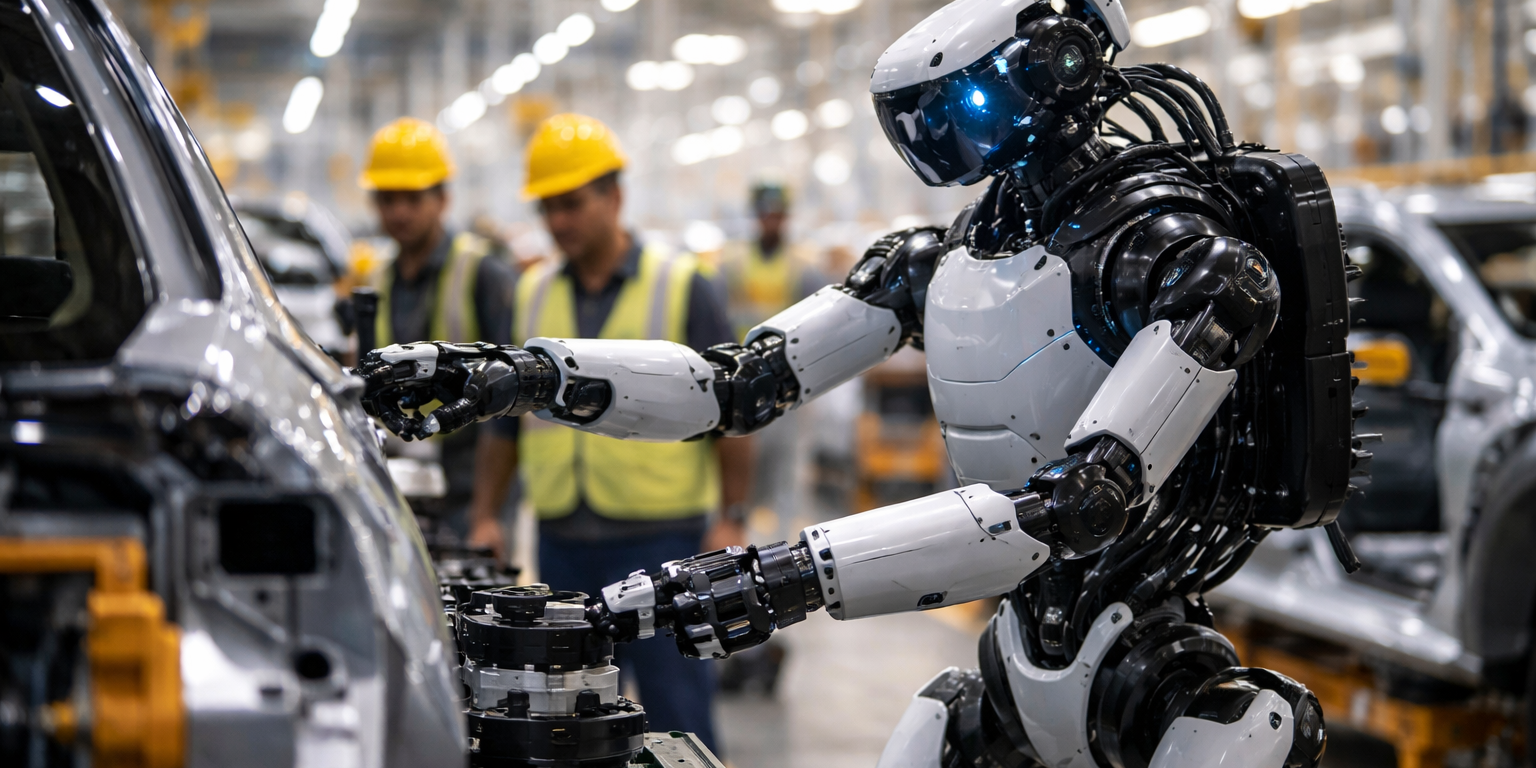
China's manufacturing infrastructure positions the country to become the dominant force in humanoid robotics over the next decade, according to Zhao Tongyang, founder of EngineAI, speaking in the fifth episode of Guangdong province's 'Beacon Over Lingnan' video series. The series, which launched across Chinese online platforms on June 27, profiles technology leaders shaping the country's artificial intelligence and robotics sectors. Zhao's assessment carries weight beyond typical industry boosterism given China's established advantages in electronics manufacturing and its government's targeted investments in robotics development. The province of Guangdong alone houses more than 6,000 robotics companies, ranging from component suppliers to full-stack humanoid developers, creating an ecosystem that Zhao argues gives Chinese firms structural advantages over competitors in North America and Europe.
The timing of Zhao's comments reflects intensifying competition in humanoid robotics, a sector that has attracted more than $3 billion in venture funding globally since 2024. Chinese companies including Unitree, Fourier Intelligence, and UBTECH Robotics have demonstrated humanoid platforms that match or exceed capabilities shown by American firms like Figure AI and Agility Robotics in certain metrics, particularly in cost-to-performance ratios. Unitree's G1 humanoid, priced at $16,000, undercuts Western competitors by 60 to 80 percent while delivering comparable mobility and manipulation capabilities. That price advantage stems directly from China's integrated supply chains for electric motors, batteries, and precision components, the same infrastructure that made the country dominant in electric vehicle production. EngineAI, while less prominent than some competitors, focuses on embodied AI systems that allow humanoids to learn tasks through demonstration rather than explicit programming, a research direction that several Chinese laboratories have pursued more aggressively than their Western counterparts.
Zhao's confidence rests partly on China's national strategy for intelligent robotics, outlined in policy documents released by the Ministry of Industry and Information Technology in 2025 and updated earlier this year. Those plans call for China to achieve 30 percent of global humanoid robot production by 2027, backed by subsidies for domestic buyers and preferential procurement policies for government facilities. Guangdong serves as a testing ground for these policies, with provincial authorities offering tax incentives to companies deploying humanoid robots in manufacturing, logistics, and eldercare settings. The province's electronics manufacturing base, centered in Shenzhen and Dongguan, provides immediate customers for humanoid platforms, unlike American startups that must convince skeptical warehouse operators to adopt unproven technology. Chinese humanoid developers can iterate designs with manufacturers who already understand robotic systems and possess the technical staff to integrate new platforms into existing operations. This built-in market solves the adoption problem that has slowed humanoid deployment in other countries.
The technical gap between Chinese and Western humanoid platforms has narrowed measurably over the past 18 months. At the World Robot Conference in Beijing last month, demonstrations from Fourier Intelligence and UBTECH showed humanoids performing multi-step assembly tasks with hand-eye coordination approaching human capability in constrained environments. Chinese research institutions have published advances in bipedal locomotion control, tactile sensing, and real-time motion planning that match work from laboratories at MIT, Stanford, and the University of Tokyo. Where Chinese humanoids still lag is in generalization, the ability to transfer learned skills across different contexts without extensive retraining, an area where companies like Figure AI have demonstrated advantages through partnerships with OpenAI. Yet Zhao and other Chinese developers argue that for commercial deployment in structured environments like factories and warehouses, generalization matters less than reliability, cost, and integration with existing automation systems, all areas where Chinese firms hold advantages. The question for the robotics industry is whether the first wave of humanoid applications will favor the generalist platforms being developed in the West or the specialized, lower-cost systems emerging from China.
What to Watch: Track deployment numbers from Unitree and Fourier Intelligence through the end of 2026, particularly in automotive and electronics manufacturing facilities in Guangdong and Jiangsu provinces. Monitor whether Figure AI and Agility Robotics respond to Chinese pricing pressure by moving production offshore or by emphasizing software capabilities that justify premium pricing. Watch for announcements from the Ministry of Industry and Information Technology regarding updated humanoid robot standards, expected before the end of Q4 2026, which could create technical barriers favoring domestic manufacturers.