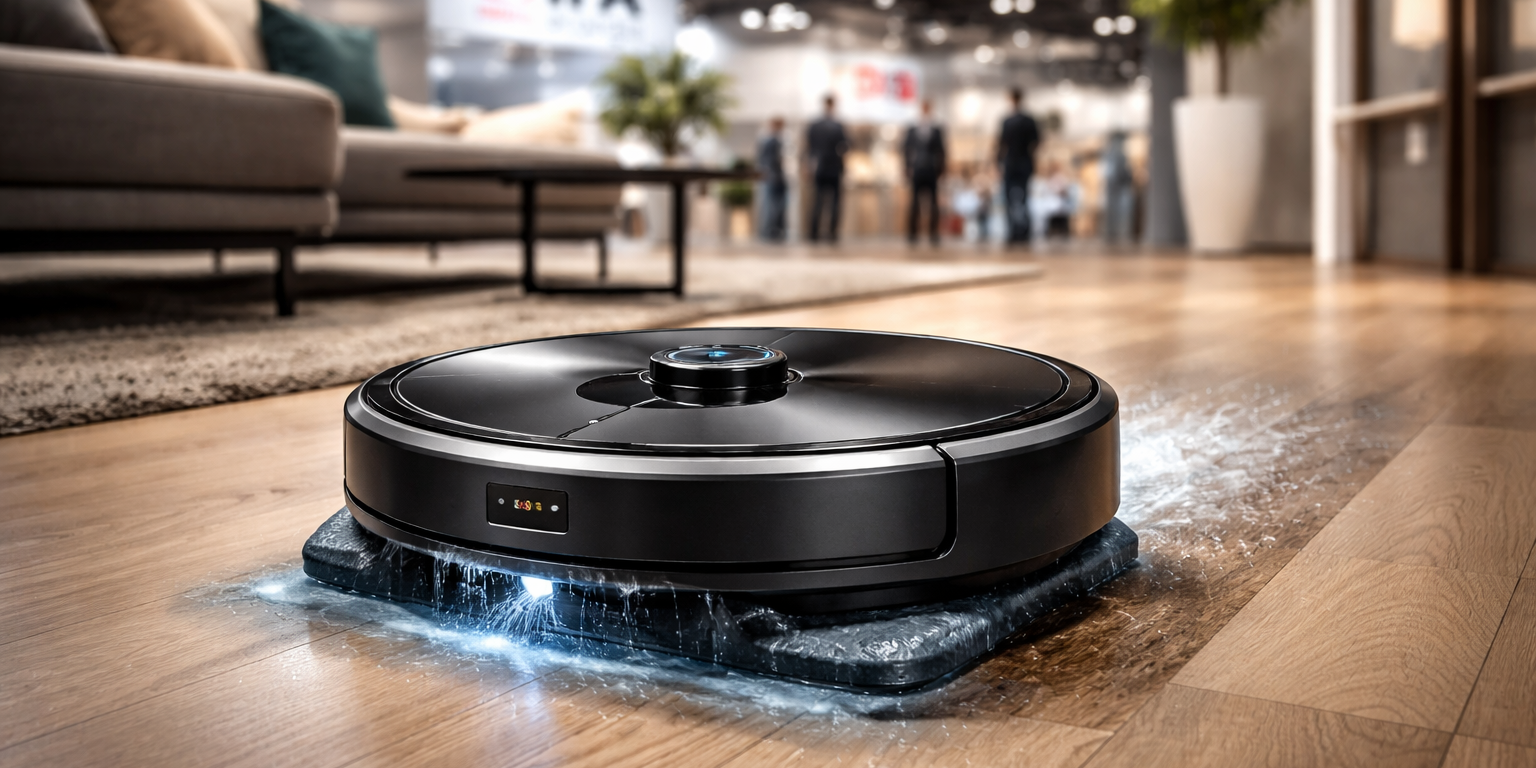
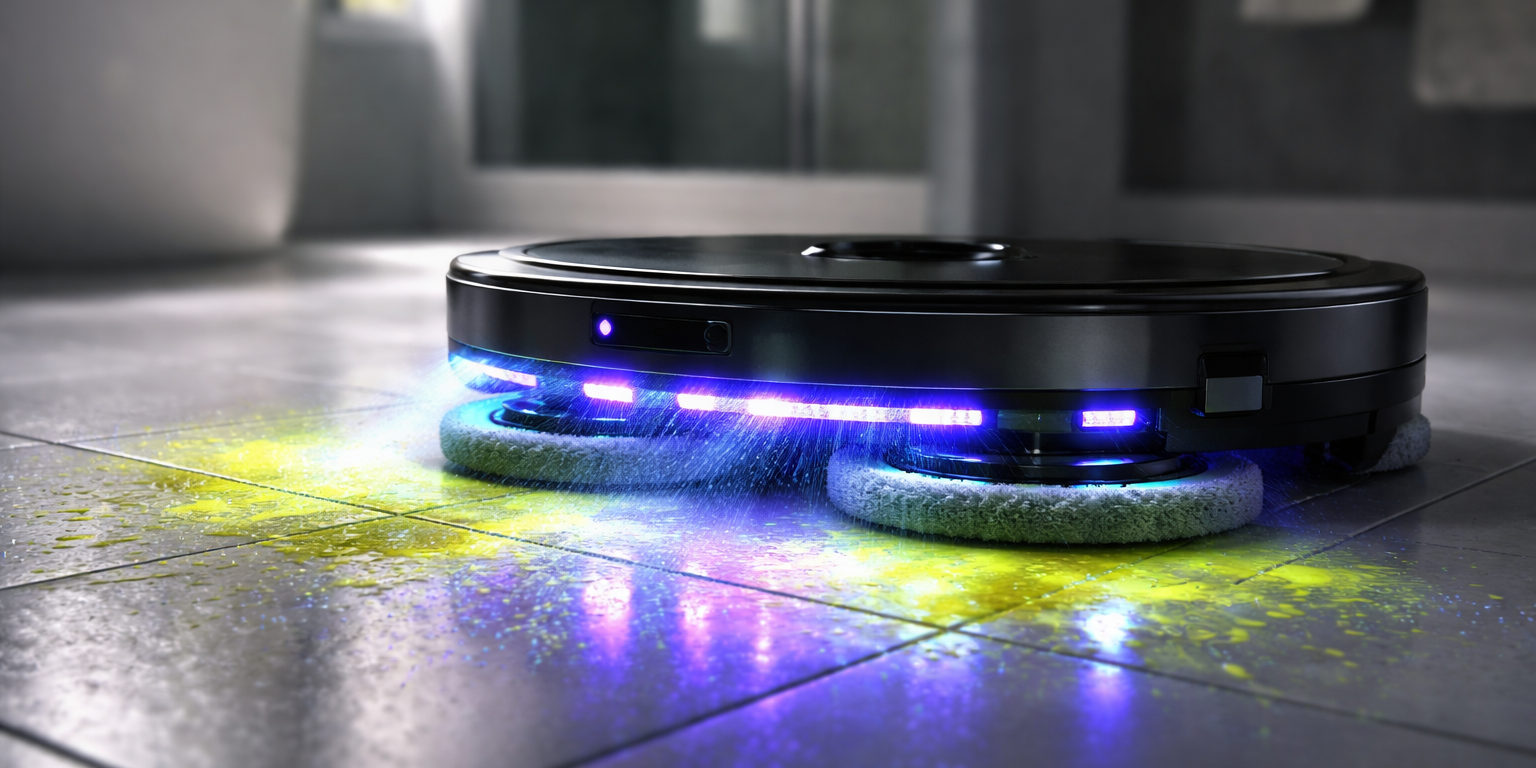
A robot vacuum that hunts pet accidents like a crime scene investigator hit the floor at a Berlin trade event this week. Dyson's R3 Nurovi Spot+Scrub UV deploys an ultraviolet LED array to make dried urine, vomit, and transparent beverage spills fluoresce against standard flooring materials, then targets those spots with rotating scrub pads and enzymatic cleaning solution. The $1,200 machine marks the first time a major manufacturer has brought UV fluorescence detection—a staple of forensic labs and hotel sanitation crews—into a consumer robot platform. Dyson did not disclose shipment timelines beyond confirming the R3 Nurovi would reach select European markets in the fourth quarter of 2026, with North American availability slated for early 2027.
The technical challenge Dyson's engineering team faced is straightforward: organic stains dry clear. A standard RGB camera or even a high-resolution LIDAR system cannot distinguish between clean tile and tile marked by a puddle of diluted apple juice that evaporated six hours earlier. Proteins, uric acid, and certain sugars absorb ultraviolet light in the 365-395 nanometer range and re-emit visible light through fluorescence, creating contrast a vision system can detect. Dyson integrated a narrow-band UV-A LED bar beneath the robot's forward bumper, paired with a monochrome CMOS sensor filtered to capture only the fluorescent emissions. When the sensor registers a fluorescence signature above a calibrated threshold, the robot halts its vacuuming routine, deploys twin counter-rotating microfiber pads from a retractable housing, and applies a hydrogen peroxide-based cleaner stored in a 150-milliliter onboard reservoir. The scrubbing cycle runs for 18 seconds per detected stain, after which the robot resumes its normal navigation pattern. Dyson claims the UV system can identify stains up to 72 hours old on hard flooring and up to 48 hours on low-pile rugs, though performance degrades significantly on dark or highly textured surfaces where fluorescence contrast is weaker.
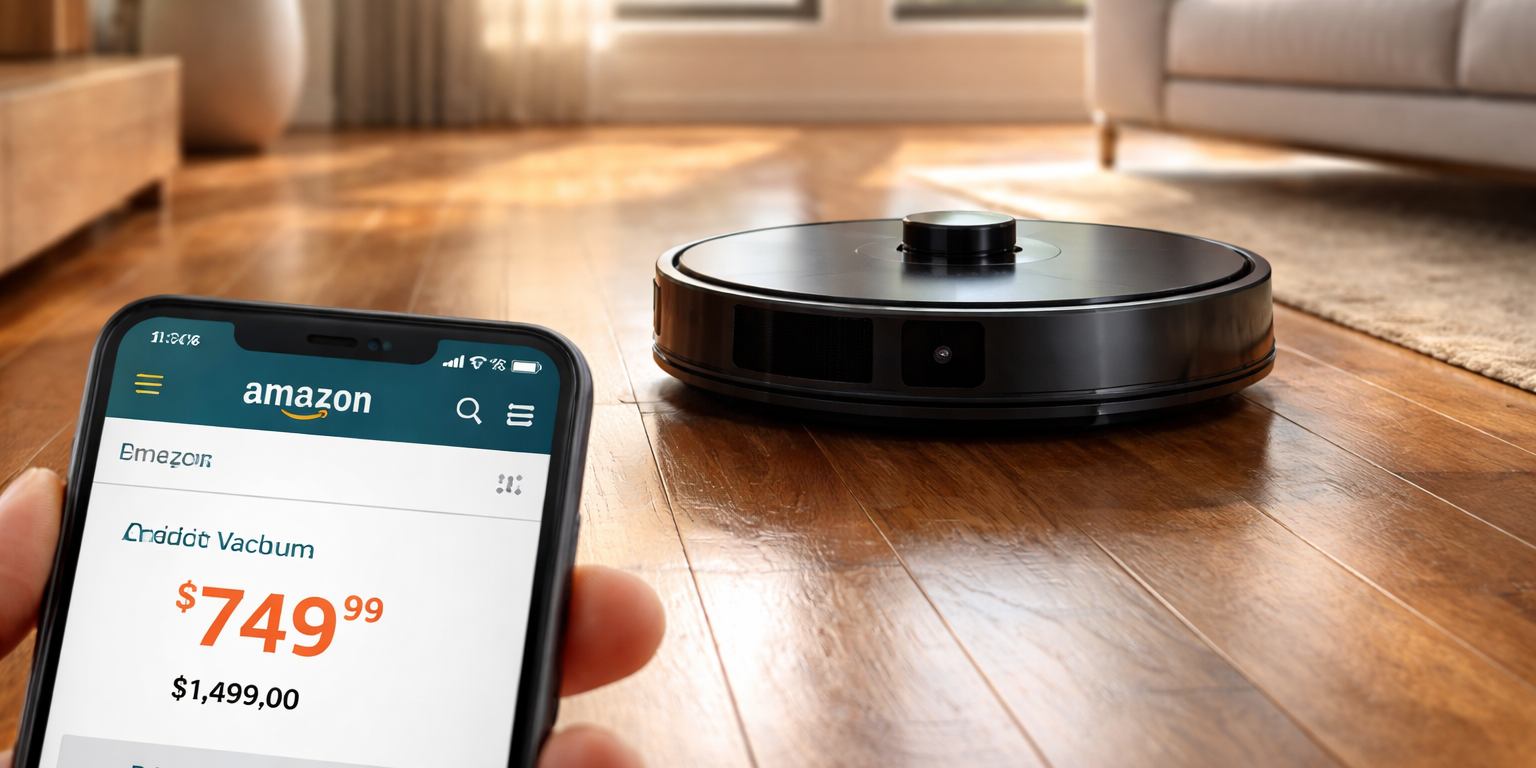
Dyson's move into UV-augmented cleaning puts the British manufacturer in a category currently dominated by niche players and industrial suppliers. Companies like Xenex and R-Zero have sold UV disinfection robots to hospitals and airports since the early 2010s, but those platforms use high-intensity germicidal UV-C lamps for pathogen inactivation, not fluorescence detection. The consumer robotics sector has experimented with UV features sporadically—LG's CordZero R9 briefly shipped with a UV-C sanitizing wand in 2019, and several Kickstarter-funded startups promised UV navigation aids that never materialized—but no major brand has productized fluorescence-based stain detection until now. The R3 Nurovi's $1,200 price point sits $400 above Dyson's flagship 360 Vis Nav vacuum and roughly $500 above premium models from iRobot and Roborock, suggesting the company views UV detection as a substantial value-add rather than a marginal feature. Dyson's press materials emphasize pet ownership as the primary use case, aligning with Packaged Facts data showing 67 percent of U.S. households owned a pet as of mid-2025, and internal surveys indicating pet stain anxiety as a top purchase driver in the premium vacuum segment.
The hardware specifications reveal where Dyson allocated its development budget. The R3 Nurovi runs a quad-core ARM Cortex-A78 processor clocked at 2.2 GHz, a significant step up from the dual-core A55 chips powering most mid-range robot vacuums, to handle real-time fluorescence image processing without throttling navigation tasks. The UV LED bar consumes 4.2 watts at full intensity, drawing from the robot's 5,200 milliamp-hour lithium-ion pack and reducing total runtime from 120 minutes in vacuum-only mode to roughly 85 minutes when UV scanning is active. Dyson did not specify whether the UV system operates continuously or cycles on and off to conserve power, though teardown analysis by third-party reviewers will likely clarify that within weeks of the retail launch. The cleaning solution reservoir is user-refillable, with Dyson offering proprietary enzymatic concentrate bottles at $18 for a 500-milliliter supply, enough for an estimated 60 scrubbing cycles. Third-party cleaning solutions are physically compatible with the dispenser mechanism, but Dyson's warranty explicitly excludes damage from non-approved fluids. The scrub pads are washable and rated for 40 cycles before replacement, with a four-pack retailing at $35.
Broader industry implications hinge on whether ultraviolet sensing proves reliable enough to justify its cost premium in real-world home environments. Early adopter feedback will likely focus on false positive rates—instances where the UV system flags non-stain fluorescence from optical brighteners in detergents, certain synthetic rug dyes, or even tonic water residue—and false negatives on surfaces where fluorescence contrast is inherently low. If Dyson's calibration algorithms prove robust, expect iRobot, Roborock, and Ecovacs to evaluate UV modules for their 2027 product roadmaps, particularly in markets like Japan and South Korea where compact living spaces and pet ownership overlap heavily. Component suppliers stand to benefit as well; UV LED manufacturers like Seoul Viosys and Nichia have production capacity to scale if demand materializes, and CMOS sensor vendors including OmniVision and Sony already offer low-cost monochrome imagers suitable for fluorescence capture. The bigger question is whether UV detection becomes table stakes in premium robots or remains a niche feature tied to specific customer anxieties, much like self-emptying bins transitioned from novelty to standard over a three-year span starting in 2019.
What to Watch: Dyson's European retail launch in Q4 2026 will provide the first large-scale test of UV stain detection under varied lighting and flooring conditions—track early owner forums for false positive complaints and battery life reports. Monitor whether iRobot or Roborock announce UV-equipped models at CES 2027 in January, signaling validation of the feature category. Component pricing from Seoul Viosys and similar UV LED suppliers will indicate whether costs drop enough to push UV sensing into mid-tier robots by late 2027. Finally, watch third-party cleaning solution sales data to gauge whether users stick with Dyson's proprietary fluids or migrate to cheaper alternatives, as margin on consumables will determine long-term profitability for the R3 Nurovi platform.