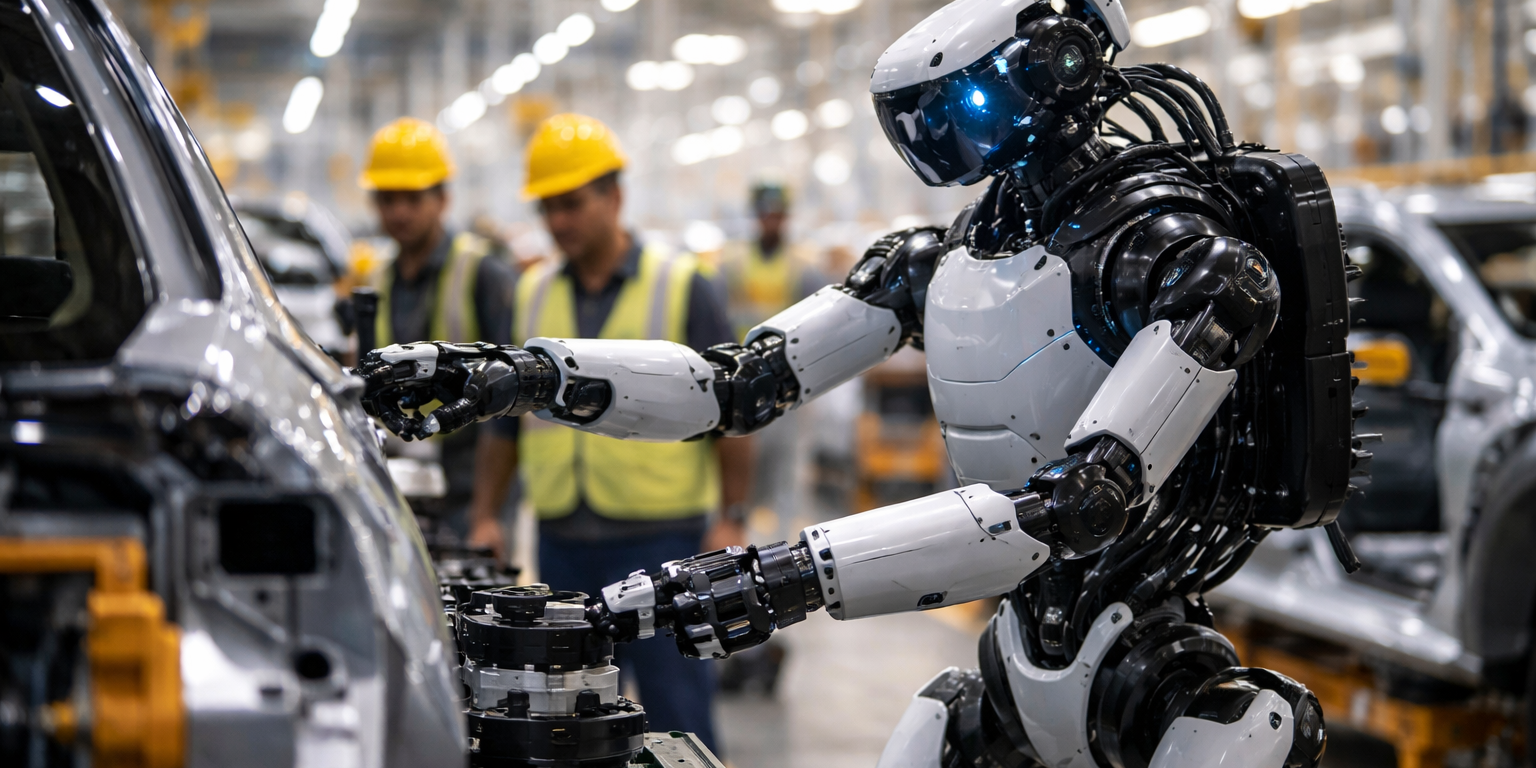
The registry assigns each humanoid a permanent identifier linking it to operational parameters, maintenance logs, and chains of responsibility—a departure from voluntary industry tracking that leaves enforcement to manufacturers. Officials at China's Ministry of Industry and Information Technology launched the program in January 2024, building on frameworks already in place for drones and select categories of industrial manipulators. More than 28,000 units have enrolled since the system went live, spanning deployments in Shenzhen's electronics sector, Shanghai hospitality venues, and elder care facilities across Jiangsu Province. The database captures robot model specifications, software version numbers, and incident reports filed by operators or third parties who interact with the machines.
China's push into comprehensive robot tracking addresses a practical problem that emerged as humanoids migrated beyond factory floors. When a delivery robot in Beijing's Chaoyang District collided with a pedestrian in September 2023, investigators spent three weeks determining which company owned the machine and whether software updates had been properly logged. The incident revealed gaps in accountability frameworks designed for stationary industrial equipment but poorly suited to mobile platforms operating in shared spaces. Provincial authorities reported similar confusion in cases involving service robots in Guangzhou hotels and warehouse units in Tianjin, where ownership chains grew murky when leasing arrangements involved multiple intermediaries. The national registry collapses those ambiguities by mandating that operators update location data within 24 hours of moving a registered humanoid and report software modifications within 72 hours.
For companies manufacturing humanoids destined for Chinese customers, the registry introduces a compliance gate that extends beyond product safety certifications. Agility Robotics, which ships its Digit bipedal units to Chinese logistics partners, now coordinates with local operators to ensure registration happens before machines enter active service. The company's Asia-Pacific compliance director noted that registration adds roughly two weeks to deployment timelines but provides clearer insurance pathways—Chinese carriers now offer policies explicitly tied to registry data, pricing premiums based on a robot's operational history and software update cadence. UBTech Robotics, a Shenzhen-based manufacturer with significant domestic sales, reported that the standardized liability framework has accelerated pilot programs with retail clients previously hesitant about legal exposure. The registry doesn't prescribe technical standards for humanoid design, but it creates audit trails that insurers and regulators can reference when disputes arise.
The timing positions China ahead of regulatory efforts taking shape in Europe and North America. The European Union's AI Act, finalized in March 2024, classifies certain autonomous systems as high-risk and mandates conformity assessments before deployment, but member states won't publish detailed implementation guidance until mid-2025. California's Senate Bill 1047, debated through much of 2024, proposed developer liability rules for advanced AI systems but stalled over questions about enforcement mechanisms. Japan's Ministry of Economy, Trade and Industry released voluntary guidelines for service robot operators in February 2024 but stopped short of creating a national registry. China's approach offers a live case study in how centralized tracking affects deployment velocity, liability costs, and cross-border data flows—variables that European and American policymakers are still modeling in theoretical frameworks. Whether Beijing shares aggregate findings with international standards bodies remains an open question; Chinese officials have not committed to data-sharing agreements, though the International Organization for Standardization has requested access to anonymized incident reports.
What to Watch: Monitor whether China's State Administration for Market Regulation publishes incident data from the registry by June 2025, which would inform safety benchmarks under discussion at ISO Technical Committee 299. Track compliance announcements from Boston Dynamics and Figure as they finalize partnerships with Chinese distributors—both companies have signaled interest in the logistics sector but haven't disclosed registration strategies. Watch for European Commission guidance on high-risk AI system registries, expected in Q2 2025, to see if Brussels adopts similar operator-linking requirements or pursues manufacturer-centric models instead.