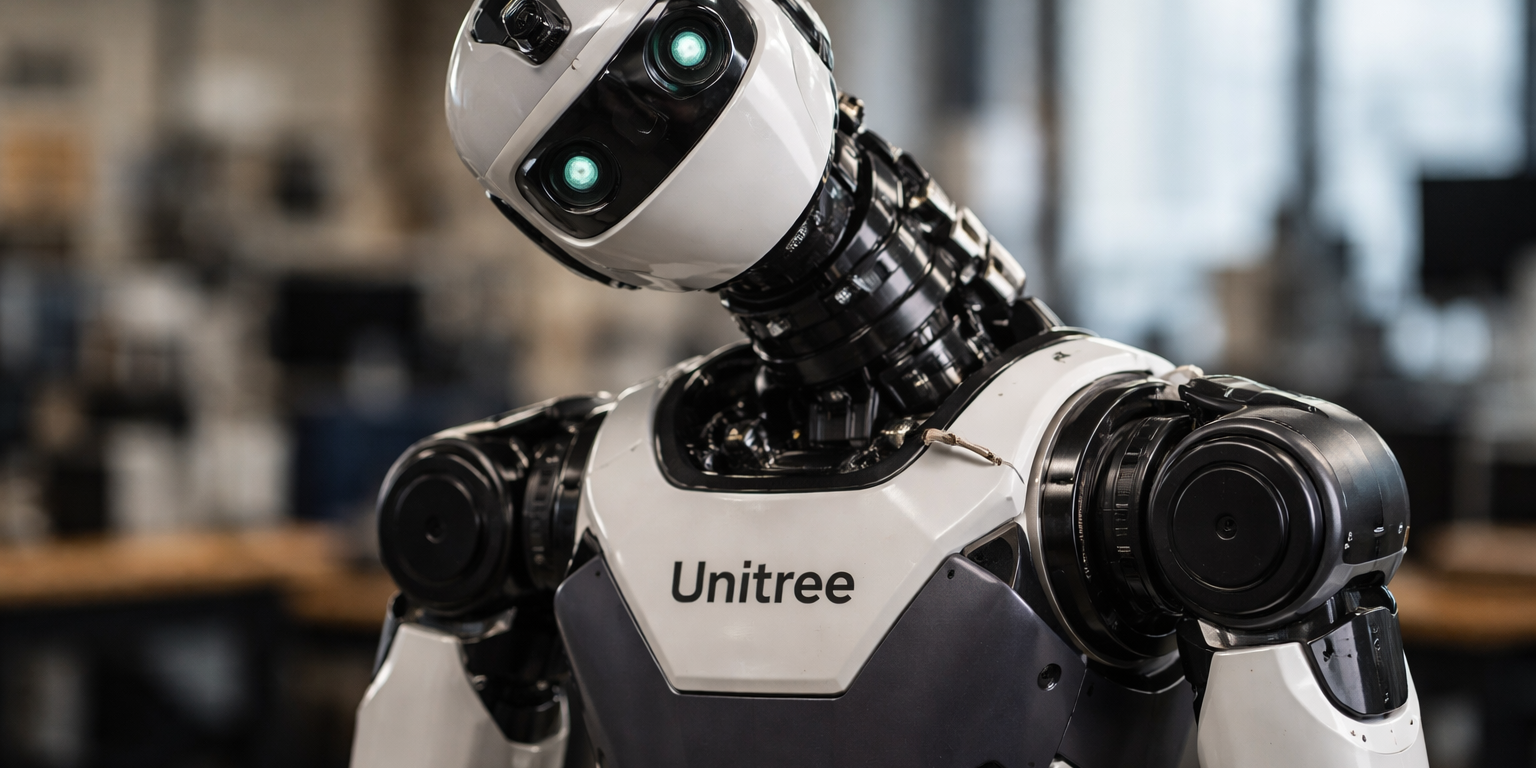
C.H. Robinson CEO Dave Bates and Agility Robotics CEO Peggy Johnson delivered a message at odds with much of the robotics industry's marketing pitch: the real value in automation isn't putting humans out of work, but making specific parts of their jobs less punishing. Bates runs a $17 billion logistics giant that moves freight for 105,000 customers. Johnson leads the company that manufactures Digit, the bipedal robot currently deployed in Amazon and GXO warehouses. Both executives told Fortune their operational experience points toward the same conclusion—trying to automate away entire job categories creates more problems than it solves, while targeting discrete tasks within those jobs delivers measurable returns.
The distinction matters because much of the capital flowing into humanoid robotics rests on an assumption that general-purpose machines will eventually perform most warehouse functions now handled by hourly workers. Figure AI raised $675 million in February 2024 at a $2.6 billion valuation based partly on that premise. Apptronik signed a deal with Mercedes-Benz to explore factory deployment of its Apollo humanoid. Sanctuary AI positioned its Phoenix robot as a path to human-level intelligence in physical form. Johnson's comments suggest the company actually building and deploying bipedal robots at commercial scale sees a different trajectory. Agility started shipping Digit units in 2023 and has multi-year agreements with third-party logistics providers. The company's manufacturing facility in Salem, Oregon can produce 10,000 units annually when running at capacity, though current production volumes remain undisclosed.
Bates cited tote-handling as an example where robotics make sense for C.H. Robinson's operations. Workers in fulfillment centers spend significant portions of their shifts lifting and moving containers that can weigh forty to sixty pounds. The repetitive motion contributes to injury rates that cost logistics operators millions annually in workers' compensation claims and lost productivity. Automating that specific movement—whether through conveyors, autonomous mobile robots, or bipedal machines—removes a source of physical strain without eliminating the need for human judgment in downstream processes like quality inspection or exception handling. The calculus changes when companies attempt to automate entire workflows. Integration costs multiply, edge cases proliferate, and the system becomes brittle when conditions deviate from what engineers anticipated during development.
The task augmentation argument aligns with deployment patterns emerging across the logistics sector. Amazon uses over 750,000 robots in its fulfillment network, but the company employed 1.5 million people as of December 2023—more than it did before introducing Kiva robots in 2012. The robots handle piece-picking and pallet transport, tasks that scale poorly with human labor. Workers now focus on problem-solving, oversight, and handling the irregular items that robotic systems can't reliably manipulate. DHL operates a similar model in its European distribution centers, where autonomous mobile robots move goods between zones while humans perform final packing and quality verification. Neither company positions automation as a headcount reduction strategy in public communications, though both achieve higher throughput per square foot than facilities without robotic systems. The labor savings materialize through reduced turnover and injury rates rather than absolute workforce reduction. Johnson's emphasis on task-level automation reflects what Agility has learned from early deployments. Digit robots at GXO facilities in Atlanta handle container movement between staging areas, a task that requires bipedal locomotion because the facilities weren't designed with robot-friendly infrastructure. The machines don't replace warehouse workers—they eliminate the need for those workers to make hundreds of trips daily across warehouse floors, leaving them fresh for tasks requiring dexterity or decision-making that current robots can't match.
What to Watch: Track whether Agility's next-generation Digit model, expected in 2025, adds manipulation capabilities beyond tote-carrying or remains focused on mobility tasks. Monitor job posting trends at C.H. Robinson and other freight brokers to see if automation enables workforce expansion in analytics and customer service roles. Watch for deployment announcements from Amazon's fulfillment network in Q2 2025, when the company typically reveals warehouse technology updates ahead of peak season.