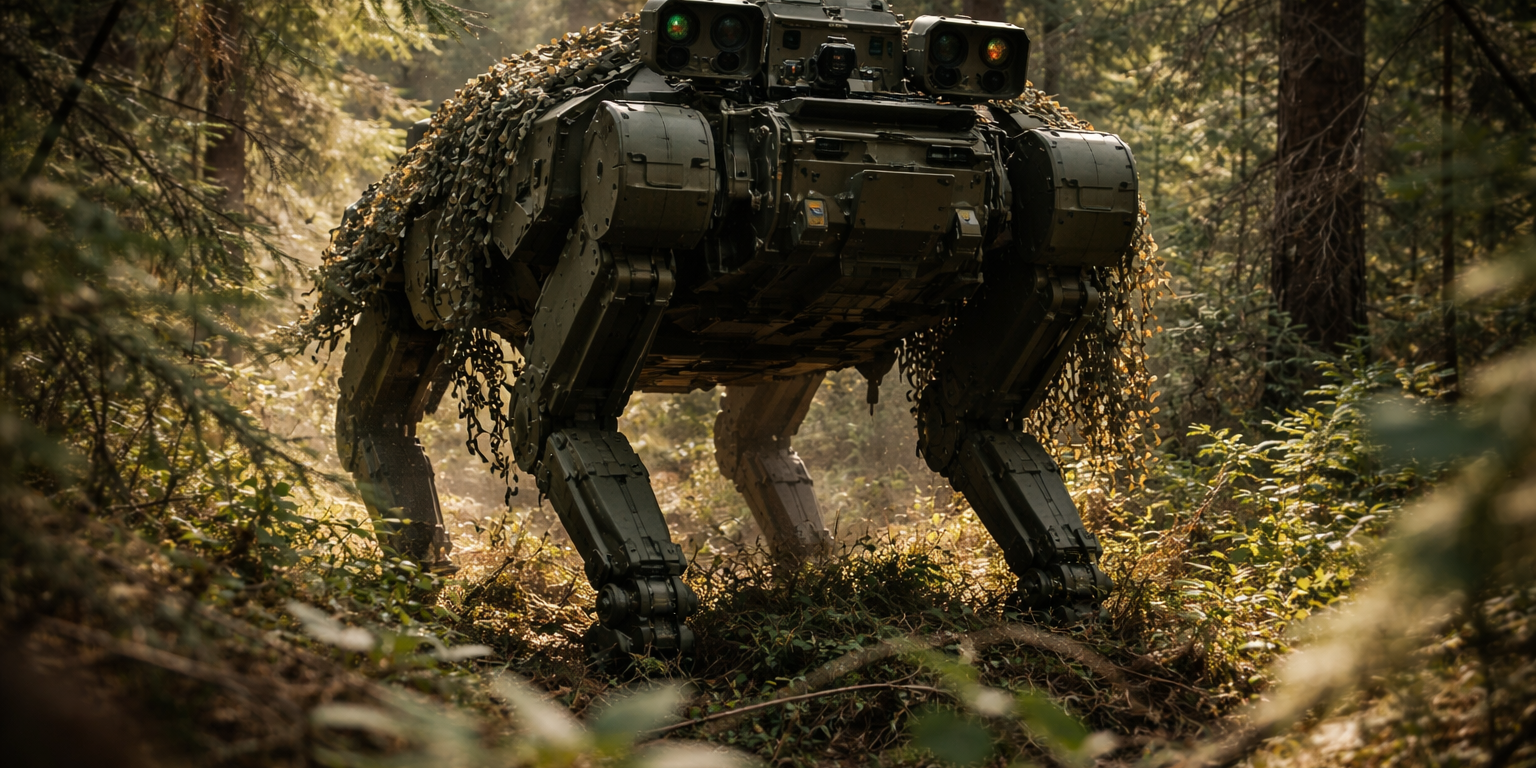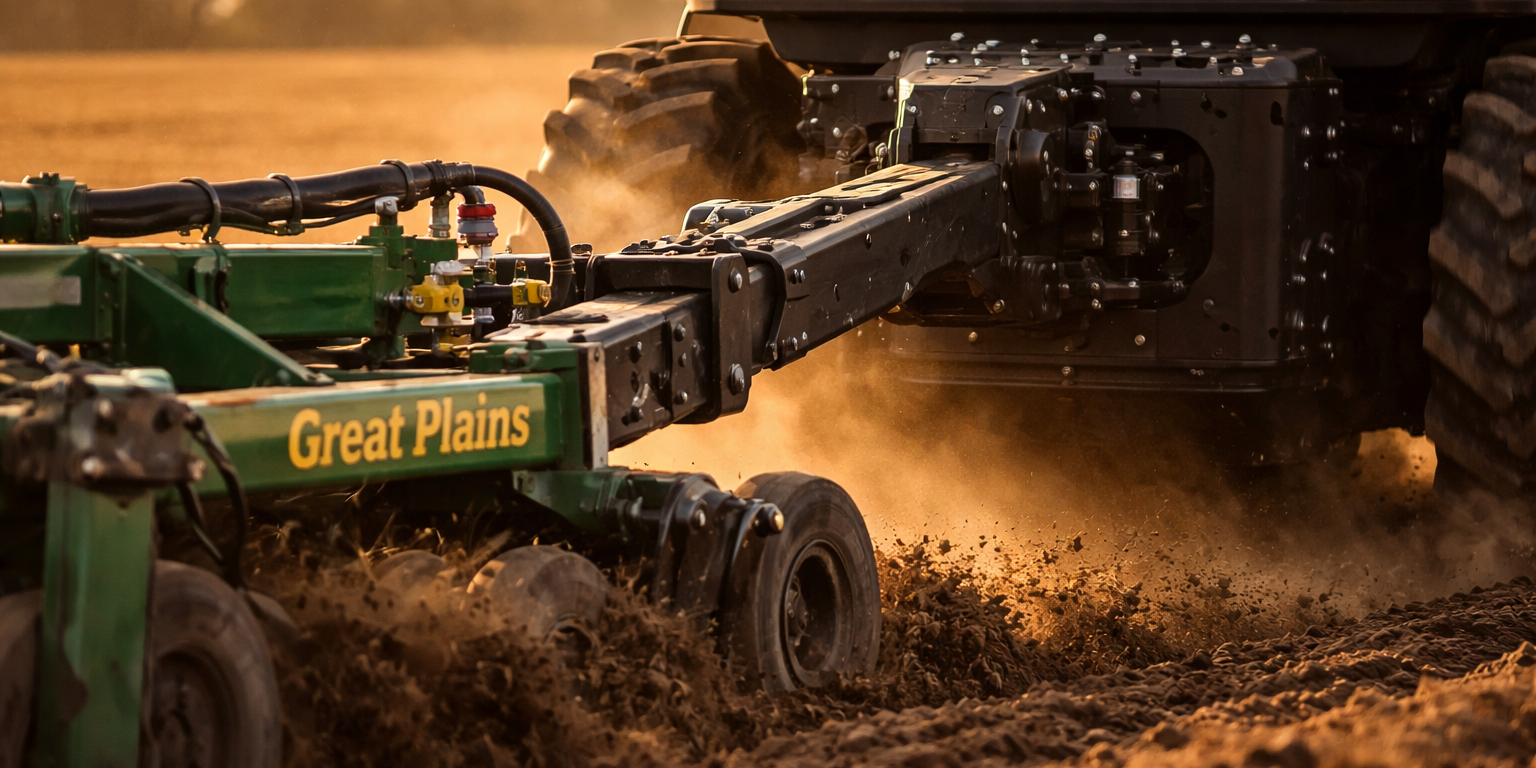
Great Plains Manufacturing will redesign selected implements to meet technical specifications for Carbon Robotics' autonomous tractor system, the first company to join a certification program that could determine which equipment suppliers survive the transition to driverless agriculture. The Autonomy Ready Program establishes a formal process for implement manufacturers to validate their products against Carbon's control protocols, sensor requirements, and operational parameters. Great Plains, a Kansas-based maker of tillage equipment, planters, and drills with annual revenue exceeding $500 million, brings immediate credibility to an initiative that depends entirely on adoption by legacy manufacturers who have spent decades building equipment for human operators.
Carbon Robotics spent three years developing autonomous tractors before discovering that implements designed for manual operation often fail in autonomous workflows. Hydraulic systems that rely on operator feel, hitches that require visual alignment, and depth controls calibrated for human feedback all introduce failure modes that don't exist when a person sits in the cab. The company's engineering team documented more than 40 discrete compatibility issues across common tillage, planting, and spraying implements. Some problems proved trivial—a relocated sensor mount, revised CAN bus messaging. Others required fundamental redesigns. A chisel plow that worked flawlessly with a human operator would dig unpredictably when the autonomous system couldn't detect slight variations in soil density that a driver would feel through the seat. Carbon released the Autonomy Ready specifications in August 2026 after beta testing with three manufacturers whose names remain confidential under commercial agreements.
The certification process requires manufacturers to submit CAD models, control system documentation, and physical units for validation at Carbon's 800-acre testing facility in Washington state. Carbon's engineers evaluate implement behavior across soil types, slopes, and operating speeds that stress the autonomous system's decision-making. Certified implements receive a compatibility designation that covers specific tractor models and software versions—a John Deere-style parts compatibility matrix for the autonomous era. Great Plains will pursue certification for its Turbo-Max vertical tillage line first, followed by the Yield-Pro planter series. Both products already incorporate electronic depth control and CAN bus communication, features that reduce the engineering lift required for autonomous compatibility. The company expects to complete certification on the first Turbo-Max models during the second quarter of 2027.
Beyond Great Plains, the program's success depends on whether competitors view certification as market necessity or vendor lock-in. AGCO, CNH Industrial, and Kubota all operate autonomous tractor development programs and may resist a standard controlled by Carbon, a private company backed by venture capital rather than established agricultural conglomerates. Carbon's leadership argues the Autonomy Ready Program remains equipment-agnostic—any autonomous platform provider could adopt the specifications or propose additions through an advisory process that includes implement manufacturers. That positioning hasn't prevented skepticism from manufacturers who recall similar standardization efforts that became de facto monopolies. The difference, Carbon maintains, is that autonomous tractors already operate on hundreds of farms across Washington, Oregon, and Idaho, making compatibility a present-tense problem rather than a speculative future concern. Farmers deploying autonomous equipment today often discover implement incompatibilities only after delivery, forcing expensive retrofits or outright replacement. A pre-purchase certification system eliminates that risk while creating a competitive advantage for early adopters among implement manufacturers.
What to Watch: Track whether AGCO or CNH Industrial join the program or launch competing certification schemes during the fourth quarter of 2026. Monitor Great Plains' Turbo-Max certification timeline—slippage beyond Q2 2027 would signal technical obstacles more serious than both companies acknowledge. Watch for Carbon to announce autonomous tractor sales figures at the end of harvest season in November 2026, data that will indicate whether the installed base justifies implement manufacturers' investment in compatibility engineering.