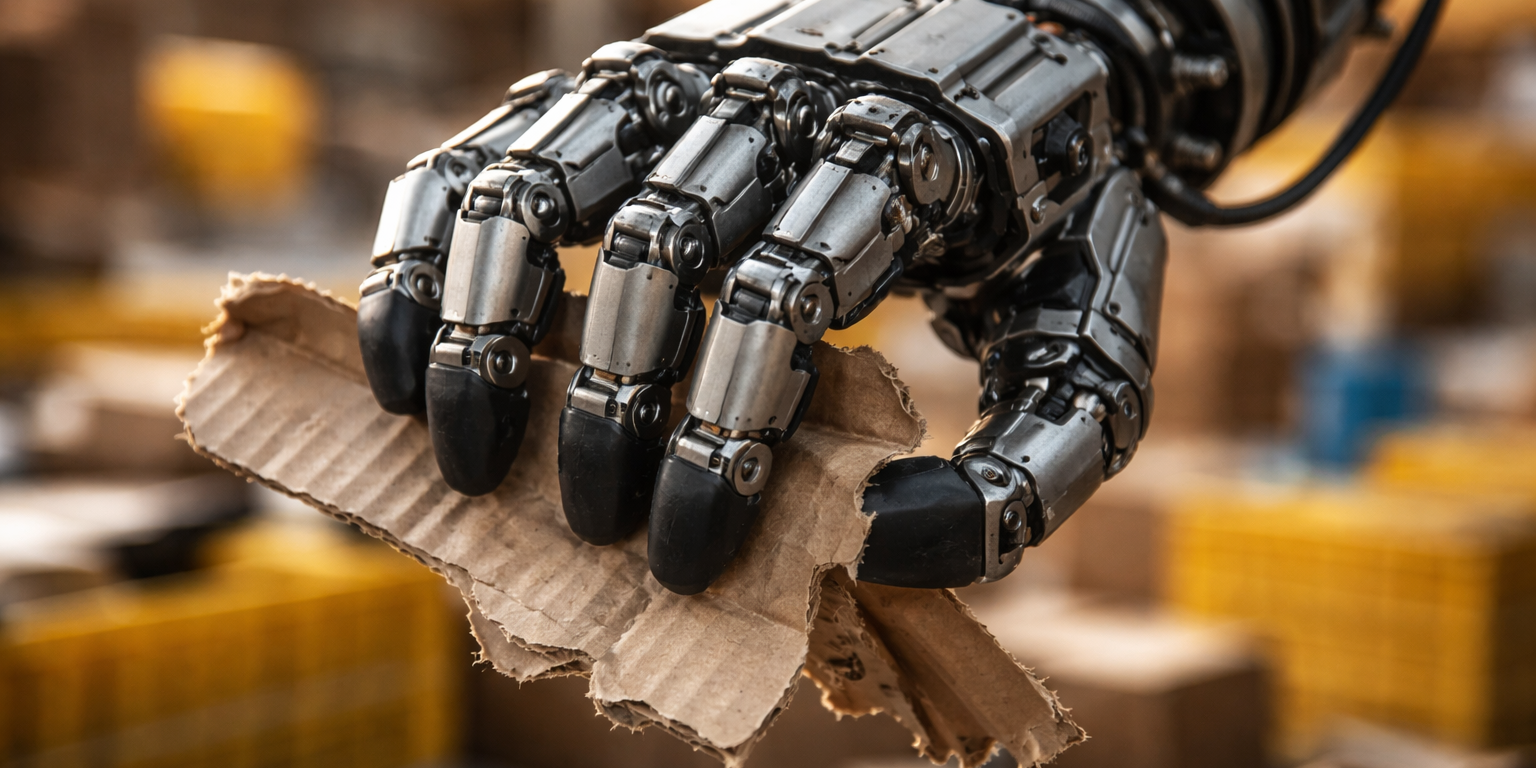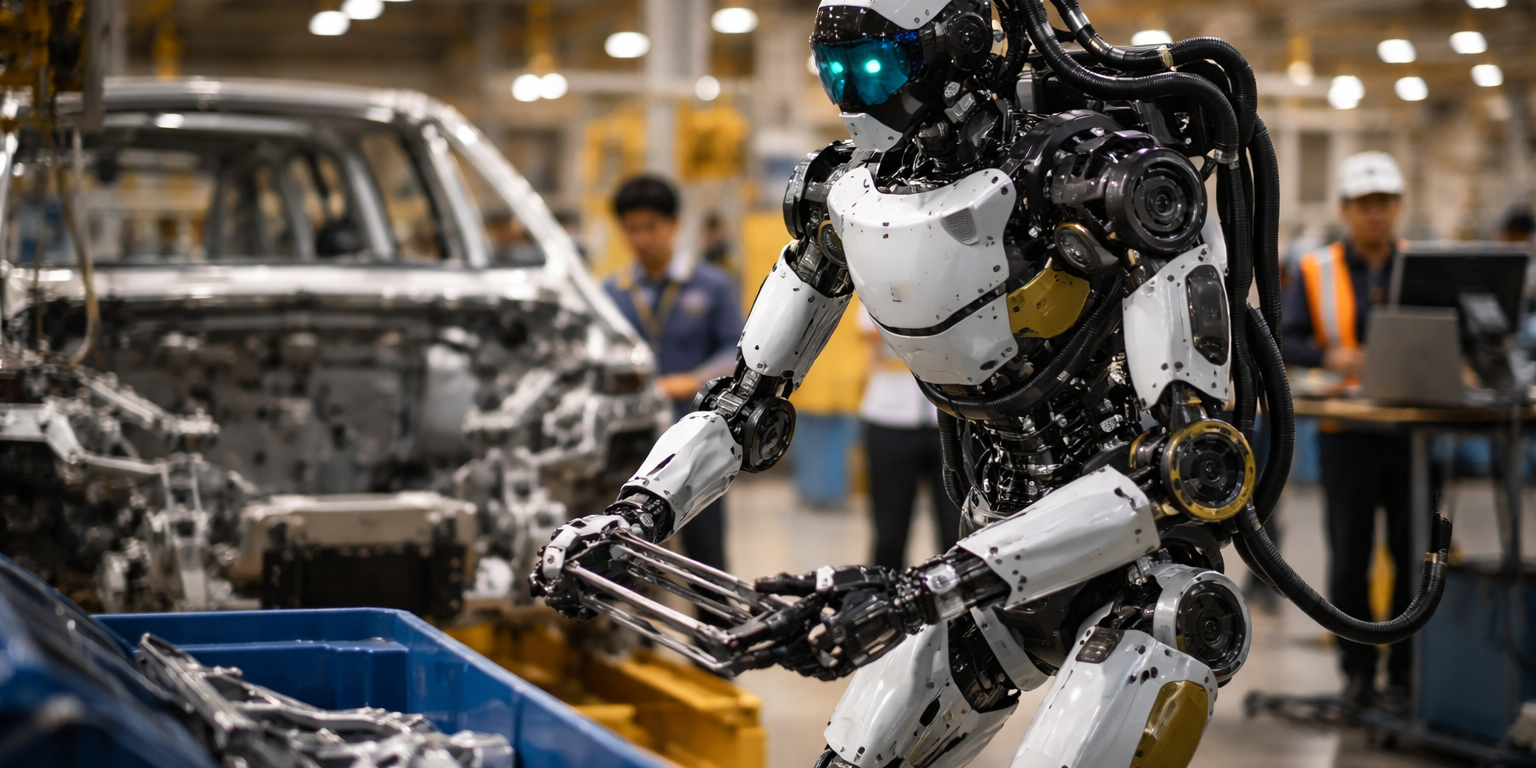
Boston Dynamics has opened a Robotics Metaplant Application Center inside Hyundai Motor Group's $7.6 billion Metaplant America complex in Georgia, where the company's engineers are now training Atlas humanoid robots for tasks on an active automotive production line. The facility, embedded within the 2,923-acre manufacturing campus in Bryan County, represents the first time Boston Dynamics has stationed a permanent technical team outside Massachusetts specifically to deploy its electric Atlas platform in a commercial environment. Hyundai, which acquired an 80 percent stake in Boston Dynamics from SoftBank in 2021 for $880 million, began construction on the Georgia plant in late 2022 with production scheduled to begin in the first quarter of 2026. Atlas units at the application center are being programmed for parts handling, bin picking, and quality inspection workflows that Hyundai plans to scale across the facility as vehicle output ramps toward the plant's 300,000-unit annual capacity target.
The electric version of Atlas, unveiled by Boston Dynamics in April 2024, retired the hydraulic model that had become the public face of bipedal robotics through viral demonstration videos. Where the hydraulic Atlas relied on high-pressure fluid systems that limited endurance and complicated maintenance, the electric redesign uses rotary actuators that provide what Boston Dynamics describes as a "superhuman range of motion" while simplifying serviceability for industrial settings. The Metaplant deployment focuses on exploiting that range of motion in tight spaces between assembly stations where wheeled mobile robots and traditional articulated arms face clearance constraints. Atlas stands 150 centimeters tall and weighs approximately 89 kilograms, dimensions that allow it to navigate the same pathways human technicians use without requiring dedicated robotic corridors. Boston Dynamics has not disclosed per-unit pricing for Atlas, but industry observers estimate commercial leasing models will likely land between $150,000 and $250,000 annually when the platform enters broader availability, positioning it as a premium option compared to emerging competitors from Agility Robotics, Figure AI, and Apptronik.
Hyundai's Metaplant America represents a test bed for what the conglomerate calls "metamobility" manufacturing, a concept that layers advanced robotics, artificial intelligence-driven logistics, and renewable energy systems into a single integrated production environment. The Bryan County facility will manufacture electric vehicles including the Hyundai Ioniq 7 SUV and Genesis GV70 Electrified crossover, with lithium-ion battery pack assembly handled on-site through a partnership with SK On. Hyundai Motor Group has committed to installing robotics across material flow, body welding, paint application, and final assembly sequences, with humanoids occupying roles that require dexterity and visual inspection rather than high-speed repetitive motion better suited to fixed industrial arms. The application center gives Boston Dynamics' engineers direct access to production data, failure modes, and cycle time benchmarks that inform both hardware revisions and the reinforcement learning models that drive Atlas's manipulation policies. Robert Playter, Boston Dynamics' CEO, said in a February 2026 investor presentation that automotive manufacturing would serve as the "beachhead market" for Atlas before expansion into logistics, aerospace, and construction verticals.
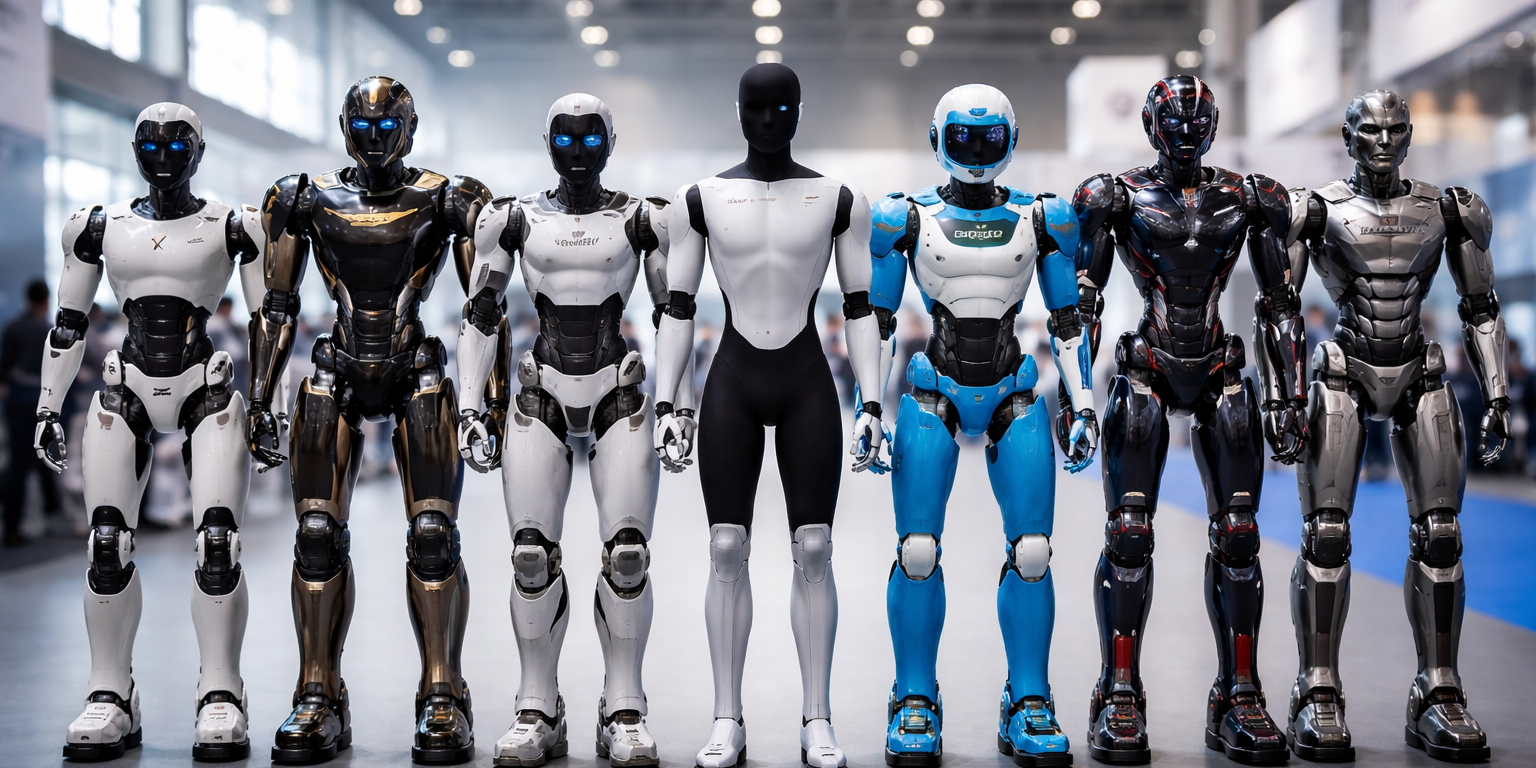
The Georgia deployment unfolds as competition in the humanoid robotics sector intensifies across funding, technical capability, and go-to-market strategy. Figure AI closed a $675 million Series B round in February 2024 at a $3.2 billion valuation, with backing from Microsoft, NVIDIA, Jeff Bezos, and OpenAI, and has since placed Figure 02 units at BMW's Spartanburg, South Carolina plant for chassis assembly tasks. Agility Robotics began commercial deliveries of its Digit humanoid to Amazon in late 2024 for tote handling in fulfillment centers, while Tesla continues internal development of its Optimus platform with Elon Musk projecting limited external sales beginning in late 2026. Apptronik, spun out of the University of Texas at Austin, secured a partnership with Mercedes-Benz in March 2024 to pilot its Apollo humanoid in logistics operations. Boston Dynamics enters this landscape with two decades of legged robotics research, an established commercial track record through its Spot quadruped and Stretch mobile manipulator, and the financial backing of a major industrial conglomerate that can provide both capital and deployment sites. The Metaplant Application Center formalizes that advantage, embedding Boston Dynamics' technical team inside a high-stakes production environment where downtime carries six-figure hourly costs and quality tolerances operate in fractions of a millimeter.
What to Watch: Monitor production ramp metrics from Hyundai's Bryan County facility through Q1 and Q2 2026 for indications of how many Atlas units transition from training to active floor deployment and whether Boston Dynamics publicly discloses cycle times or task completion rates. Track announcements from Figure AI regarding BMW deployment scale and any new automotive partnerships, as well as Tesla's Optimus external sales timeline, to gauge competitive positioning. Watch for Boston Dynamics' participation in ICRA 2026 in May and ROSCon 2026 in October, where technical presentations may reveal manipulation benchmarks, learning approaches, or new application domains beyond automotive manufacturing.