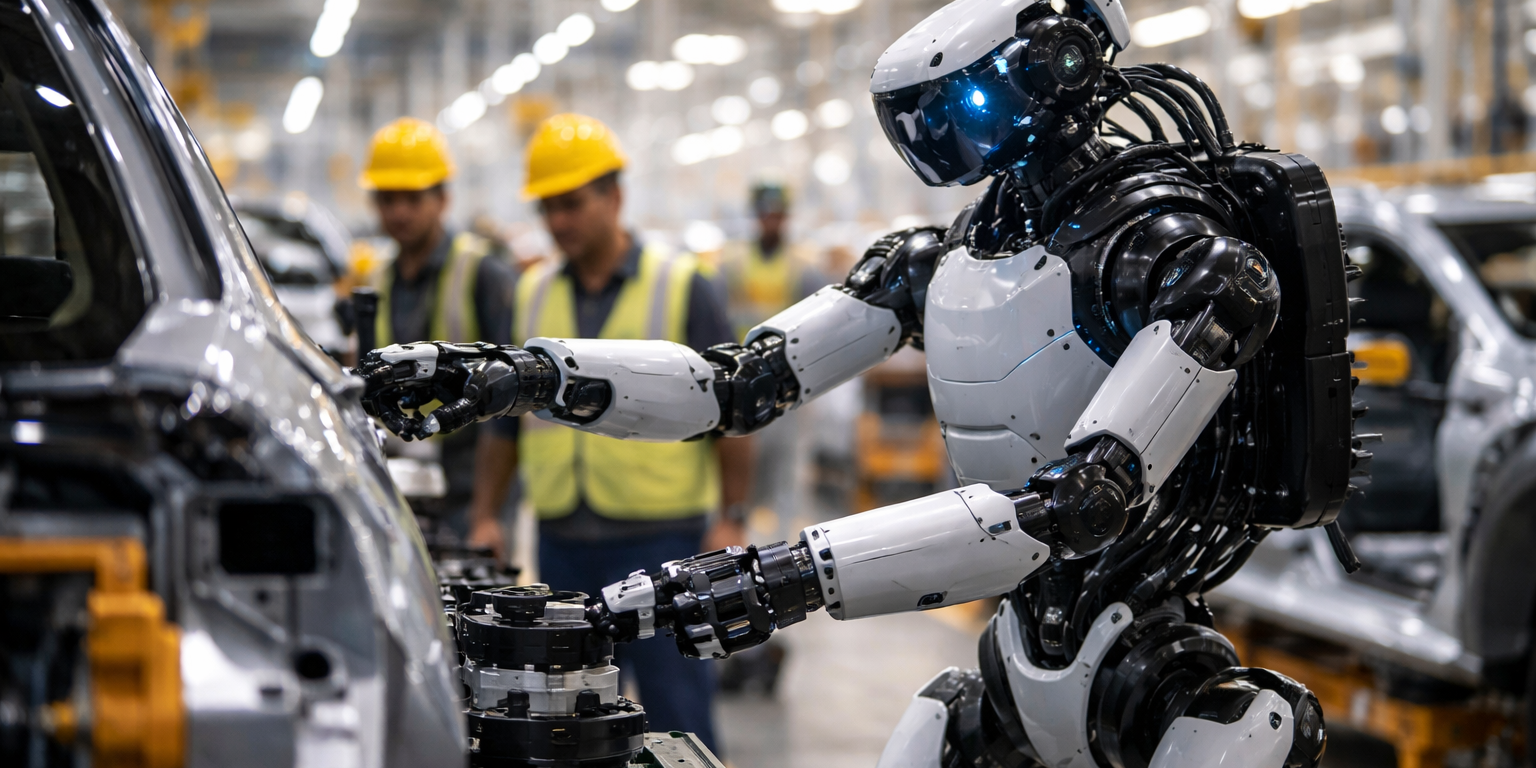

Atlas logged its first sustained factory trial at a Hyundai parts supplier in South Korea three months ago, running eight-hour shifts moving automotive components between assembly stations. The deployment represents a threshold crossing for Boston Dynamics, shifting from viral demonstration videos to industrial revenue generation. Hyundai Motor Group now positions the robot as a near-term commercial product rather than research curiosity, with capital markets discussions underway that could value the combined Boston Dynamics entity north of $4 billion. Marc Raibert, founder and now executive advisor, told investors in December that factory economics finally justify humanoid deployment where facility reconfiguration costs exceed $2 million, a constraint that previously made wheeled mobile manipulators the rational choice for most applications.
The timing exposes a materials dependency that aerospace and defense contractors have quietly managed for years but humanoid robotics startups are encountering at scale for the first time. Neodymium-iron-boron magnets generate the power density required for Atlas actuators to deliver 400 newton-meters of torque in a 3-kilogram package, performance essential for dynamic balancing and load manipulation that defines Boston Dynamics' technical lead. Dysprosium additions allow those magnets to function at the elevated temperatures generated during continuous operation. China refined 167,000 metric tons of rare-earth oxides in 2023 compared to 43,000 tons for all other countries combined, according to U.S. Geological Survey data. Processing capacity matters more than mining volume because rare-earth separation requires extensive chemical expertise and environmental controls that took China three decades to develop. Lynas Rare Earths in Australia and MP Materials in California operate the only significant non-Chinese processing, combined output roughly one-fifth of annual humanoid sector requirements if Tesla reaches stated 2026 production targets.
Hyundai's automotive procurement relationships provide partial insulation through existing contracts for electric vehicle traction motors, which use similar though not identical rare-earth grades. The company sources neodymium from multiple suppliers under agreements negotiated before rare-earth prices spiked 40% in early 2024 following Beijing's announcement of tighter export licensing. But humanoid actuators demand tighter tolerances and different magnetic properties than vehicle motors, requiring dedicated supply arrangements that Boston Dynamics must now establish while preparing for institutional investor scrutiny. JPMorgan analysts modeling the potential IPO noted in February that hardware gross margins compress rapidly when input costs fluctuate beyond 15% annually, a volatility threshold rare earths exceeded in four of the past seven years. Figure AI, valued at $2.6 billion in its February funding round, disclosed to investors that securing rare-earth allocations at fixed prices proved more difficult than anticipated, delaying its production ramp from Q2 to Q4 2025. Apptronik founder Jeff Cardenas said in a March podcast that motor supply represents the primary constraint on scaling beyond 1,000 units annually, not software or assembly capacity.
The concentration risk ripples beyond individual company execution into sector-wide venture capital appetite and customer procurement decisions. Tesla's humanoid program benefits from vertical integration into motor production and pre-existing rare-earth contracts supporting Model 3 and Model Y output of 1.8 million vehicles annually, giving Optimus a materials advantage competitors cannot easily replicate. Sanctuary AI in Canada pivoted in January to pneumatic actuators for its Phoenix robot specifically to avoid rare-earth dependency, trading some performance ceiling for supply chain predictability. Ford and BMW, evaluating humanoid trials for 2026, reportedly include materials sourcing resilience in vendor scoring frameworks alongside technical capability and unit economics. Boston Dynamics must now demonstrate to potential public market investors that it can secure rare-earth supplies for a multi-year production scaling curve while competitors bid for the same limited processing capacity. Hyundai's vertical integration provides leverage, but humanoid-specific motor requirements mean Atlas cannot simply draw from automotive parts bins the way Optimus potentially can from Tesla's supply base. The Pentagon's Defense Production Act investments in domestic rare-earth processing will not reach meaningful output until 2027 at earliest, according to Department of Energy timelines, leaving a gap between commercial humanoid ambitions and supply availability.
What to Watch: Boston Dynamics' S-1 filing, expected between Q3 2025 and Q1 2026, will disclose rare-earth supply contracts and pricing risk factors for the first time under SEC requirements. Monitor whether Hyundai announces offtake agreements with Lynas or MP Materials similar to those securing automotive supply. Track Atlas deployment announcements beyond Hyundai facilities, particularly whether non-automotive customers emerge before year-end. Figure's production timeline revisions offer a leading indicator of whether rare-earth constraints affect the broader humanoid sector or remain company-specific.