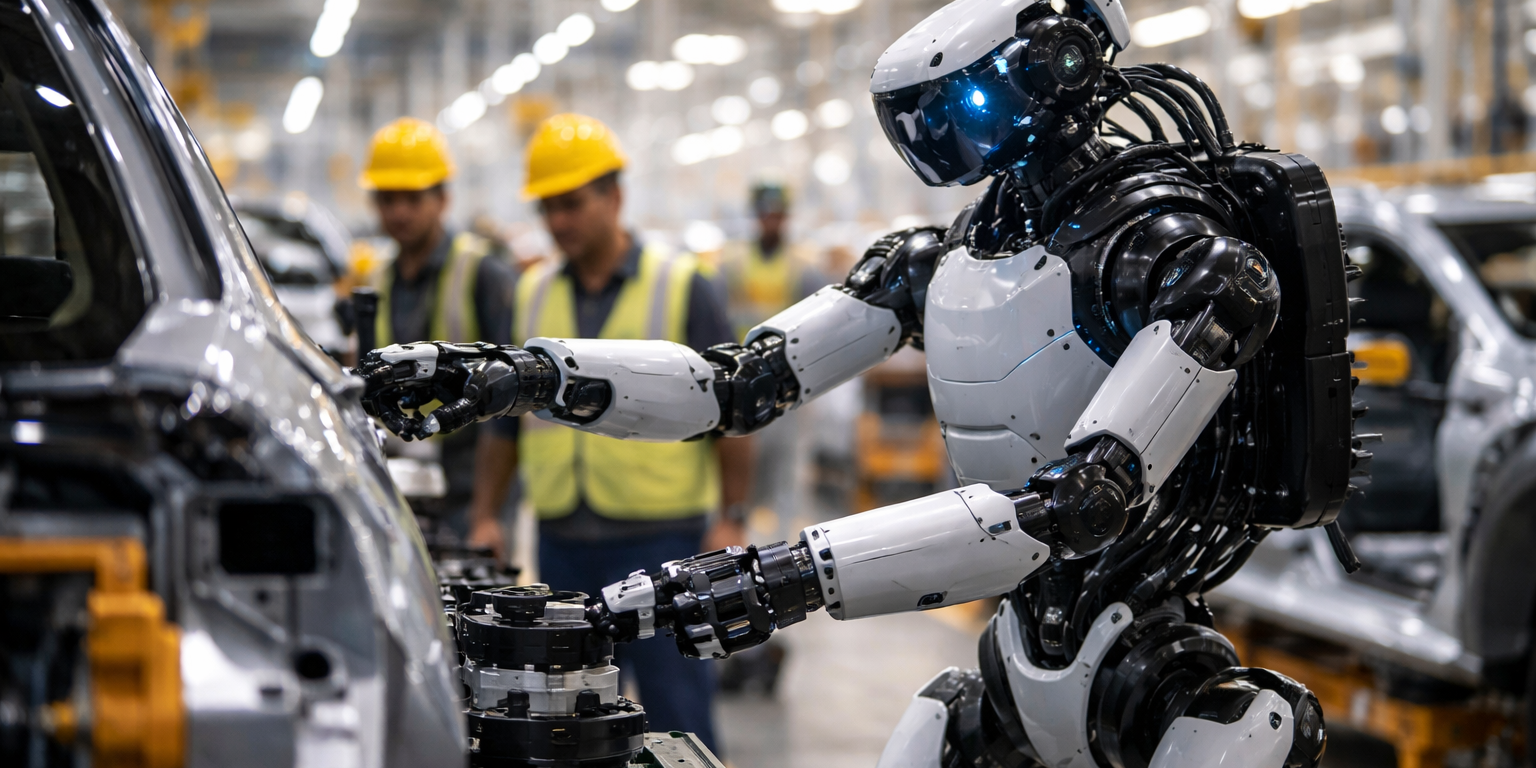

Beijing municipal officials activated a digital identity system for humanoid robots in January 2025, creating what amounts to a birth certificate and permanent record for machines designed to work alongside humans. The platform tracks each robot through manufacturing, deployment, maintenance cycles, and eventual decommissioning—a cradle-to-grave approach that mirrors vehicle registration systems but applied to bipedal machines now entering Chinese warehouses, hospitals, and retail environments. No comparable system exists in the United States or Europe, where humanoid deployment remains scattered across disconnected pilot programs. The Beijing platform assigns a unique identifier that follows each robot regardless of ownership changes or geographic relocation within China, establishing infrastructure that becomes more valuable as deployment density increases. Municipal authorities declined to specify which agencies control the underlying database or how long records will be retained, though the system reportedly went live with several hundred robots already registered from manufacturers including UBTech and Fourier Intelligence.
The timing reflects China's push to industrialize humanoid robotics before international competitors establish market dominance. Unitree shipped its G1 humanoid at $16,000 in mid-2024, undercutting Boston Dynamics' Atlas and Agility Robotics' Digit on price while offering comparable mobility specifications. UBTech's Walker S demonstrated stair navigation and object manipulation at the 2024 World Robot Conference, signaling readiness for commercial contracts rather than laboratory demonstrations. Fourier Intelligence deployed its GR-1 humanoid in rehabilitation facilities across Guangdong Province, accumulating operational hours that feed into product iteration cycles. These companies now operate in an environment where regulatory infrastructure precedes mass deployment rather than reacting to problems after thousands of units reach the field. The digital identity platform potentially accelerates commercialization by providing liability frameworks, maintenance standards, and safety protocols before incidents force reactive regulation—a reversal of the pattern seen in consumer drones and autonomous vehicles, where regulatory gaps slowed adoption and created compliance uncertainty.
The platform architecture remains partially disclosed, but industry sources indicate it integrates with existing industrial robotics standards developed by China's Ministry of Industry and Information Technology. Each registered robot transmits operational telemetry—motor performance, battery degradation, navigation errors, and maintenance logs—to centralized servers accessible by manufacturers, facility operators, and government inspectors. This data aggregation creates a national repository of humanoid performance metrics unavailable to Western competitors, potentially giving Chinese manufacturers an advantage in identifying failure modes, optimizing components, and demonstrating safety records to corporate buyers. The system also addresses liability questions that have stalled humanoid adoption in other markets: when a bipedal robot causes property damage or injures a worker, the digital identity record establishes ownership, maintenance history, and software version at the time of incident. Insurance underwriters can price policies based on manufacturer track records rather than broad categorical risk, lowering deployment costs for companies with superior safety performance. Foreign manufacturers face the prospect of compliance requirements that add engineering costs and reduce competitiveness in the Chinese market, where government procurement favors domestic suppliers meeting local standards.
Beijing's decision to lead this initiative reflects broader competition among Chinese cities to dominate emerging technology sectors. Shenzhen commands drone manufacturing and electric vehicles, while Shanghai concentrates semiconductor design and autonomous driving development. Beijing positioning itself as the regulatory center for humanoid robotics creates gravitational pull for headquarters, research centers, and testing facilities—infrastructure that generates high-paying engineering jobs and corporate tax revenue. The municipal government has not published adoption targets, but the platform's existence suggests expectations for thousands of registered units within 24 months, a scale that would surpass current global humanoid deployments combined. Whether the system becomes a national standard or remains a Beijing initiative depends on adoption by manufacturers outside the capital region and whether other provincial governments develop competing frameworks. The Ministry of Industry and Information Technology has not indicated plans for a unified national system, leaving open the possibility of fragmented regional standards that complicate interstate robot deployment—a scenario that would paradoxically slow the commercialization the platform intends to accelerate.
What to Watch: Monitor whether Shanghai or Shenzhen municipal governments launch competing registration systems, which would signal fragmentation rather than national standardization. Track whether UBTech, Unitree, or Fourier Intelligence reference Beijing digital identity compliance in customer contracts or investor presentations, indicating commercial value beyond regulatory checkbox. Watch for foreign manufacturers—particularly Agility Robotics or Figure AI if they pursue Chinese market entry—to announce compliance partnerships with local system integrators, revealing costs and technical requirements of the Beijing platform.