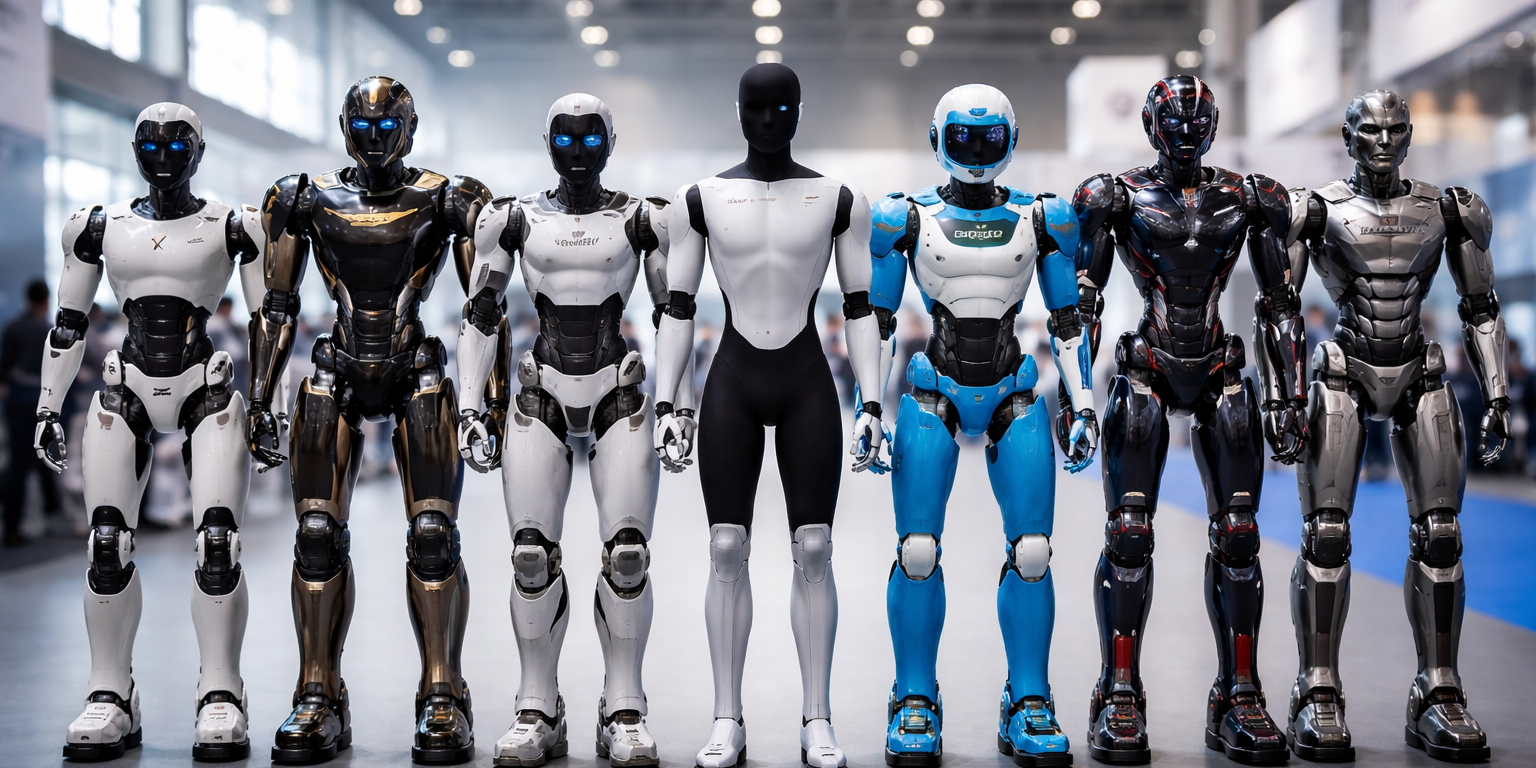
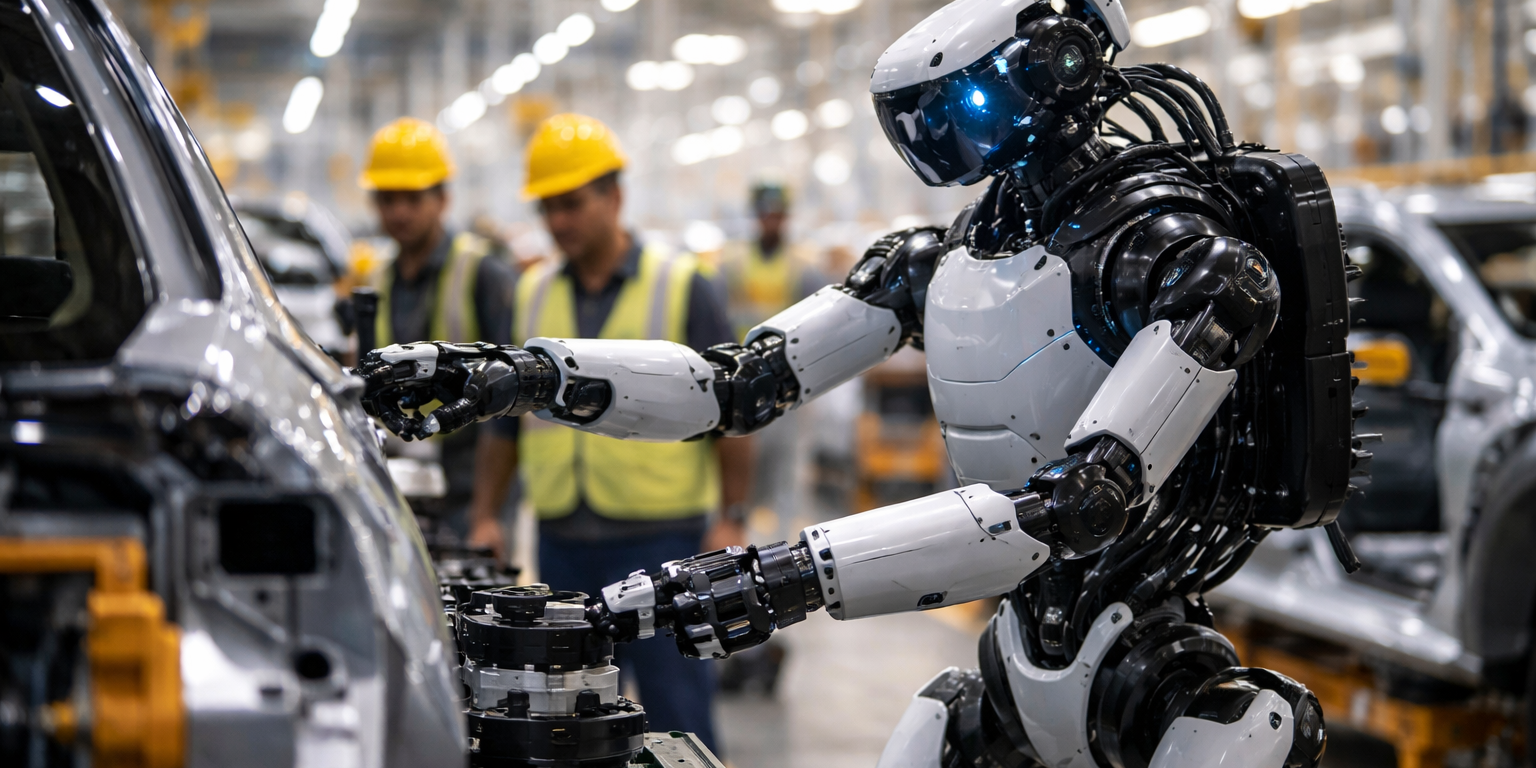
AlphaBot spent four days making lattes for expo attendees without human intervention. AI Robotics stationed the humanoid robot at Booth D06 during BEYOND Expo 2026, where it took verbal orders, operated espresso equipment, steamed milk, and handed finished drinks to customers. The company structured the demonstration as a commercial viability test rather than a scripted showcase. Unlike controlled presentations where robots execute predetermined sequences, the coffee station exposed AlphaBot to the interruptions, clarification requests, and equipment variations that characterize actual retail operations. AI Robotics has positioned the system as a commercial embodied AI platform designed for deployment, not a research prototype built to prove a concept in laboratory conditions.
Coffee preparation has emerged as an industry benchmark because it compresses multiple robotics challenges into a single workflow. The task demands fine motor control for portafilter handling and tamping, real-time speech processing to parse orders that rarely match training data exactly, and adaptive sequencing when a customer changes their mind mid-order or equipment behaves unpredictably. Most humanoid demonstrations tackle these elements in isolation. Digit from Agility Robotics moves totes in warehouses but does not interact with customers. Figure's robots manipulate objects but operate in structured factory environments. Tesla's Optimus prototypes have shown dexterity in controlled settings but have not sustained multi-day public operation. The AlphaBot demonstration attempted all elements simultaneously under conditions the company could not fully script in advance. Service industry applications represent a substantially larger addressable market than warehousing or manufacturing, but they also introduce human interaction variables that have historically caused task-specific robots to fail when conversational context shifts unexpectedly.
AI Robotics has not published technical specifications for AlphaBot's actuator count, sensor array, or the architecture of its vision and language models. The company has not disclosed whether the robot operates with full autonomy or receives periodic operator input between customers. Trade show demonstrations typically run with engineering teams nearby to reset systems between interactions, and AI Robotics has not clarified whether the Booth D06 setup included remote monitoring or manual recovery from error states. The absence of information about how many AlphaBot units exist complicates assessment of the technology's maturity. Single prototypes often achieve capabilities that prove difficult to replicate at scale. Investors and potential customers evaluating embodied AI platforms typically require data on mean time between failures, recovery procedures, and whether performance degrades across extended operation. The company has also not announced pricing, which will determine whether the economics of AlphaBot deployment make sense for cafes, hotels, or other service environments where labor costs drive interest in automation.
The demonstration arrives as humanoid robotics companies face pressure to move from milestone videos to sustained real-world performance. Figure AI raised $675 million in February 2024 at a $2.6 billion valuation. Boston Dynamics' Atlas has demonstrated parkour and object manipulation but remains a research platform without commercial deployment timelines. Sanctuary AI's Phoenix robots work in retail stockrooms for select partners but have not scaled beyond pilot programs. Apptronik shipped its first Apollo units to partners in late 2025 but has not disclosed performance data from those deployments. The gap between demonstration capabilities and the reliability required for unattended operation has kept most humanoid platforms out of customer-facing roles. A robot that completes 95 percent of orders correctly still creates operational problems when it fails unpredictably during the remaining five percent, particularly in service contexts where customers expect immediate resolution. The coffee station challenge tests whether AlphaBot's embodied AI can maintain performance across the variability of hundreds of interactions, or whether it requires the kind of structured environment and human oversight that would undermine the labor economics that justify humanoid deployment in the first place.
What to Watch: AI Robotics has not announced customer pilots or deployment timelines, so any commercial partnership announcements in the next 90 days would signal confidence in the technology beyond trade show conditions. The company's disclosure of technical specifications, particularly around autonomy levels and failure recovery, would provide clarity on whether AlphaBot operates independently or requires remote human supervision. Watch whether other humanoid developers respond with their own extended public demonstrations, which would indicate industry recognition that sustained performance matters more than highlight reels.