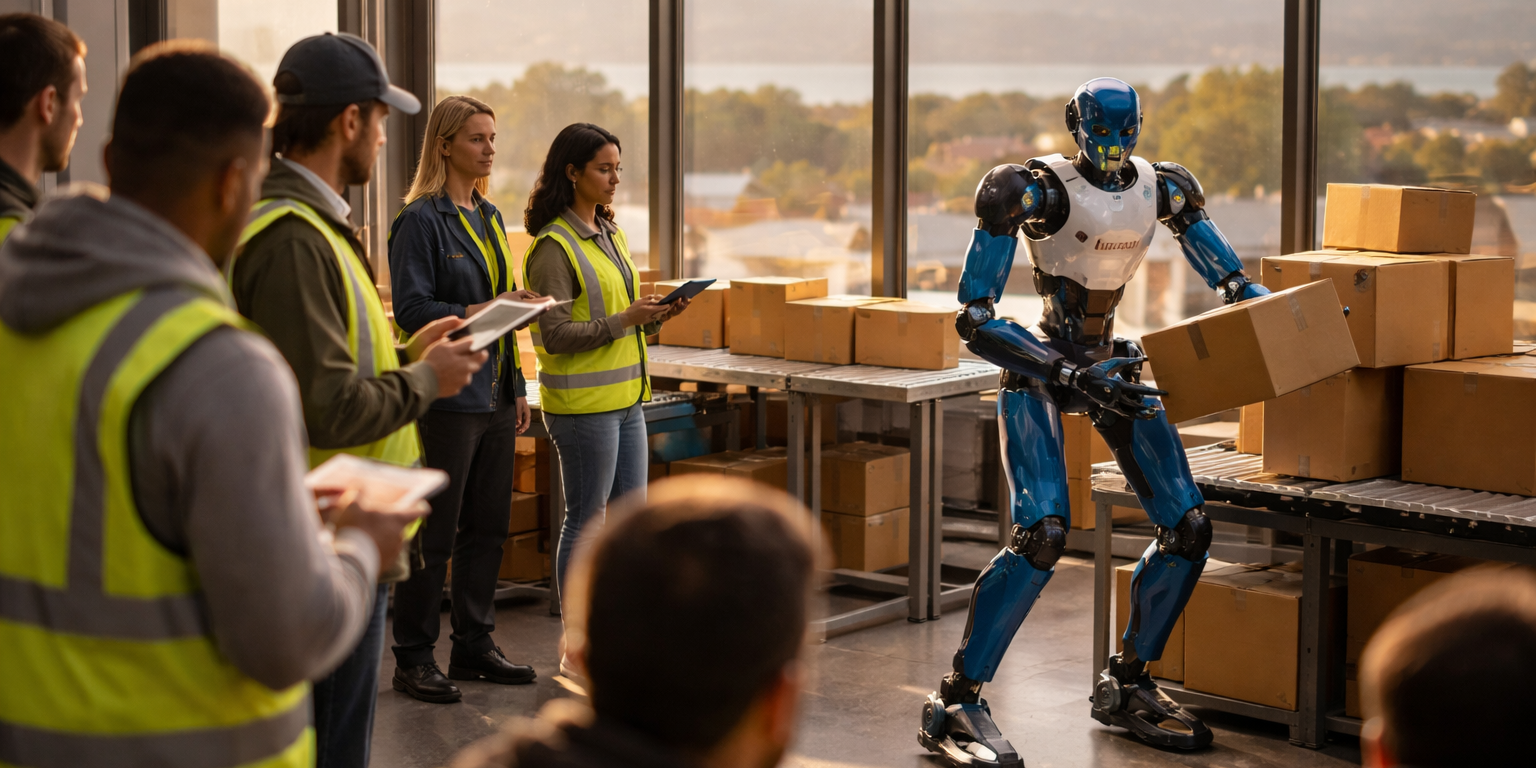
Agility Robotics has opened a 12,000-square-foot training center in Fremont, California, marking the first time the Albany, Oregon-based company has established operations outside its home state. The facility sits less than a mile from Tesla's automotive assembly plant on Kato Road, placing Agility squarely in the geographic heart of Silicon Valley's manufacturing ambitions. The center will serve as a hands-on training ground for customers deploying Digit humanoid robots, with programs beginning this month for logistics partners and warehouse operators across the western United States. Agility CEO Damion Shelton told reporters the location was chosen specifically for its proximity to both existing customers and the engineering talent pool Tesla has cultivated in the East Bay over the past decade.
The timing reflects Agility's shift from prototype demonstrations to volume production. The company began delivering production units from its Salem, Oregon factory in late 2024, and has since shipped more than 200 Digit robots to customers including Amazon, GXO Logistics, and Spanx. Each unit costs approximately $250,000, though Agility offers leasing arrangements starting at $10,500 per month for multi-year commitments. The Fremont center will accommodate up to 40 trainees at a time, running week-long certification programs for robotics technicians, warehouse supervisors, and integration engineers. Graduates receive credentials to operate, troubleshoot, and perform routine maintenance on Digit units without requiring Agility field support for common tasks. That capability matters as fleets scale. Amazon alone has indicated plans to deploy Digit across 15 fulfillment centers by the end of 2027, which would require hundreds of trained personnel distributed across multiple time zones.
The facility also serves as a West Coast demonstration hub for prospective customers. Agility has outfitted the space with adjustable racking systems, conveyor belts, and pallet configurations that mirror real-world warehouse environments. Potential buyers can observe Digit navigating tight aisles, manipulating totes of varying weights, and responding to dynamic obstacles like forklifts or human workers crossing its path. Those scenarios address the most common deployment concerns Agility hears from logistics operators: whether the robot can handle variability without constant human intervention. The company has logged more than 50,000 hours of autonomous operation across customer sites since the start of 2025, with mean time between failures now exceeding 120 hours in controlled environments. Shelton noted that figure drops to roughly 80 hours in high-traffic warehouses where unpredictable conditions are more frequent, but the reliability curve continues to improve as software updates incorporate learnings from the growing installed base.
Agility's expansion into California also positions the company closer to competitors and collaborators alike. Apptronik operates a testing facility in Austin but maintains a Silicon Valley office. Figure AI is headquartered in Sunnyvale, less than 30 miles north of Fremont. Sanctuary AI recently signed a lease in San Jose for a similar training and demo center. The clustering reflects both the concentration of venture capital in the Bay Area and the region's role as a proving ground for automation technologies before they scale nationally. Agility has raised $179 million to date, most recently closing a $150 million Series B led by DCVC and Playground Global in early 2024. The company has not disclosed revenue figures, but industry analysts estimate annual recurring revenue in the range of $35 million to $50 million based on known deployments and leasing contracts. That would make Agility one of the few humanoid robotics companies generating meaningful commercial income rather than subsisting entirely on venture funding and pilot programs.
What to Watch: Monitor whether Agility announces additional training centers in the Midwest or Southeast by the end of 2026, particularly near major logistics hubs like Memphis or Atlanta. Track certification throughput at the Fremont facility as an indicator of deployment velocity; if Agility graduates more than 200 technicians in the next six months, expect a corresponding spike in unit shipments in early 2027. Watch for announcements from Amazon regarding Digit performance metrics at its fulfillment centers, which could serve as a public benchmark for the technology's operational maturity and influence purchase decisions by other Fortune 500 logistics operators.