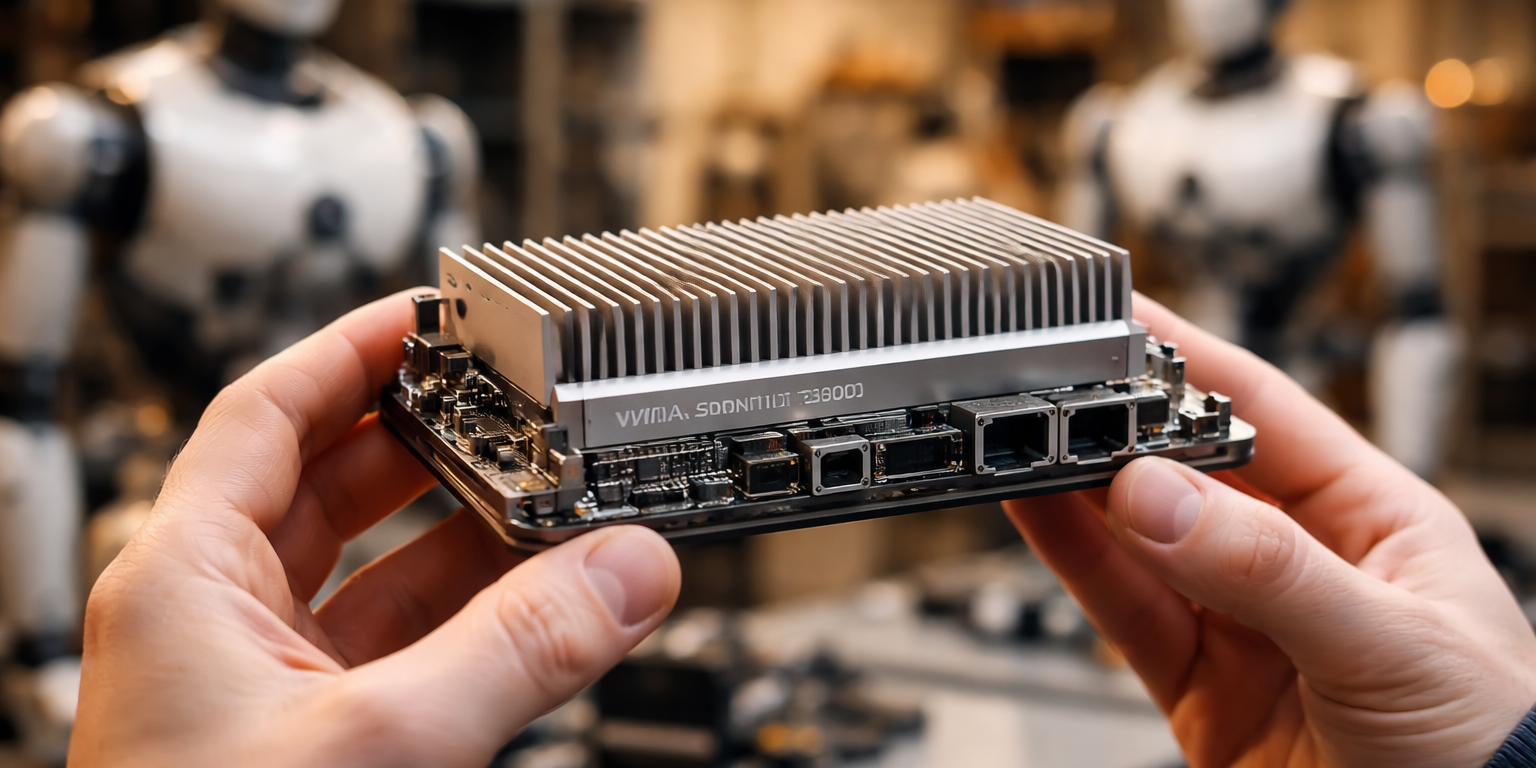
The T3000 delivers 865 teraflops of AI performance in a module smaller than most desktop graphics cards, marking NVIDIA's most aggressive entry yet into robotics beyond research labs. Announced this week, the Jetson Thor platform expands into two distinct SKUs: the flagship T3000 aimed at full-scale humanoid robots and the T2000 targeting edge AI deployments in industrial automation and mobile manipulation platforms. NVIDIA has not disclosed pricing, but industry sources familiar with the Jetson roadmap expect the T3000 to land between $2,500 and $3,500 per unit at volume, roughly triple the cost of the current Jetson AGX Orin but with more than six times the compute density.
The specifications reflect a purpose-built architecture for physical AI. Both modules integrate vision transformers natively on silicon, eliminating the need for separate preprocessing hardware that has plagued earlier generations of mobile robotics compute. The T3000 pairs its 865 TFLOPs with 128 GB of high-bandwidth memory and supports up to 16 camera inputs simultaneously, a configuration that mirrors the sensor arrays on humanoid platforms from Figure, Apptronik, and Sanctuary AI. The T2000, meanwhile, runs 400 TFLOPs with 64 GB of memory and handles eight cameras, targeting applications where cost and thermal constraints matter more than raw performance. Both modules support the same software stack, allowing developers to prototype on the T2000 and scale to the T3000 without rewriting control algorithms. NVIDIA positions this as a direct counter to Qualcomm's Snapdragon Spaces platform, which has gained traction in augmented reality headsets but lacks the thermal headroom for continuous operation in mobile robots.
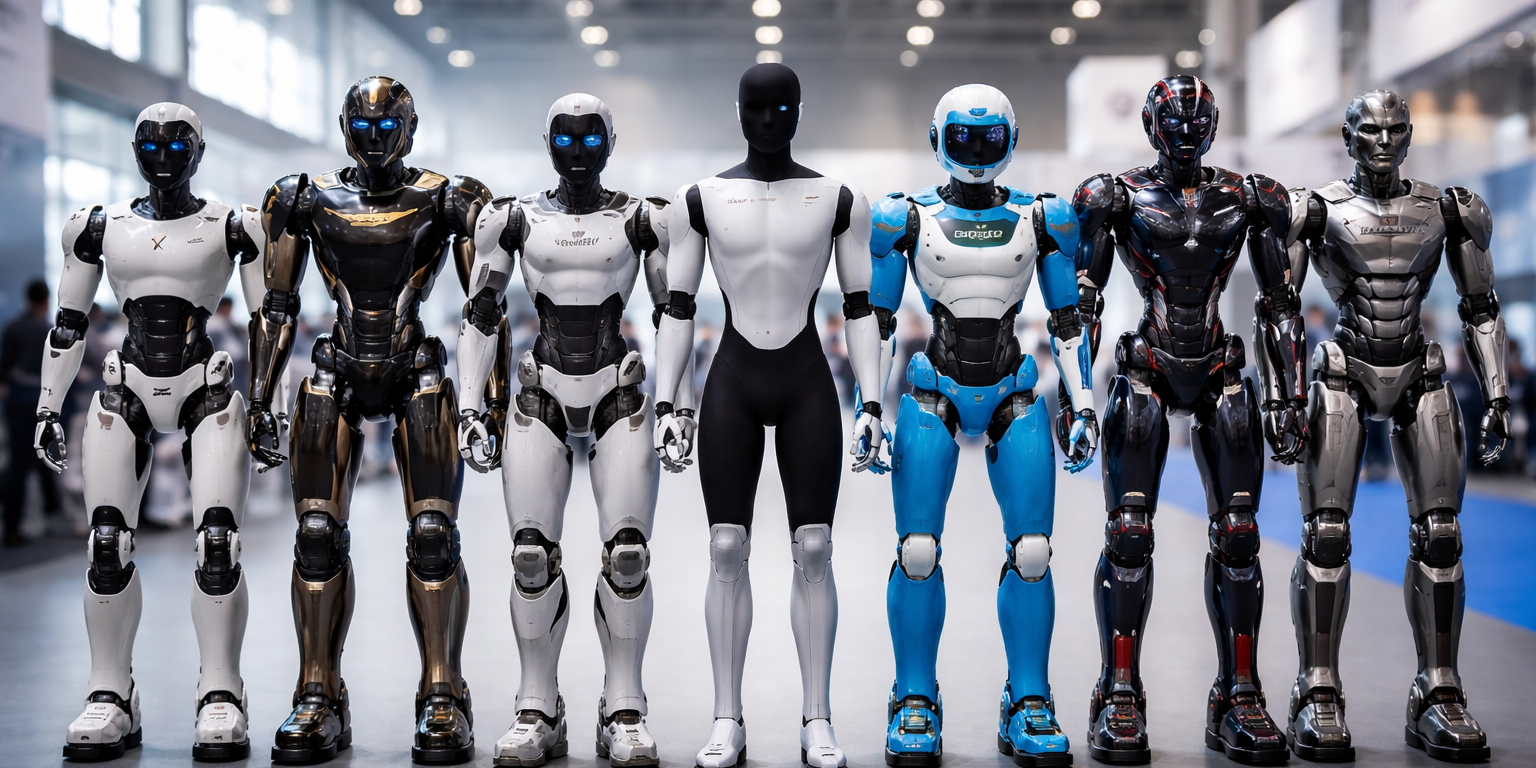
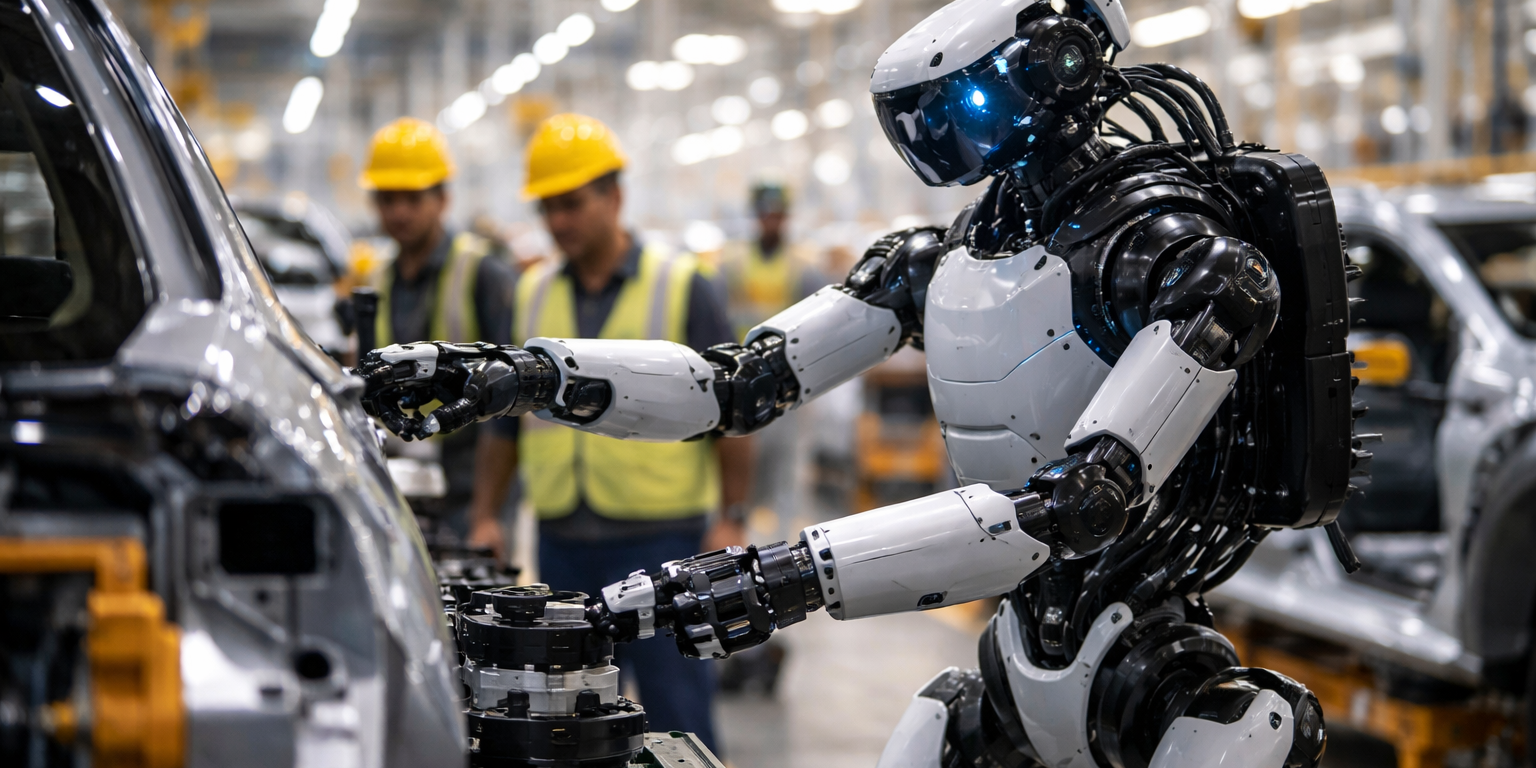
The timing aligns with a visible shift in the humanoid robotics sector. Figure AI began limited production of its Figure 02 platform earlier this year, with units deployed at BMW's Spartanburg plant and two Amazon fulfillment centers in Kentucky. Apptronik announced in May 2026 that its Apollo humanoid would enter pilot deployments with Mercedes-Benz before the end of the year. Both companies confirmed to RoboticsIntl.com that they are evaluating Jetson Thor modules as part of their compute roadmaps, though neither has committed publicly to a platform decision. Sanctuary AI, which raised $140 million in Series C funding last December, has been more explicit: its Phoenix humanoid already runs on Jetson AGX Orin modules, and the company's CTO told analysts in June that Sanctuary is working directly with NVIDIA on Thor integration. The T3000's specifications suggest NVIDIA designed the module with direct input from these partners. The 128 GB memory capacity matches the working set size for whole-body motion planning algorithms that run real-time inverse kinematics across 30 to 40 degrees of freedom, a technical requirement that Intel's proposed robotics compute module, announced at CES in January, does not meet.
Beyond humanoids, the T2000 targets a broader market. Autonomous mobile robots in warehouses, last-mile delivery platforms, and agricultural equipment all require vision processing at the edge, often in power-constrained environments where data transmission to cloud infrastructure introduces unacceptable latency. The 400 TFLOPs figure places the T2000 roughly on par with the compute available in current self-driving car platforms from Mobileye and Tesla, but in a form factor that fits into a robot arm controller or a quadruped chassis. Boston Dynamics has not commented on its compute strategy for the electric Atlas humanoid, but thermal imaging analysis of prototypes shown at investor briefings in March revealed heat signatures consistent with high-performance SoCs in the torso, not distributed microcontrollers. If Atlas moves to production, it will need something in the T3000 class. The same logic applies to China's humanoid sector, where companies like Fourier Intelligence and UBTech have announced plans to ship thousands of units by late 2027. NVIDIA's dominance in China's AI training market does not automatically translate to edge deployment, especially as export restrictions tighten, but the Jetson Thor platform is not subject to the same controls as datacenter GPUs, giving NVIDIA a path into that market that competitors lack.
The competitive landscape now hinges on software ecosystems as much as hardware performance. NVIDIA's Isaac platform, which provides simulation environments, pre-trained models, and deployment tools for robotics, has been quietly building adoption since its 2023 overhaul. Over 600 robotics companies now use Isaac for development, according to NVIDIA's count, compared to fewer than 200 in early 2024. ROS 2, the open-source middleware that underpins most research and many commercial robots, added native Isaac Sim integration in its Iron Irwini release last fall. Developers can train reinforcement learning policies in Isaac Sim, validate them in simulation, and deploy directly to Jetson Thor hardware without changing frameworks. That workflow matters more than raw TFLOPs in an industry where software maturity remains the bottleneck. Qualcomm and Intel both offer competitive compute modules on paper, but neither has built the end-to-end toolchain that NVIDIA now provides. The question is whether robotics companies will prioritize that integration or push for multi-vendor optionality to avoid dependence on a single supplier.
What to Watch: First production integrations should surface by September, when Figure AI and Apptronik are expected to detail their next-generation compute architectures publicly. Track whether Boston Dynamics confirms a compute platform for electric Atlas ahead of its anticipated 2027 production launch. Monitor Chinese humanoid manufacturers for Jetson Thor adoption signals, particularly Fourier Intelligence and UBTech, as both have U.S. partnerships that could accelerate deployment despite export complexities. NVIDIA has not disclosed T3000 availability dates beyond "shipping to partners now," but volume production typically follows six months after initial partner shipments, putting general availability around late 2026 or early 2027.