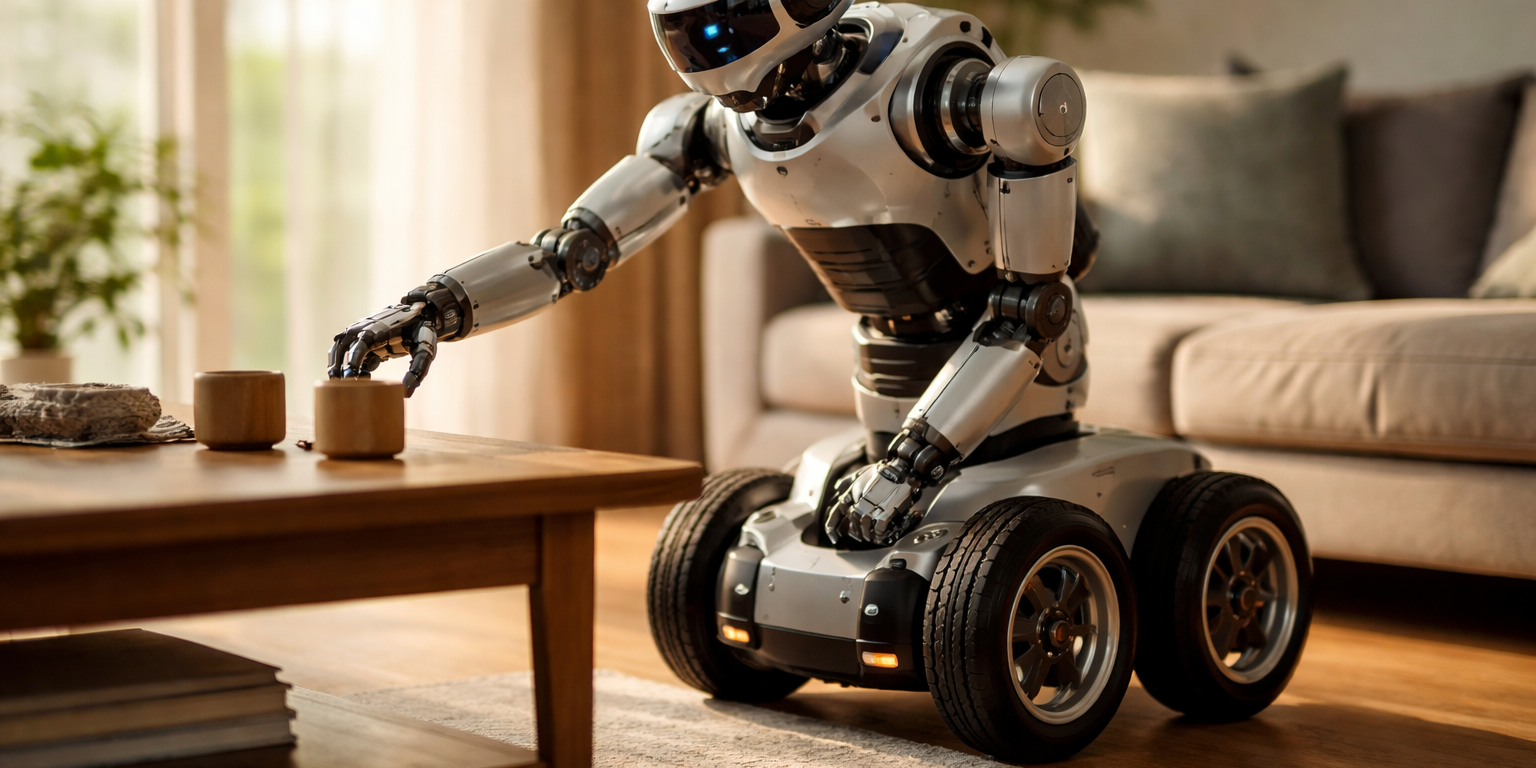
Weave Robotics detailed the technical specifications of Isaac, its wheeled mobile manipulator designed for domestic and office environments, adding another contender to the increasingly crowded market for assistive robotics. The system combines dual manipulator arms with a wheeled base, a configuration the company positions as more practical than bipedal humanoids for near-term deployment in structured indoor settings. While Weave has not disclosed unit pricing or availability timelines, the feature set suggests the platform targets light-duty tasks including object retrieval, surface manipulation, and potentially eldercare applications where mobility demands are predictable.
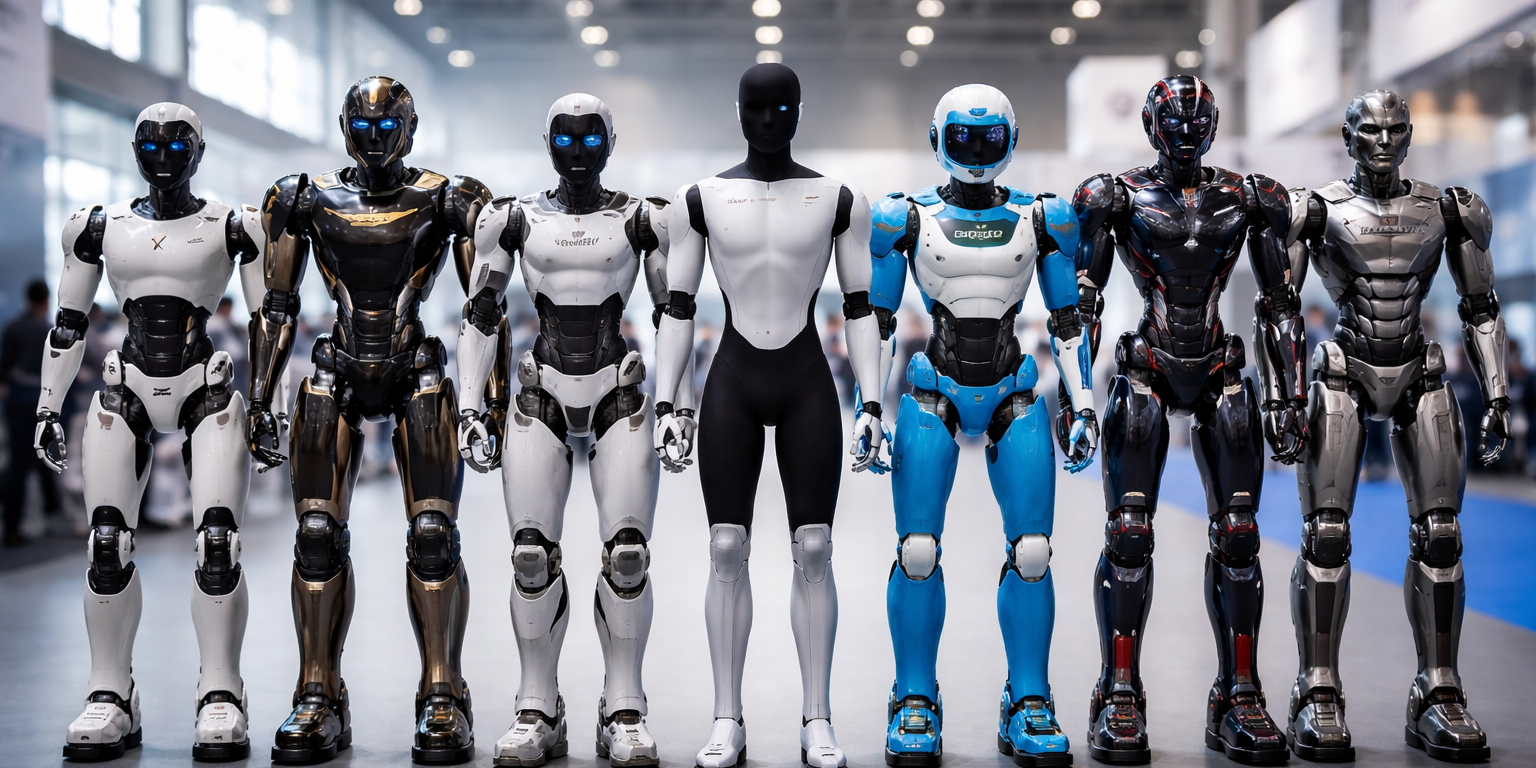
The decision to pursue wheels rather than legs reflects ongoing debate within the robotics community about optimal form factors for human environments. Bipedal humanoids from Figure AI, Agility Robotics, and 1X Technologies have captured significant venture funding and media attention over the past eighteen months, with proponents arguing that leg-based locomotion enables navigation of stairs, curbs, and irregular terrain designed for human anatomy. Yet wheeled systems offer immediate advantages in stability, energy efficiency, and control complexity. Hello Robot's Stretch platform demonstrated commercial viability in research and healthcare settings starting in 2022, while Toyota Research Institute continues to advance wheeled manipulation through its Punyo prototype. Weave appears to be betting that the majority of assistive tasks occur on level surfaces where wheels suffice, and that customers will prioritize reliability and cost over stair-climbing capability.
Weave Robotics itself remains relatively opaque in terms of funding history and leadership team. The company has not appeared in major venture funding announcements tracked by Crunchbase or PitchBook, suggesting either bootstrap financing, stealth-mode operation, or backing from non-traditional sources such as government grants or strategic corporate partners. This contrasts sharply with the humanoid space, where Figure AI raised $675 million in early 2024 at a $2.6 billion valuation, and Apptronik announced a $50 million Series A in September 2023. The absence of public funding data makes it difficult to assess Weave's runway or production capacity. Companies entering the mobile manipulation market typically require $20 million to $50 million in capital to reach pilot production volumes, based on precedents like Fetch Robotics and Savioke. Without clarity on financial backing, potential customers and integration partners may hesitate to commit to Isaac as a long-term platform.
The timing of Isaac's announcement coincides with a broader maturation in the manipulation hardware supply chain. Component costs for collaborative robot arms have declined approximately 30 percent since 2023, driven by Chinese suppliers including Aubo Robotics and Elite Robots entering the market with sub-$15,000 six-axis arms. Perception systems built on Intel RealSense or Azure Kinect depth cameras now cost under $200 per unit, while compute platforms like NVIDIA Jetson Orin provide sufficient edge processing for real-time object detection and grasp planning at roughly $600 per module. These economics enable smaller players like Weave to prototype systems that would have required multimillion-dollar budgets a decade ago. However, the same supply chain access lowers barriers for competitors, intensifying pressure on differentiation through software, user experience, and go-to-market strategy rather than hardware novelty alone. Investors evaluating Isaac will scrutinize Weave's software stack, dataset scale for training manipulation policies, and field test results far more than the mechanical design of the wheeled base or arm kinematics.
What to Watch: Monitor whether Weave Robotics announces pilot deployments or partnerships with senior living facilities, universities, or corporate campuses by the fourth quarter of 2026. Track pricing disclosures from competing wheeled platforms, particularly any commercial offerings from Toyota Research Institute or follow-on products from Hello Robot. Watch for technical publications or conference presentations from Weave's engineering team that would signal depth in manipulation learning or sensor fusion, key differentiators in this segment.