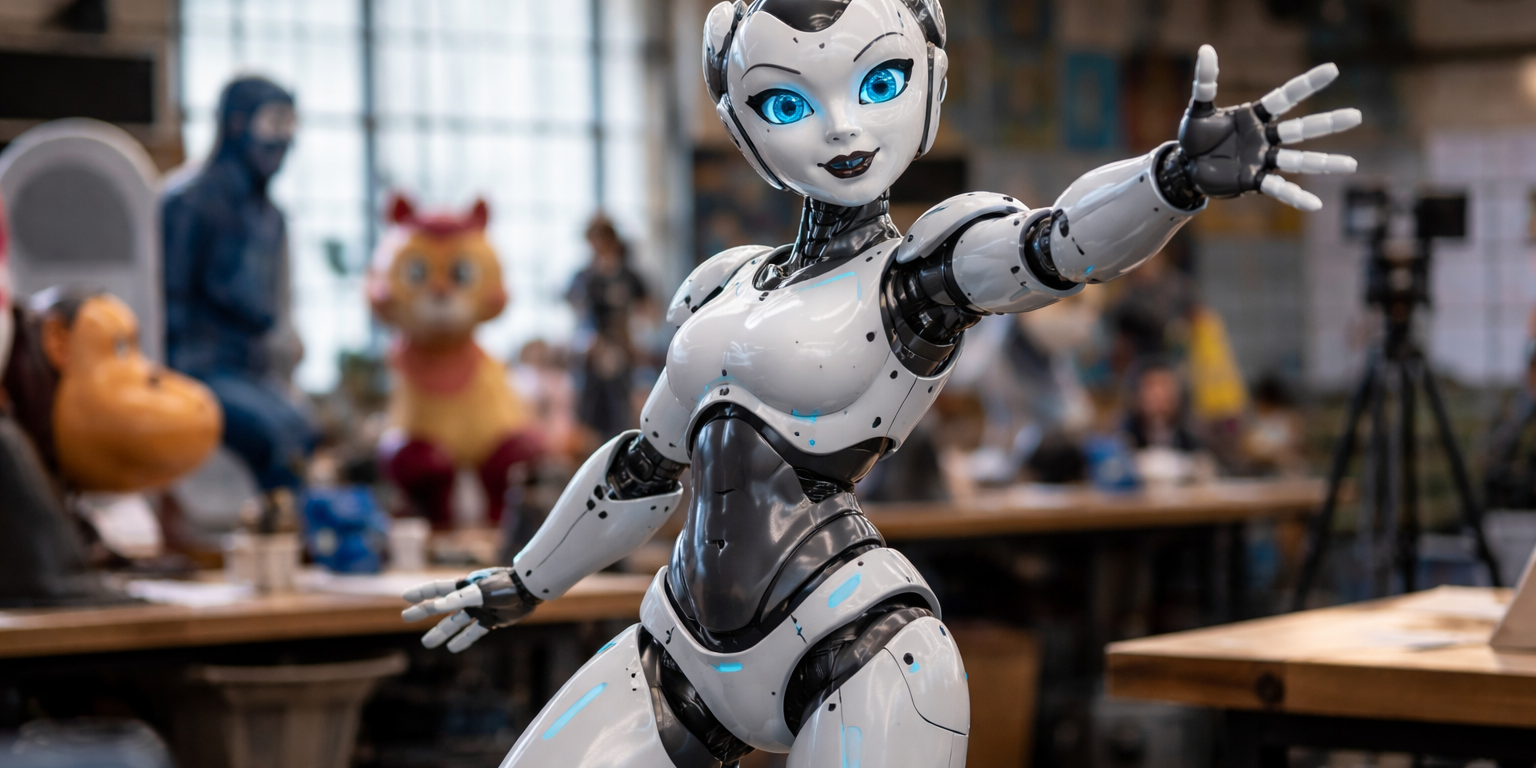
Xense Robotics occupied a 120-square-meter booth at ICRA 2026 in Vienna's Messe Wien Exhibition & Congress Center, making tactile sensing technology the centerpiece of its conference presence. The company demonstrated hardware and software integration for what it terms "tactile intelligence" during the three-day event that drew more than 8,400 robotics researchers, engineers, and industry executives from 62 countries. ICRA, organized by IEEE Robotics and Automation Society, represents the largest annual gathering focused exclusively on robotics research and commercial applications. Xense's booth placement in Hall B alongside companies including Universal Robots, ABB Robotics, and KUKA suggests the organizers view tactile sensing as core infrastructure rather than peripheral technology.
The company's focus on touch-based perception addresses a technical gap that has limited robot deployment in unstructured environments. Vision systems, even those enhanced with depth sensing and machine learning, struggle with contact-rich tasks like assembly, bin picking, and delicate object handling. Robots equipped only with cameras cannot detect slip, measure grip force with precision, or adapt to unexpected surface textures in real time. Tactile sensors embedded in robotic grippers and hands provide direct mechanical feedback that enables more reliable manipulation. This capability matters particularly for humanoid robots, which face the challenge of interacting with objects designed for human hands across infinite variations in size, shape, weight, and fragility. The technical challenge lies not just in sensor hardware but in processing the resulting data streams at speeds fast enough for closed-loop control during dynamic manipulation tasks.
Xense Robotics emerged from research conducted at Tsinghua University's Department of Mechanical Engineering and formally incorporated in 2021. The company's sensor technology employs arrays of miniaturized force-sensing elements that can be integrated into robot end effectors with various form factors. While the company has not disclosed specific technical specifications publicly, demonstrations at previous conferences have shown response times under 5 milliseconds and spatial resolution sufficient to detect texture differences in materials like fabric, paper, and metal. The sensors reportedly withstand repeated contact forces exceeding 50 newtons without degradation, addressing durability concerns that have plagued earlier tactile sensing attempts. Xense counts among its customers several major Chinese robotics manufacturers developing humanoid platforms, though the company has not confirmed specific partnerships or deployment volumes. Industry sources estimate that fewer than 2,000 robots worldwide currently operate with integrated tactile sensing arrays, suggesting the market remains in early stages despite growing technical interest.
The Vienna conference featured 1,247 peer-reviewed papers across topics including manipulation, human-robot interaction, learning-based control, and field robotics. Tactile sensing appeared as a component in 89 of these papers, up from 54 papers at ICRA 2025 in Atlanta and 31 papers at ICRA 2024 in Yokohama. This acceleration reflects broader industry momentum around embodied AI and physical intelligence. Companies including Tesla, Figure AI, Apptronik, and Sanctuary AI have all signaled intentions to deploy humanoid robots in commercial settings within the next 18 to 24 months. These platforms require sensing capabilities that go beyond computer vision to handle real-world variability. The technical challenge extends beyond hardware to include data processing, where tactile information must be fused with visual and proprioceptive data to inform real-time control decisions. Several research groups at ICRA 2026 presented work on neural network architectures specifically designed to process tactile data, indicating that software infrastructure for these sensors is advancing alongside the hardware itself.
Xense's conference presence also highlighted the growing role of Chinese companies in robotics component supply chains. While Western firms like Meta and OpenAI dominate large language model development and companies like Boston Dynamics and Agility Robotics lead in legged locomotion, Chinese manufacturers have captured significant market share in electric motors, motor controllers, harmonic drives, and increasingly in sensor systems. This geographic distribution of robotics capabilities creates both opportunities and complications for companies assembling complete robot systems. Export controls, particularly those implemented by the United States targeting advanced semiconductor technology and AI capabilities, have created uncertainty around cross-border robotics component supply. Tactile sensors generally fall below the technical thresholds that trigger export restrictions, but integration of these sensors with AI-based control systems could bring them into scope of future regulations. Several conference attendees from North American robotics companies noted they are evaluating multiple sensor suppliers to reduce dependence on any single geographic source.
What to Watch: Monitor humanoid robot announcements from Sanctuary AI and Apptronik in Q3 2026 for specifications on tactile sensing integration. Track whether Xense Robotics opens a North American office or announces distribution partnerships with US-based robotics component suppliers. Watch for technical papers from the Tsinghua University robotics group on tactile data processing architectures, which typically preview Xense's next-generation product features by 12 to 18 months. Follow whether ICRA 2027 in Singapore allocates dedicated workshop space for tactile sensing, which would signal IEEE's recognition of the technology as a distinct research domain.