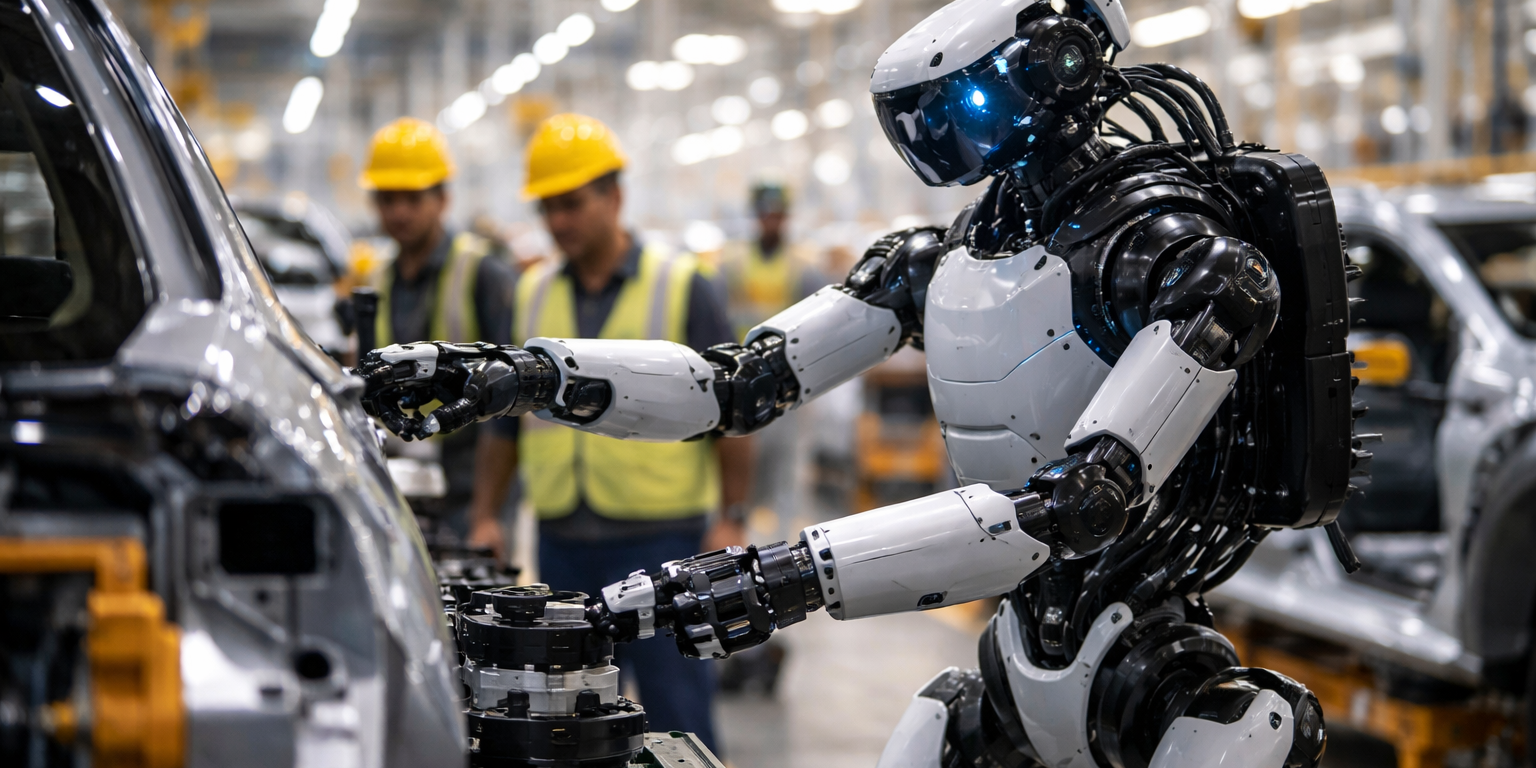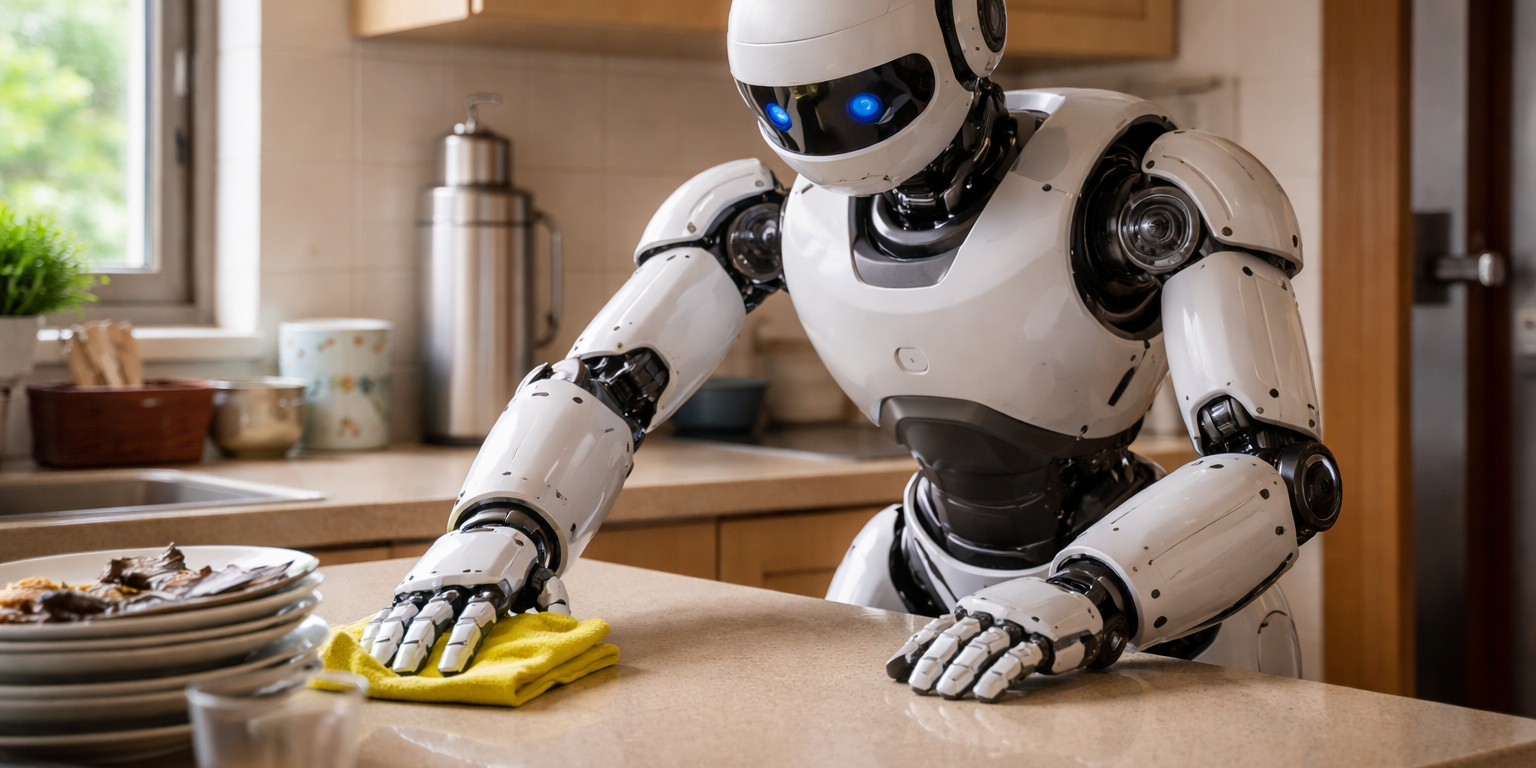
LimX Dynamics uploaded a three-minute continuous video of its Oli humanoid robot completing household chores without cuts, edits, or apparent human assistance—a technical milestone that matches demonstrations previously showcased only by Figure AI and a handful of American counterparts. The Shenzhen company released the footage in mid-July 2026, shortly after securing $200 million in Series B financing led by Sequoia China and Tencent Holdings. The video shows Oli clearing dishes from a countertop, wiping surfaces with a cloth, sorting items into bins, and folding fabric with bimanual dexterity that suggests real-time sensorimotor control rather than pre-programmed trajectories. Chinese humanoid robotics has often been dismissed as derivative or years behind Western labs. This demo challenges that assessment directly.
LimX Dynamics was founded in 2024 by former researchers from the Chinese Academy of Sciences and Tsinghua University's robotics program, initially focusing on quadruped platforms for logistics and inspection. The pivot to humanoids came in early 2025, when the team began developing Oli as a general-purpose biped designed specifically for unstructured home environments. Oli stands 170 centimeters tall, weighs 63 kilograms, and features 43 degrees of freedom across its body—comparable to Figure 02 and Sanctuary AI's Phoenix Gen 7. The robot uses a proprietary whole-body controller that integrates vision transformers for scene understanding with model-predictive control for dynamic balance. LimX has declined to specify whether Oli's onboard compute relies on NVIDIA Jetson modules or domestically produced alternatives, though industry sources suggest the company is hedging between both to navigate export control uncertainties. The household demo represents a technical jump from LimX's previous public showing in March 2026, when Oli walked across uneven terrain outdoors but performed no manipulation tasks.
The $200 million raise positions LimX among the most capitalized humanoid startups globally, trailing only Figure AI ($675 million Series B in early 2026) and 1X Technologies ($360 million cumulative). Sequoia China partner Neil Shen joined the LimX board as part of the deal and reportedly argued internally that humanoid robotics represents the next frontier for China's hardware manufacturing advantage, particularly as battery density and actuator costs continue to drop. Tencent's strategic interest stems from potential integration with its WeCom enterprise platform and smart home ecosystem, though neither investor has disclosed valuation terms. LimX has not announced commercial partnerships or pilot deployments, but CEO Dr. Zhang Wei told Chinese media in June that the company is in discussions with appliance manufacturers and eldercare facility operators about trials beginning in late 2026. The company operates a 4,000-square-meter facility in Shenzhen's Nanshan District and employs roughly 180 people, about half in hardware engineering and the remainder split between machine learning and manufacturing operations.
The competitive implications extend beyond U.S.-China rivalry. Tesla's Optimus program has shown assembly-line work but limited domestic task capability. Boston Dynamics has deliberately avoided the humanoid form factor. Agility Robotics' Digit excels in logistics but lacks fine manipulation. What separates Oli's demonstration from most promotional videos is the absence of jump cuts and the inclusion of recovery behaviors—at one point, Oli drops a small object, pauses, then successfully retrieves it from the floor. This suggests closed-loop control and real-time replanning rather than scripted choreography. Whether LimX can scale this capability beyond controlled demonstrations into variable real-world environments remains the critical question. Figure AI faced similar scrutiny after its own kitchen demo in 2025, and has since acknowledged that reliability in diverse home settings is the bottleneck, not individual task performance. The technical challenge is less about performing one task flawlessly and more about generalizing across thousands of household variations without constant human supervision or software patches.
What to Watch: LimX Dynamics is expected to reveal pricing and delivery timelines for Oli at the World Robot Conference in Beijing, scheduled for August 21-25, 2026. Figure AI will showcase its updated Figure 03 platform at the same event, creating a direct comparison opportunity. Monitor whether LimX announces partnerships with Chinese appliance giants like Midea or Haier, which would signal a path to domestic manufacturing scale. Finally, track U.S. export control developments around AI inference chips—any tightening of restrictions on NVIDIA or AMD hardware could force LimX and other Chinese robotics firms to rely entirely on domestic semiconductor alternatives, potentially widening or narrowing the capability gap depending on execution.