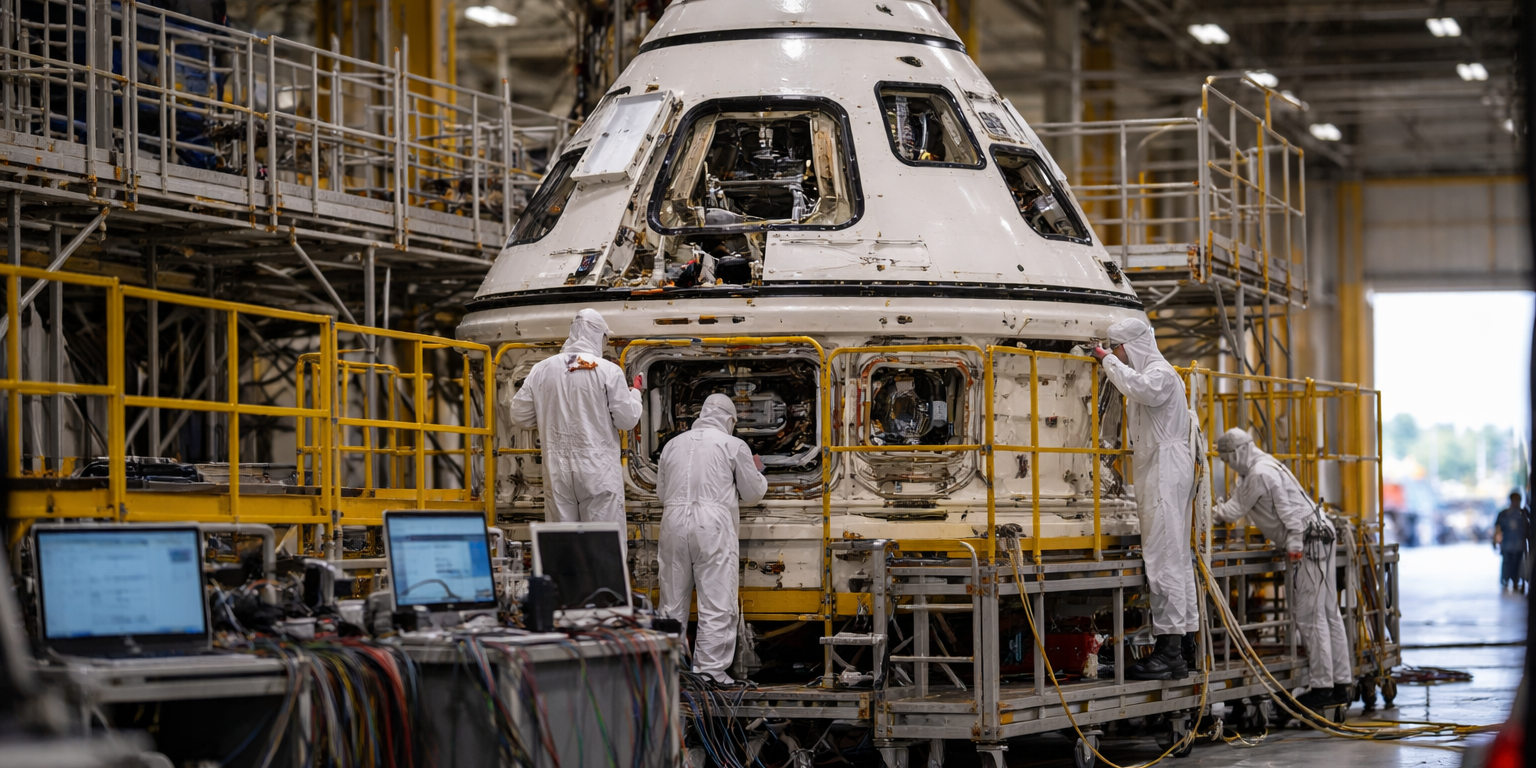
Voyager Technologies closed its acquisition of Astrobotic Technology this week, absorbing one of the aerospace industry's most experienced lunar robotics companies just weeks after NASA awarded Astrobotic two new Commercial Lunar Payload Services missions. The timing positions Voyager as a major player in lunar surface infrastructure at a moment when robotic lunar operations are transitioning from demonstration projects to sustained commercial activity. Astrobotic brings seven NASA CLPS task orders to Voyager's portfolio, including missions scheduled for 2027 and 2028 delivery windows. The acquisition terms were not disclosed, but the deal transfers ownership of Astrobotic's Peregrine and Griffin lunar lander platforms, the company's Mission Control Center in Pittsburgh, and roughly 300 employees specializing in guidance, navigation, control systems, and payload integration for lunar surface operations. Astrobotic generated approximately $110 million in contract revenue over the past eighteen months, primarily from NASA and Department of Defense programs.
Voyager, a holding company focused on space systems and national security technologies, has been assembling a vertical stack of capabilities across satellite manufacturing, launch services, and now lunar surface operations. The firm acquired satellite manufacturer Terran Orbital in early 2025 and holds stakes in launch provider ABL Space Systems and communications network E-Space. Astrobotic adds surface mobility and robotic operations to that portfolio, creating what Voyager executives describe as an end-to-end lunar logistics capability from Earth orbit through landing, surface operations, and payload deployment. The company now controls hardware capable of delivering up to 650 kilograms to the lunar surface via Griffin, Astrobotic's larger lander variant designed for NASA's VIPER rover mission, which remains under contract despite programmatic delays. Peregrine, Astrobotic's smaller lander, flew its first mission in January 2024 but suffered a propulsion system anomaly hours after separation from its launch vehicle. The spacecraft never reached the Moon.
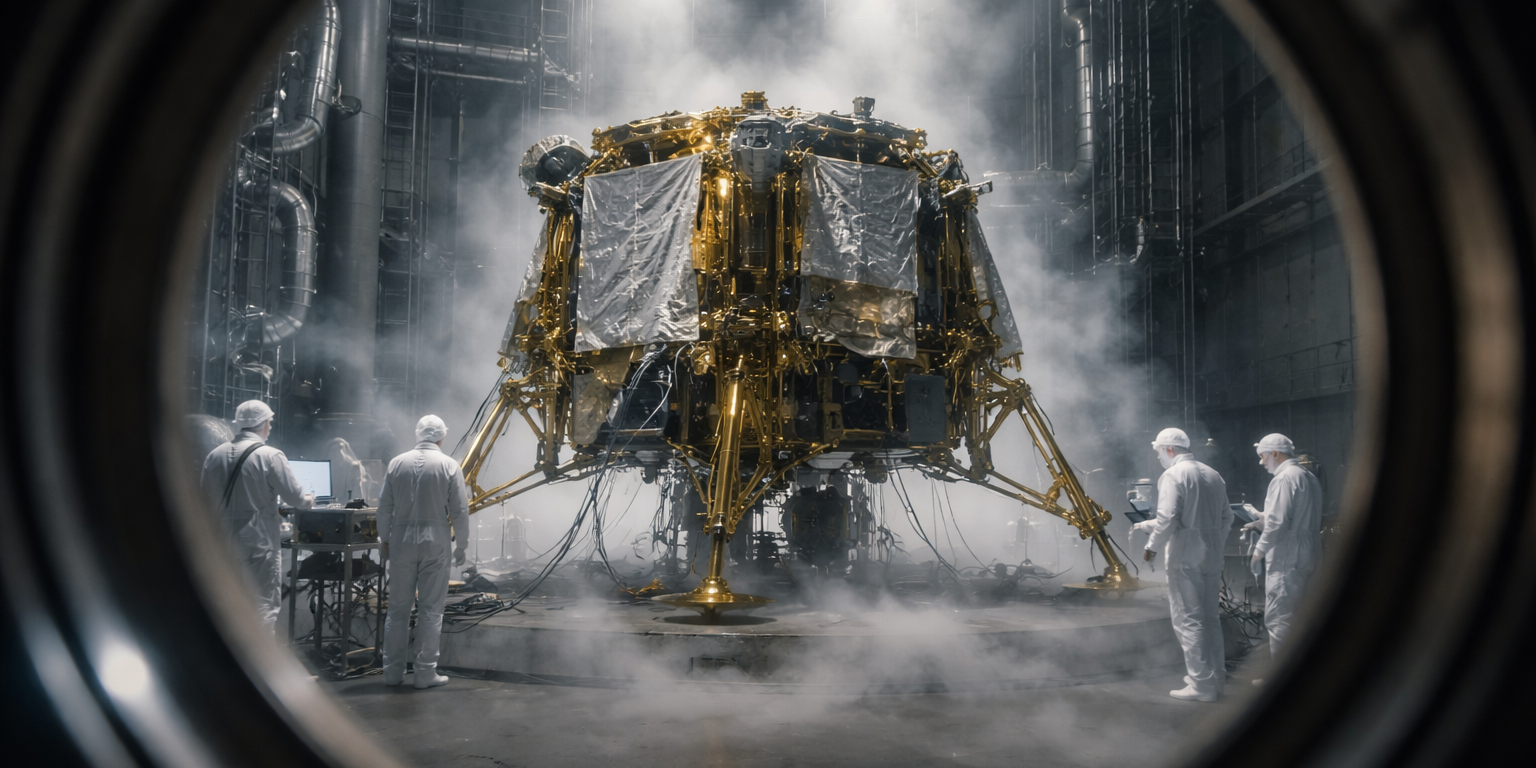
The two recent NASA awards bring immediate near-term business. One task order covers delivery of scientific instruments to the lunar south polar region in 2027, targeting a location within five degrees of the Moon's south pole where ice deposits may exist in permanently shadowed craters. The second mission will transport a drilling system and sample analysis payload to a mid-latitude site in 2028, part of NASA's effort to characterize regolith properties for in-situ resource utilization. Both missions fly on Griffin landers, which Astrobotic has been developing in parallel with Peregrine since 2016. Griffin stands approximately 4.5 meters tall and uses a throttleable main engine capable of precise touchdown control, a critical requirement for high-value payloads and uneven terrain. Astrobotic has performed more than 200 hot-fire tests of the propulsion system at NASA's Stennis Space Center and completed thermal vacuum testing of the integrated lander structure. The company's engineers developed a terrain-relative navigation system that correlates onboard camera data with pre-mission orbital reconnaissance to identify hazards and divert to safe landing zones autonomously during final descent.
For the robotics industry, this acquisition underscores a structural shift in how lunar missions are capitalized and executed. Astrobotic raised roughly $200 million in venture funding between 2008 and 2023, a long development timeline that tested investor patience even as NASA's CLPS program provided steady contract revenue. Voyager's acquisition offers an alternative model: strategic buyers with adjacent capabilities absorbing technical teams and hardware platforms, then leveraging government contracts to fund continued development while pursuing commercial applications. Several lunar logistics companies are watching this closely. Intuitive Machines, which successfully landed its Nova-C spacecraft in February 2024, remains publicly traded but has seen share price volatility tied to mission schedules and contract announcements. Firefly Aerospace operates as a subsidiary of private equity-backed Firefly parent company and recently won its own CLPS awards. The industry is sorting itself into strategic buyers with deep balance sheets versus pure-play lunar companies seeking either acquisition exits or sustained profitability from government and commercial customers. Astrobotic's robotics expertise extends beyond landers into payload accommodations, power distribution, thermal control in extreme lunar environments, and dust mitigation systems that protect sensitive instruments during landing plume interaction with regolith.
What to Watch: Track Voyager's integration plans for Astrobotic's Mission Control operations in Pittsburgh, particularly whether the facility expands to support Voyager's satellite constellation management. Monitor NASA's release of the next CLPS solicitation, expected in late 2026, to see if Voyager bids Griffin landers for polar exploration missions tied to Artemis program infrastructure. Watch for Astrobotic's next Peregrine launch manifest, which will test modifications to the propulsion system following the 2024 anomaly and determine whether the smaller lander remains viable for commercial customers.