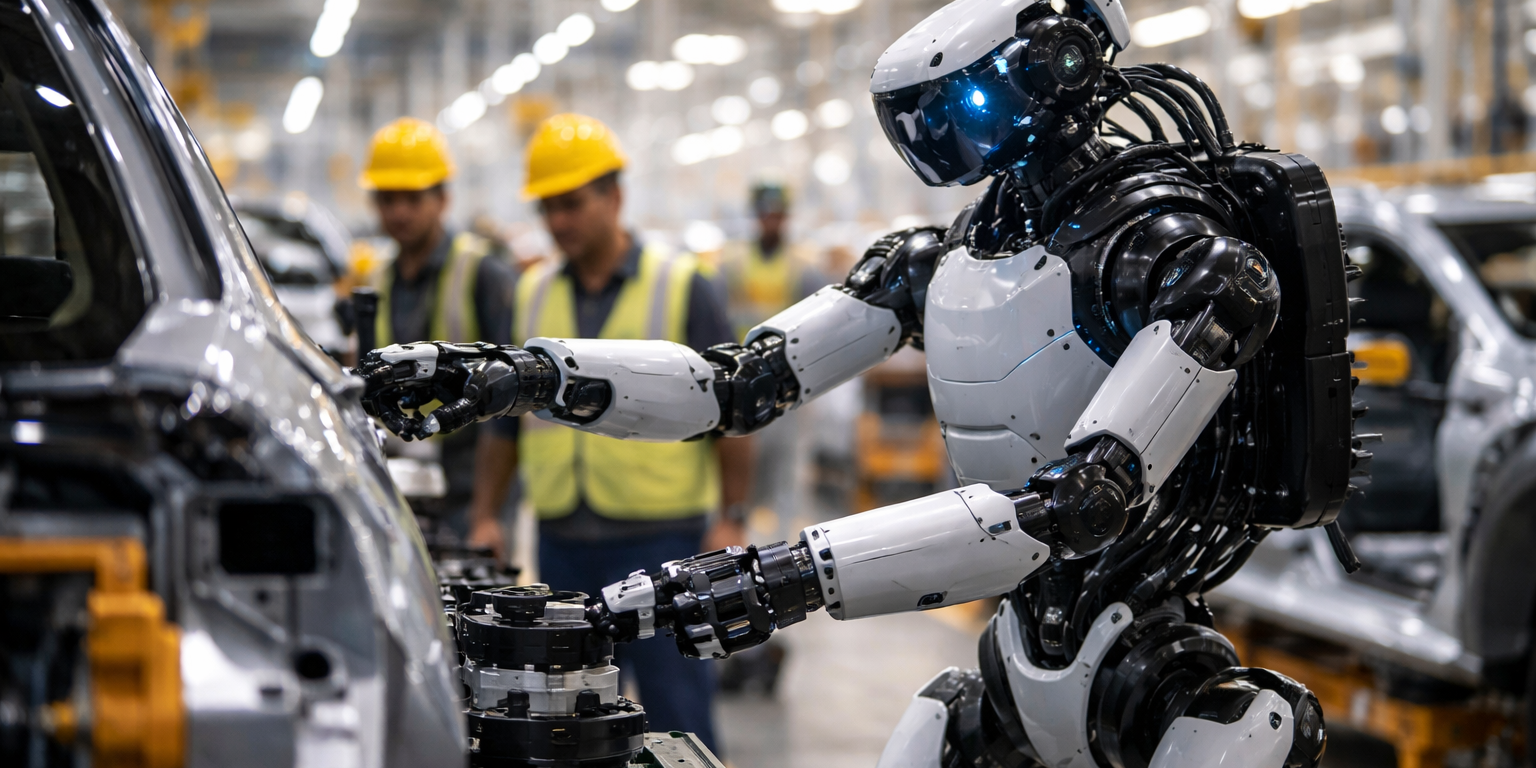
Federal agencies may soon face strict limitations on Chinese ground robots under legislation that targets everything from humanoid platforms to quadruped inspection units. The American Security Robotics Act, introduced in March by Senator Tom Cotton of Arkansas and Senate Majority Leader Chuck Schumer of New York alongside Representative Elise Stefanik of New York's 21st district, would prohibit government purchase and operation of Chinese-manufactured mobile robotics across multiple form factors. The bipartisan bill arrives just days after the Federal Communications Commission imposed stricter authorization requirements on foreign-made routers and network switches, suggesting coordinated action across technology categories that policymakers now classify as potential national security vulnerabilities. Unlike previous restrictions that focused primarily on stationary infrastructure or airborne systems, this legislation explicitly addresses terrestrial mobile platforms capable of autonomous or semi-autonomous operation in sensitive environments. The timing indicates lawmakers view ground robotics as infrastructure requiring the same scrutiny previously applied to telecommunications gear from Huawei and aerial drones from DJI.
The legislative push reflects concerns that have been building since at least 2019, when the Defense Department began restricting procurement of commercial drones manufactured in adversarial nations. That initial focus on aerial platforms expanded gradually as quadruped robots from companies including Unitree and other Chinese manufacturers began appearing in commercial catalogs at price points 50 to 70 percent below American alternatives. Boston Dynamics' Spot quadruped lists at approximately $74,500 per unit, while comparable Chinese platforms have entered the market below $3,000, creating pricing pressure that makes them attractive for budget-constrained agencies. Federal law enforcement, border security units, and infrastructure inspection teams have piloted various ground robot platforms over the past three years, though the exact number of Chinese-made units currently deployed across government agencies remains unclear. The Department of Homeland Security has not published comprehensive procurement data breaking down ground robot origins by manufacturer or country. Several state and local agencies have acknowledged testing lower-cost Chinese quadrupeds for perimeter monitoring and hazardous material response, creating a potential cascade of compliance issues if federal restrictions trickle down to agencies receiving federal funding or operating under federal guidelines.
The legislation does not specify replacement timelines for existing Chinese robots already deployed in federal facilities, nor does it allocate funding for agencies to swap out affected platforms. This omission creates significant implementation questions, particularly for agencies that have integrated Chinese robots into operational workflows for tasks like tunnel inspection, radiation monitoring in nuclear facilities, or search operations in confined spaces. Ghost Robotics, which manufactures its Vision 60 quadruped in Philadelphia, has supplied units to the Air Force for base security applications. Agility Robotics operates production facilities in Oregon for its Digit humanoid platform, which several logistics companies have piloted for warehouse operations. Boston Dynamics produces Spot and its wheeled Stretch robot at its Waltham, Massachusetts headquarters, maintaining exclusive U.S. manufacturing despite multiple offshore inquiries. These three companies represent the primary domestic alternatives for federal agencies seeking to comply with potential new restrictions, though their combined production capacity may face strain if demand surges suddenly. One industry executive speaking off the record estimated current U.S. quadruped production capacity at fewer than 3,000 units annually across all manufacturers, a figure that could prove insufficient if federal, state, and federally-funded local agencies simultaneously shift procurement away from Chinese suppliers.
The broader implications extend beyond immediate government contracts into venture capital patterns and startup formation. Defense-focused robotics startups raised approximately $380 million across 17 deals in 2024, according to PitchBook data, with roughly half that capital flowing to companies emphasizing domestic manufacturing and supply chain transparency. The American Security Robotics Act, if enacted, would effectively guarantee these companies exclusive access to federal procurement channels worth an estimated $2.1 billion through 2028, based on Congressional Budget Office projections for ground robotics spending across defense, homeland security, and infrastructure agencies. That guaranteed market could accelerate development timelines for emerging platforms, particularly in the humanoid category where Figure, Apptronik, and Sanctuary AI compete with Chinese manufacturers including Fourier Intelligence and UBTech. The Defense Innovation Unit has issued several solicitations specifically requesting humanoid platforms for logistics applications on military bases, with awards expected in the third quarter. Those contracts will likely include explicit supply chain requirements that exclude Chinese components even at the subassembly level, going beyond the bill's focus on final assembly location. This component-level scrutiny could complicate compliance, as many U.S. robot manufacturers source actuators, sensors, and computing modules from Asian suppliers with complex multi-tier manufacturing networks.
What to Watch: Congressional markup sessions in the House Armed Services Committee and Senate Commerce Committee will reveal whether the bill gains provisions for replacement funding or extended compliance deadlines. Boston Dynamics, Ghost Robotics, and Agility Robotics may announce production capacity expansions or new federal contract wins within 60 days as agencies anticipate passage. The Defense Innovation Unit's humanoid solicitation awards, expected by September, will signal whether supply chain requirements have already tightened ahead of formal legislation. State and local agencies receiving federal homeland security grants may begin issuing guidance on Chinese robotics procurement even before federal rules take effect.