A human operator now sits inside a 2.8-meter walking machine that switches gaits like a Transformer toy, courtesy of Unitree Robotics' latest engineering gambit. The GD01 mecha puts its pilot in an open cockpit embedded in the robot's torso, controlling a 500-kilogram frame that walks upright or drops to all fours within seconds. Unitree demonstrated the transformation publicly as part of its runway toward a $7 billion initial public offering, staking the company's valuation not just on autonomous robots but on human-machine hybrids that hand control back to flesh and blood. Where competitors chase fully autonomous humanoids for factories and warehouses, Unitree is betting some applications demand human judgment wrapped in robotic strength and reach.
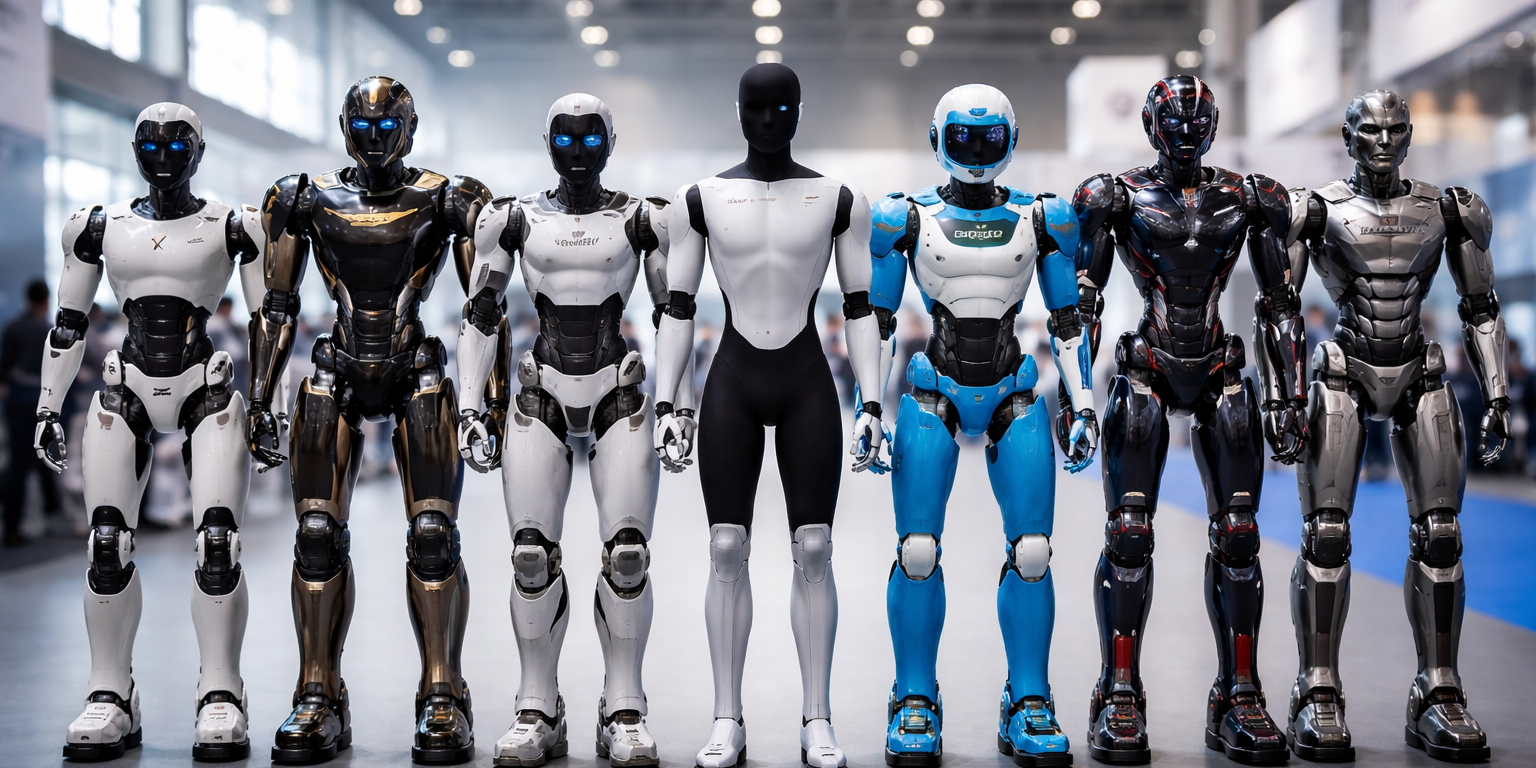
The Hangzhou-based manufacturer built its reputation on affordable quadruped robots, undercutting Boston Dynamics' Spot with models priced for universities and hobbyists rather than enterprise budgets. Its G1 humanoid, launched at roughly $16,000, claims volume sales that exceed Tesla's Optimus in absolute units shipped, though Tesla's robot remains in limited production ahead of broader deployment. Unitree has moved over 30,000 units across its product line since 2017, a figure that includes dog-like robots popular in research labs and promotional stunts but also signals manufacturing scale Chinese robotics firms now command. The GD01 marks a pivot toward spectacle and differentiation, pursuing a category where Boston Dynamics, Tesla, Figure, and Agility Robotics have no direct answer. Piloted mechs inhabit a narrow design space between industrial exoskeletons like Sarcos Robotics' Guardian XO and purely teleoperated systems, giving operators mobility and strength amplification without full autonomy's unpredictability.
Unitree has not disclosed intended applications for the GD01, payload capacity, battery endurance, or unit pricing, leaving analysts to speculate whether the machine targets disaster response, heavy construction, military logistics, or simply serves as a technology demonstrator. The transformable design suggests scenarios where bipedal navigation through tight spaces transitions to quadrupedal stability for heavy lifting or traverse across uneven ground. Japan's Skeletonics and South Korea's Hankook Mirae Technology have built piloted mechs, though neither achieved commercial scale or moved beyond exhibitions. The difference this time may be Unitree's manufacturing infrastructure and its willingness to price aggressively, traits that allowed it to flood the market with sub-$3,000 quadrupeds when competitors charged five figures. If Unitree applies similar cost discipline to the GD01, niche markets like film production, theme parks, or search-and-rescue teams might justify small production runs that validate the concept without requiring mass adoption.
The IPO timing places Unitree in a crowded field of robotics companies seeking public market capital as venture funding tightens. Agility Robotics raised $150 million in 2023 at a reported $1.5 billion valuation for its bipedal Digit robot, targeting logistics automation with a business model built around leasing rather than outright sales. Figure AI secured $675 million earlier this year at a $2.6 billion valuation, pursuing humanoids for manufacturing with backing from Microsoft, Nvidia, and Amazon. Tesla's Optimus looms over all competitors despite limited shipments, because Elon Musk's projections position humanoids as a larger business than automotive within a decade. Unitree's $7 billion target valuation exceeds these peers despite operating in a market where no company has yet demonstrated sustainable revenue from humanoid robots at scale. The GD01 functions as a narrative device, proof that Unitree engineers think beyond commodity form factors even if piloted mechs never ship in meaningful volume. For IPO roadshows, the mecha offers a visual argument that the company possesses technical breadth and risk tolerance, qualities growth investors favor over incremental product improvements.
What to Watch: Unitree's IPO prospectus will reveal whether the GD01 has development budget allocated beyond the prototype stage or remains a marketing exercise. Track whether any search-and-rescue agencies or construction firms commit to pilot programs within the next 90 days, signaling real demand for piloted exoskeletons. Monitor competing humanoid robot makers for responses, particularly whether Boston Dynamics or Tesla demonstrate human-in-the-loop control modes that blur the line between teleoperation and piloted systems. Finally, observe unit sales and pricing for Unitree's G1 humanoid through Q4 2024, which will indicate whether claims of outselling Tesla hold under independent verification and whether the company's cost advantage sustains as production scales.