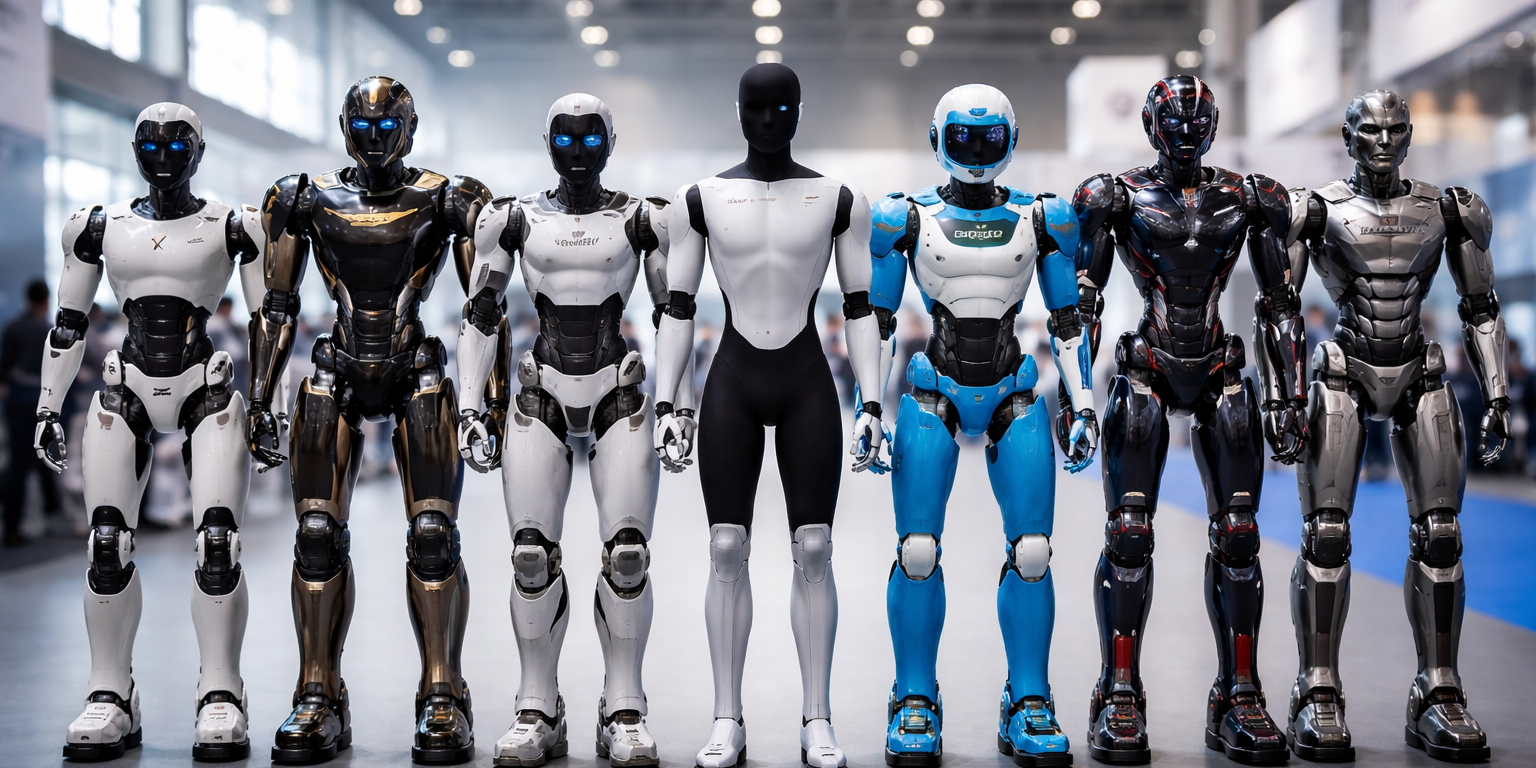
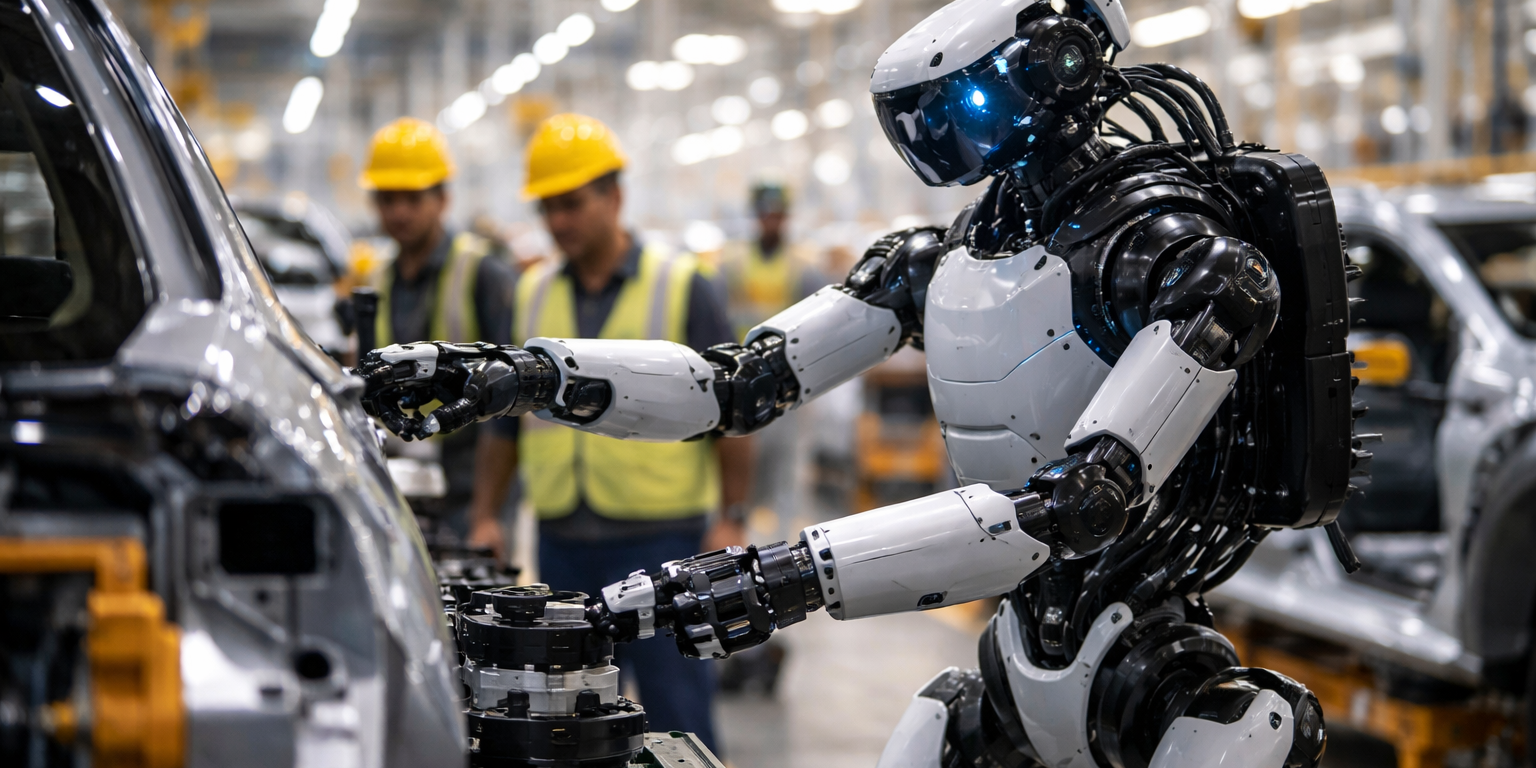
The production line at Figure's Sunnyvale facility churns out 55 humanoid robots each week, according to specifications disclosed in an IEEE Spectrum video roundup. That rate marks a departure from the batch-manufacturing approach typical of industrial robotics, where units move through assembly in discrete groups rather than continuous flow. Figure CEO Brett Adcock has anchored the company's strategy on automotive-style production lines designed to drive unit costs down through volume. The weekly figure, confirmed through company documentation reviewed by IEEE Spectrum, suggests Figure has moved beyond prototype assembly into repeatable manufacturing. No pricing per unit was disclosed, though industry analysts peg humanoid robot costs between $50,000 and $150,000 depending on capabilities and production scale. The company has raised more than $750 million from investors including OpenAI, Microsoft, NVIDIA, Parkway Venture Capital, and Jeff Bezos. That capital base funds both engineering development and manufacturing infrastructure buildout. Figure has stated it aims to place robots in commercial settings by 2025, with warehouse logistics and manufacturing assembly lines identified as initial deployment targets.
The production milestone carries weight because it demonstrates sustained output rather than one-time batch capacity. Previous humanoid announcements have emphasized pilot units or limited production runs. Figure's 55-per-week pace translates to roughly 2,800 robots annually if maintained consistently—a figure that remains modest compared to automotive assembly lines producing thousands of vehicles weekly, but substantial within a robotics category still establishing its commercial credentials. Traditional industrial robot manufacturers like FANUC and ABB produce units in the tens of thousands annually, though those designs reflect decades of refinement and proven use cases. Humanoid robots face a different calculus. Their human-like form factor promises versatility in environments designed for human workers, but that flexibility comes with mechanical complexity, higher costs, and unproven reliability compared to specialized industrial arms or mobile robots. Figure competes directly with 1X, which has also ramped production and secured deployment agreements with logistics providers. Tesla's Optimus program represents the category's highest-profile entrant, though production figures remain undisclosed. Elon Musk has claimed Tesla could eventually manufacture millions of Optimus units annually, leveraging automotive supply chains and factory expertise. Chinese manufacturers including Unitree and Fourier Intelligence have announced production expansions as well, with Unitree listing a humanoid model at approximately $16,000—a price point that would disrupt the market if capabilities match marketing claims.
The technical challenge embedded in Figure's production rate lies in quality control and component sourcing. Humanoid robots integrate motors, sensors, batteries, computing hardware, and sophisticated control systems. Supply chain constraints for high-torque actuators and vision sensors have limited production scalability across the robotics industry. Figure has not disclosed whether its 55-unit weekly pace reflects internal component production or reliance on third-party suppliers. The distinction matters because vertical integration improves margin control but requires substantial capital investment, while outsourcing accelerates initial scaling but introduces dependencies on supplier capacity and quality. Boston Dynamics, which pioneered legged robotics with Atlas and commercialized Spot, scaled production gradually over years before Hyundai's acquisition brought automotive manufacturing discipline. That timeline offers a reference point: moving from laboratory prototypes to thousands of fielded units demands not just engineering refinement but also service networks, software update infrastructure, and customer support operations. Figure's production figures say nothing about deployment rates. Manufacturing 2,800 robots annually means little if customers cannot integrate them effectively or if total cost of ownership exceeds alternatives. Early humanoid deployments will likely focus on controlled environments—warehouse aisles with predictable layouts, manufacturing cells with defined tasks—rather than unstructured settings. Success in those initial applications will determine whether production scales to tens of thousands of units or stalls as a niche technology.
The broader industry trajectory suggests humanoid robotics is transitioning from research curiosity to commercial reality, though the timeline remains uncertain. Labor shortages in logistics and manufacturing have intensified interest in automation alternatives. Amazon operates more than 750,000 mobile robots across its fulfillment network, demonstrating that warehouse operators will adopt robotics at scale when economics justify deployment. Humanoids offer theoretical advantages over specialized systems because a single platform could theoretically perform diverse tasks—unloading trucks, picking items, assembling products—without requiring custom infrastructure. That versatility remains largely theoretical. Current demonstrations show humanoids performing individual tasks under controlled conditions, not the sustained multi-task operation that would justify their higher cost relative to purpose-built systems. Figure's production rate indicates confidence that commercial customers will materialize, but public deployment agreements remain scarce across the humanoid category. Investors have poured billions into humanoid startups based on long-term potential rather than near-term revenue. Figure, Apptronik, Sanctuary AI, and others have raised substantial funding rounds in the past 24 months. That capital sustains engineering teams and manufacturing buildouts, but it also creates pressure to demonstrate commercial traction. Production capacity means little without paying customers. The next 18 months will reveal whether the humanoid robotics sector can transition from funded development to sustainable business models.
What to Watch: Figure's first announced commercial pilot deployments should arrive within the next six months if the company maintains its stated 2025 timeline. Watch for pricing disclosures from any humanoid manufacturer, which will clarify whether these systems can compete economically with incumbent automation solutions. Track production announcements from Tesla's Optimus program and 1X, both of which have indicated scaling timelines. Monitor workforce impact studies from early deployment sites to assess whether humanoids deliver productivity gains sufficient to justify capital expenditure.