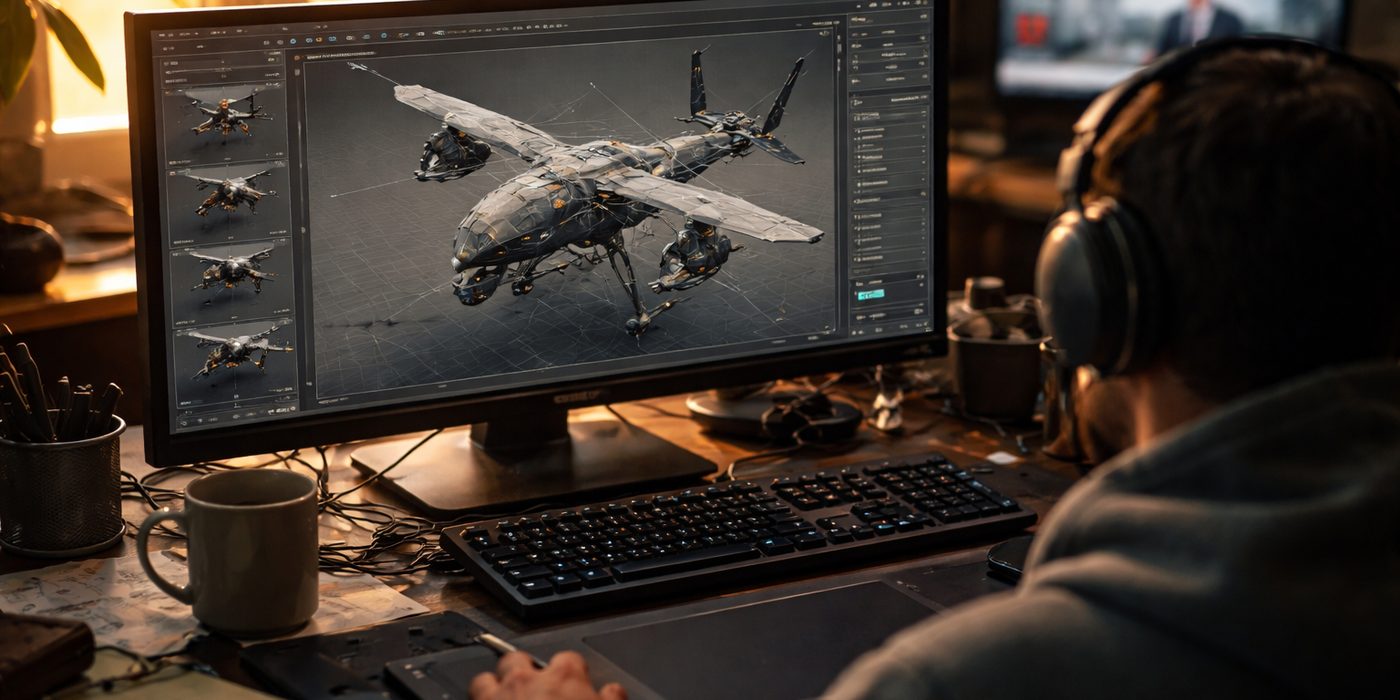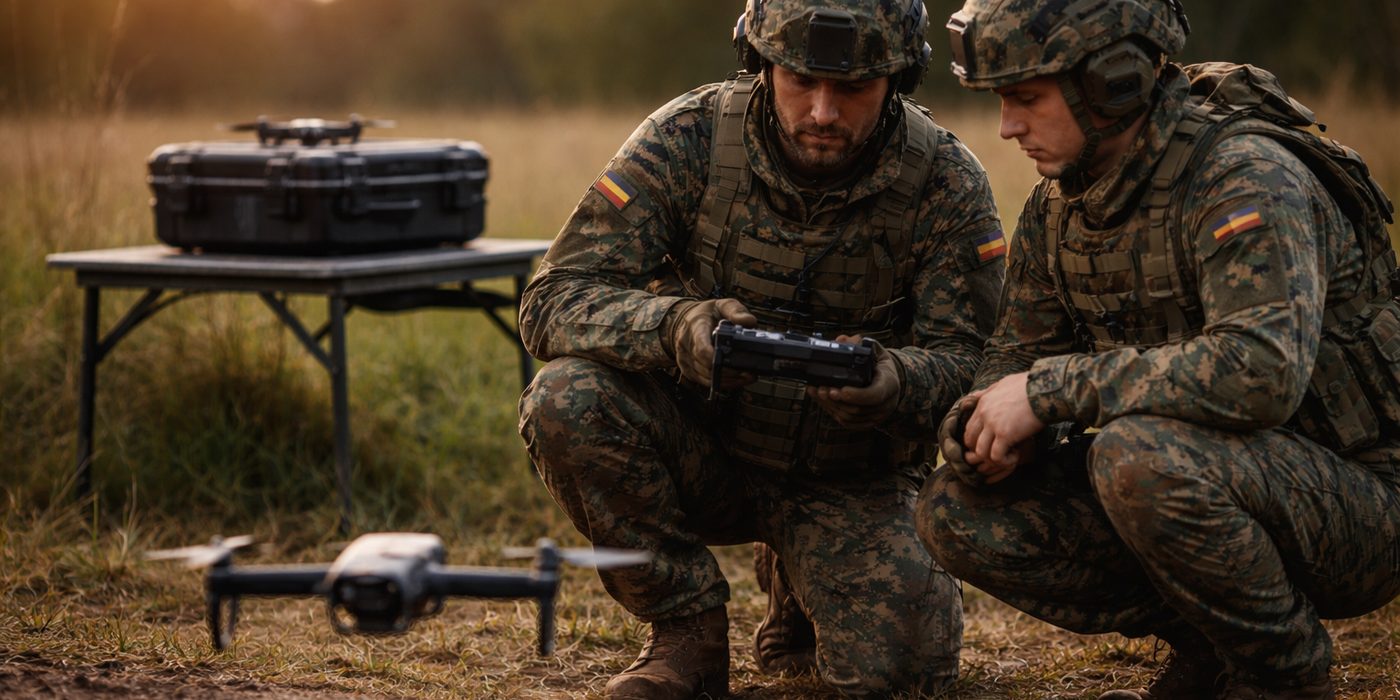
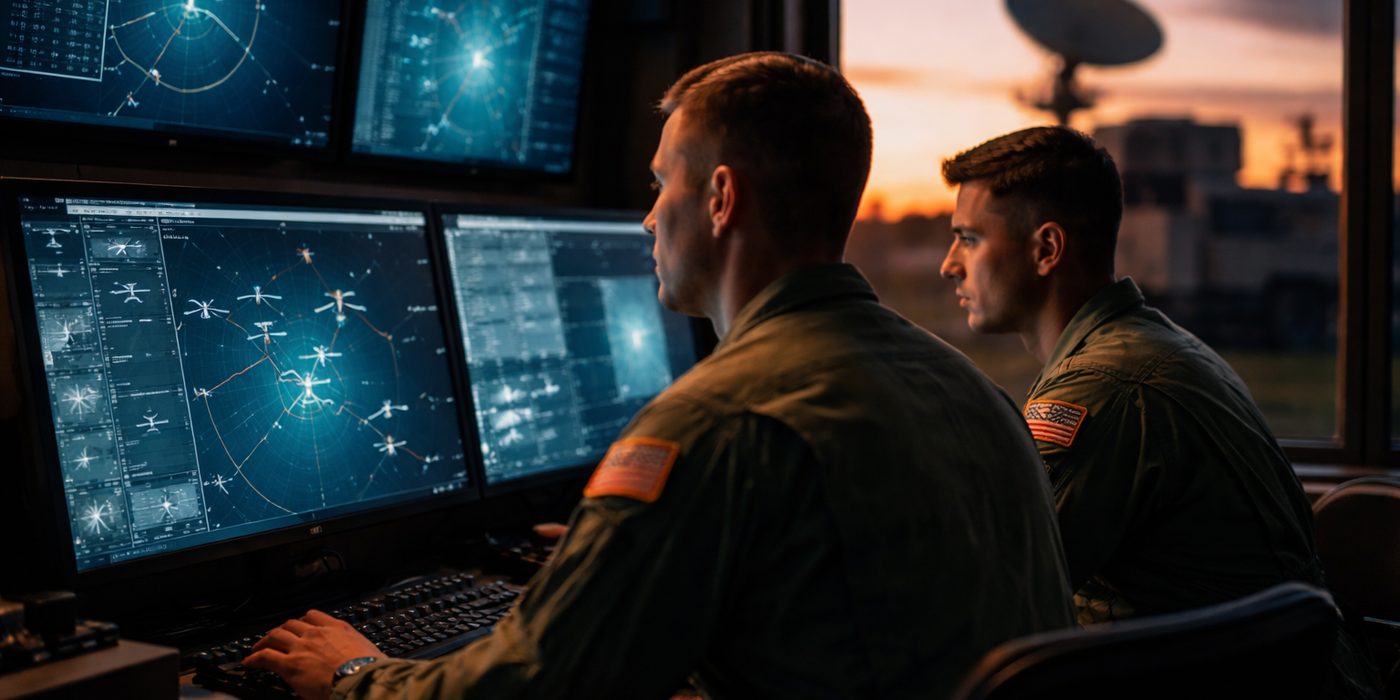
The most telling line in the Air Force's 2026 strategy isn't about a new aircraft. It's about what the service intends to see, and how fast it intends to decide. Sensors, artificial intelligence, and autonomous systems now anchor the service's near-term priorities, and counter-drone capability sits at the top of that stack. TechRadar's reporting on the strategy frames it as a pivot toward detection and air defense, and the ordering matters. A service that spent decades defining itself by the platforms it flies is now publicly ranking the perception layer above them.
The logic is easy to trace. Low-cost uncrewed aircraft have become the defining nuisance of modern air operations, forcing militaries to weigh missiles that cost hundreds of thousands of dollars against targets that cost a few thousand. Air defense built for fast jets and cruise missiles struggles with small, slow, low-altitude objects that blend into clutter. Detecting them is the first failure point, long before any question of how to stop them. That is why sensing, not interception, leads the strategy. You cannot defeat what you cannot reliably find, classify, and track, and doing so at scale requires machine assistance because human operators cannot watch every radar return and camera feed at once.
For the robotics industry, the details of that shift matter more than the headline. Counter-drone work is a systems problem spanning radar, electro-optical and infrared cameras, radio-frequency detection, acoustic arrays, sensor fusion software, and the effectors that act on the resulting tracks. Many of those effectors are themselves autonomous or semi-autonomous, from interceptor drones to turreted systems that cue on machine-generated targets. Companies that already build perception stacks for mobile robots hold transferable expertise: simultaneous localization and mapping, multi-sensor fusion, onboard inference on constrained power budgets. The difference is the operating environment, which demands ruggedization, electromagnetic resilience, and tolerance for adversaries actively trying to deceive the sensors.
There is also a procurement story underneath the technology story. A strategy that prizes sensors and autonomy favors modular, software-defined hardware that can be upgraded on commercial timescales rather than the decade-long cycles typical of crewed aircraft. That opens room for smaller, faster vendors alongside the traditional primes, and it raises the premium on open interfaces so that a new sensor or algorithm can slot into an existing network without a full redesign. Integration, not invention, becomes the scarce skill. The firms best positioned are those that can prove their autonomy performs under degraded communications and contested conditions, since that is the environment the service expects to operate in. Evidence of that kind, gathered in exercises and field trials, will likely shape who wins the contracts that follow.
What to Watch Track how the strategy translates into dollars: the Air Force's fiscal 2027 budget documents and any reprogramming requests will show whether counter-drone and sensor lines actually grow. Watch for announcements of competitive demonstrations or experimentation events where vendors field detection and interception systems against drone swarms, since results there tend to precede contract awards. Pay attention to the traditional primes and venture-backed autonomy firms alike for partnership announcements around sensor fusion and edge AI, which would indicate where integration work is consolidating. Finally, monitor how the service defines human oversight requirements for automated tracking and engagement, because those rules will determine how much autonomy suppliers are allowed to ship.