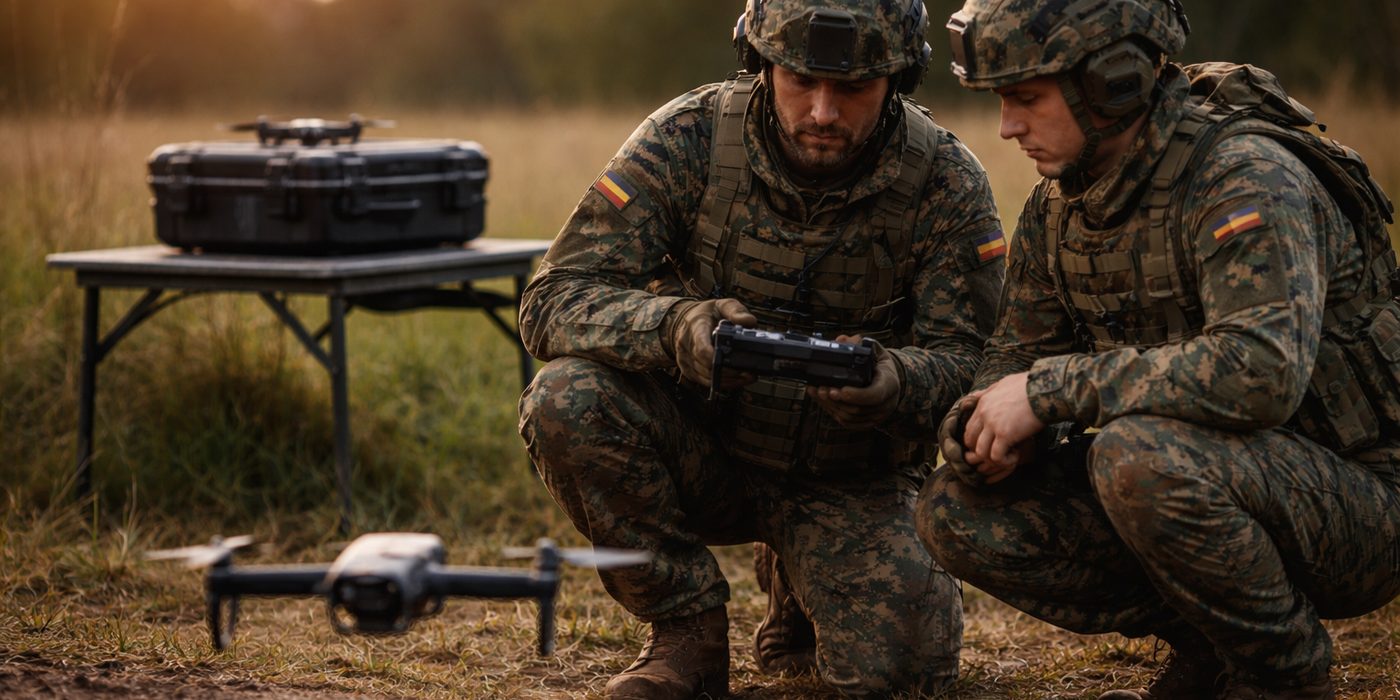
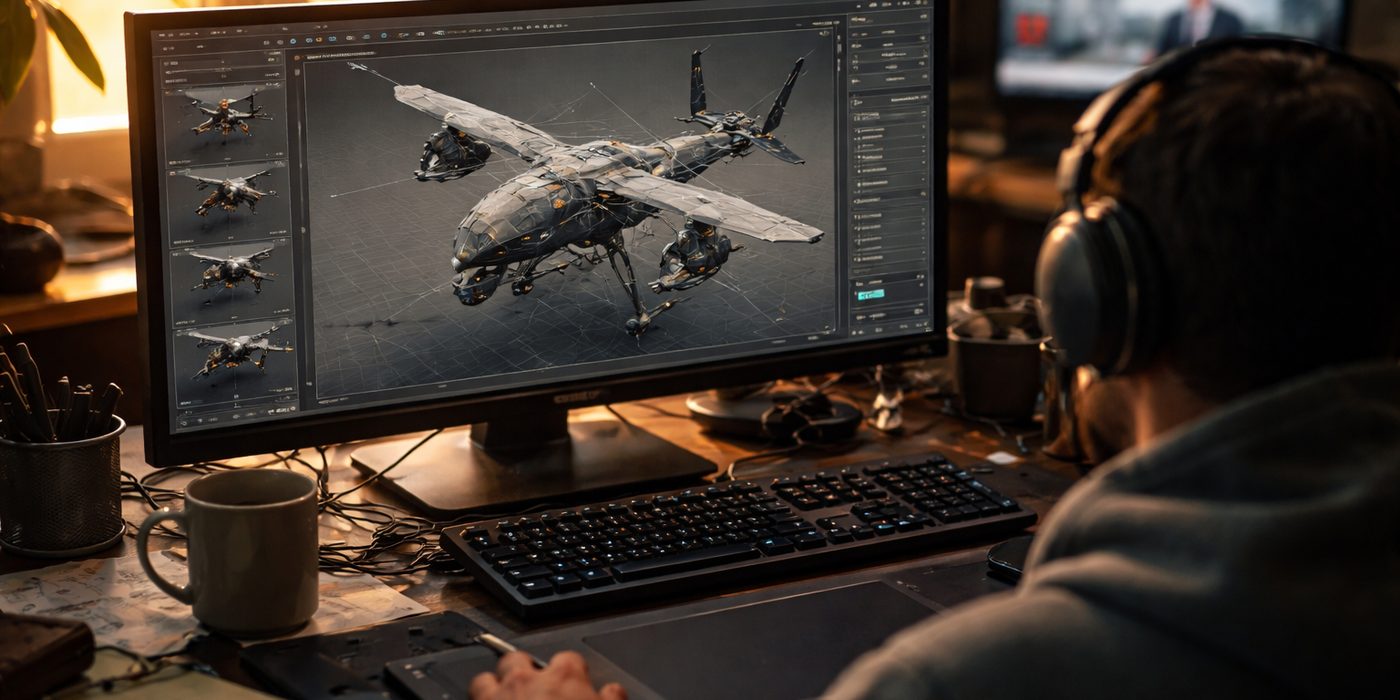
Five drones, five separate FBX files, one price tag small enough to expense without a purchase order. That is the substance of Drone Sentinels, a low-poly combat drone pack from the developer MivaMagic, now listed on the Unity Asset Store. Each model is rigged and animated, wears deliberately weathered military armor, and carries a distinct weapon configuration, from what the listing describes as differing systems across the set. The target buyer is an indie studio building a sci-fi shooter, a tactical game, or a robotic-enemy encounter. Nothing in the pack flies, fires, or ships with a datasheet. But the product exists because armed drones have become instantly legible to anyone who has watched a news broadcast in the past five years.
That legibility is the real story. A decade ago, the stock robotic enemy in game art was a bipedal mech or a tracked walker, a design lineage running through decades of science fiction. The quadcopter and fixed-wing loitering munition have displaced them. Asset creators read market demand the way commodity traders read futures, and the volume of drone-themed packs on storefronts like Unity's reflects what players now recognize as credible threats. Worn armor panels, exposed rotor housings, and modular weapon mounts echo the improvised, field-modified look of real systems documented in recent conflicts. The low-poly style keeps geometry light enough for mobile and VR targets, where draw calls matter more than realism.
The technical specifications matter more to the trade than the fiction does. PBR texturing means the assets drop into modern Unity render pipelines without custom shader work, and individual FBX delivery with rigging intact means animators can retarget or extend motion sets rather than rebuilding from scratch. For small teams, that is weeks of modeling and rigging labor compressed into a download. The same economics apply well beyond entertainment. Simulation and training developers increasingly build on game engines, and Unity and Unreal both sit underneath a growing share of synthetic-data pipelines for perception training. A competent, cheap drone mesh with accurate silhouette variation is a usable input for generating labeled imagery of aerial threats, whatever its original purpose.
For robotics engineers and investors, the lesson sits in how fast the visual grammar of unmanned systems has standardized. Procurement offices, game artists, and film studios now draw from overlapping reference material, and the aesthetic of a combat drone is settled enough to sell as a template. That cuts both ways for the industry. Public intuition about what these machines look like is increasingly shaped by stylized fiction rather than engineering reality, which affects how regulators, customers, and communities react to real products. Companies building commercial inspection or delivery drones already spend effort distancing their designs from the armed silhouette. A pack like this is a small reminder of the visual baggage they carry.
What to Watch Track how the Unity Asset Store's drone and robotics categories evolve through the first quarter of 2027, particularly whether packs add physically plausible flight dynamics rather than purely cosmetic animation. Watch Unity's and Epic Games' continued investment in simulation and synthetic-data tooling, since that is where cheap, well-rigged robotic assets cross from entertainment into engineering workflows. Keep an eye on NVIDIA's Isaac Sim ecosystem and its asset libraries as a benchmark for how professional simulation vendors price and license robot models against hobbyist storefronts. Finally, follow user reviews and update cadence on the Drone Sentinels listing itself, which will show whether demand for the genre justifies follow-on packs from MivaMagic.