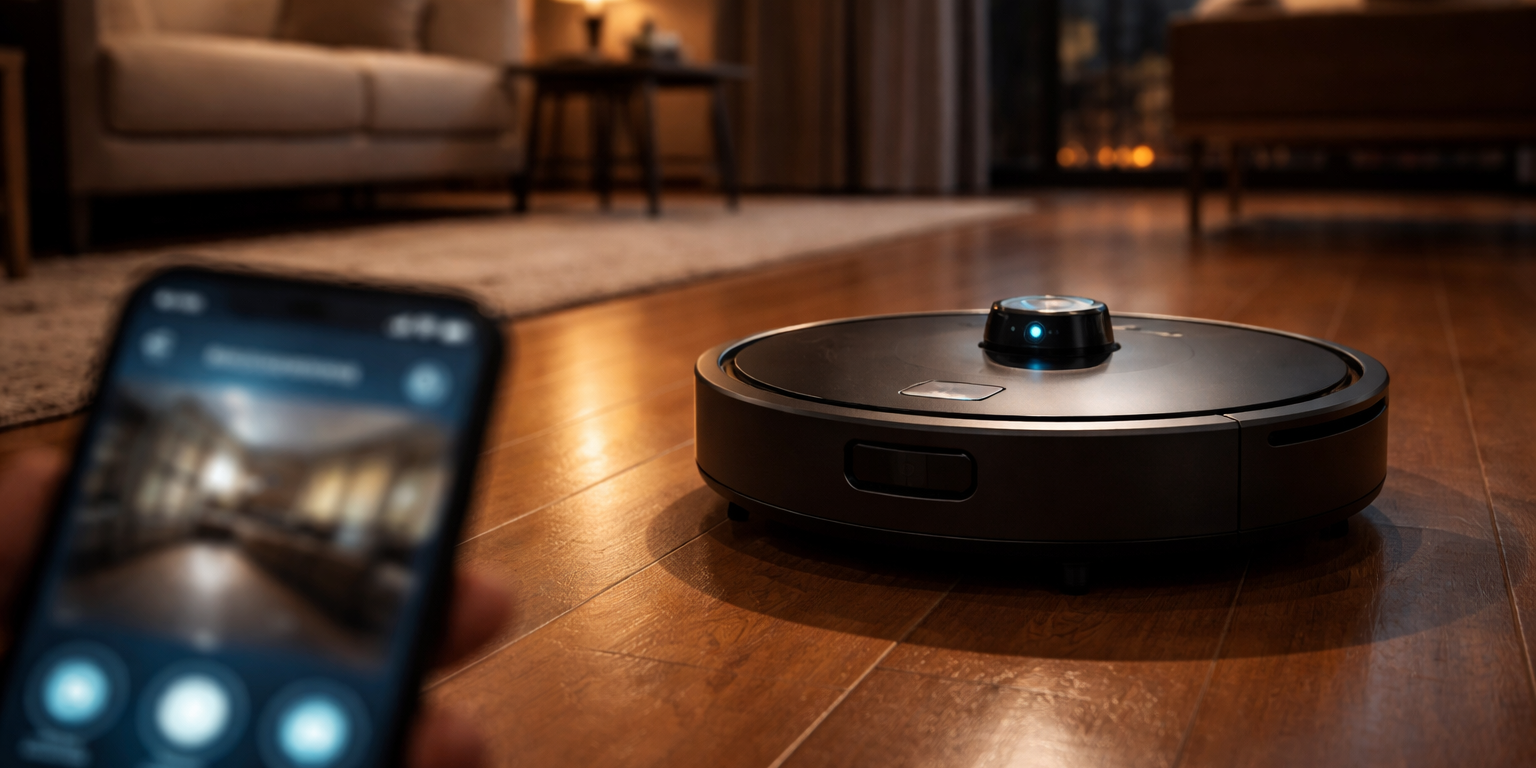
A robot vacuum's onboard camera captured video of an extramarital encounter in a Taoyuan residence, and that footage became admissible evidence in a civil lawsuit that concluded with damages awarded to the plaintiff, according to court documents released by Taoyuan District Court. The husband received approximately $16,000 from his wife and her partner after the court accepted the robot's sensor data as valid documentation of the incident. The case represents an abrupt collision between consumer robotics, domestic privacy law, and evidentiary standards in civil proceedings.
The vacuum in question was a live-streaming model, meaning its camera feed transmitted in real time to a paired smartphone application rather than storing footage locally. The husband accessed the feed remotely and preserved the video before initiating legal action. Taiwan's courts have historically required physical evidence or witness testimony in marital tort cases, but the Taoyuan ruling establishes that machine vision data from autonomous household devices satisfies evidentiary thresholds when properly authenticated. Legal scholars in Taipei have noted that the decision creates binding precedent for similar cases involving sensor-equipped robots operating in private residences, an area of law that has remained largely theoretical until consumer adoption rates for camera-equipped robots crossed approximately 30 percent of urban households in Taiwan during 2025.
The robotics industry has long understood that devices with spatial mapping capabilities generate sensitive data, but manufacturers have generally treated privacy protections as a compliance checkbox rather than a design priority. Most consumer robot vacuums equipped with cameras use that hardware for simultaneous localization and mapping, not deliberate surveillance, yet the systems cannot distinguish between mapping a room layout and recording human activity within that space. The Taiwan case underscores a structural tension: robots designed to navigate autonomously require environmental perception systems sophisticated enough to capture legally significant information, whether manufacturers intend that secondary use or not. iRobot, Roborock, and Ecovacs all manufacture models with live-streaming features marketed primarily for pet monitoring, but legal discovery processes now have a proven pathway to compel production of that data in civil disputes.
Manufacturers face immediate pressure to clarify data retention policies, encryption standards, and user access controls. Current industry practice varies widely. Some brands store video locally on the device with no cloud backup, others transmit compressed image data for processing and delete it after navigation tasks complete, and still others offer cloud storage as a premium feature with retention periods ranging from 24 hours to indefinitely. The Taiwan ruling did not address whether the husband's remote access to the live feed constituted lawful use of a jointly owned device or whether one spouse can unilaterally deploy surveillance-capable robots in shared living spaces. That ambiguity leaves manufacturers exposed to claims that their products enable domestic surveillance without adequate safeguards or warnings. Several U.S. states have wiretapping statutes that criminalize recording without all-party consent, and it remains unclear whether a robot vacuum's terms of service can override those protections when the device operates in multi-occupant residences.
What to Watch: Monitor whether Taiwan's Ministry of Justice issues guidance on authentication standards for robot sensor data in legal proceedings, expected before year-end 2026. Track warranty and liability language changes from major vacuum manufacturers in their next product cycles, particularly around data access and third-party disclosure. Watch for similar cases in jurisdictions with strong two-party consent laws, where the legal outcome may diverge sharply from Taiwan's precedent.