Wang Xingxing will control 65.31 percent of Unitree Robotics' voting power after next week's Shanghai IPO, even as he and related parties hold just 31.29 percent of the company's economic interest. The dual-class share structure, disclosed late Thursday, positions the founder to maintain strategic control as the Hangzhou manufacturer enters public markets with a 40.45 million share offering. That represents exactly one-tenth of the company's post-listing capital, a figure that suggests Unitree has valued precision over maximizing immediate proceeds. The mechanics matter because Unitree faces capital-intensive competition on two fronts: undercutting Boston Dynamics on price in industrial markets, and racing Figure AI to viable humanoid commercialization.
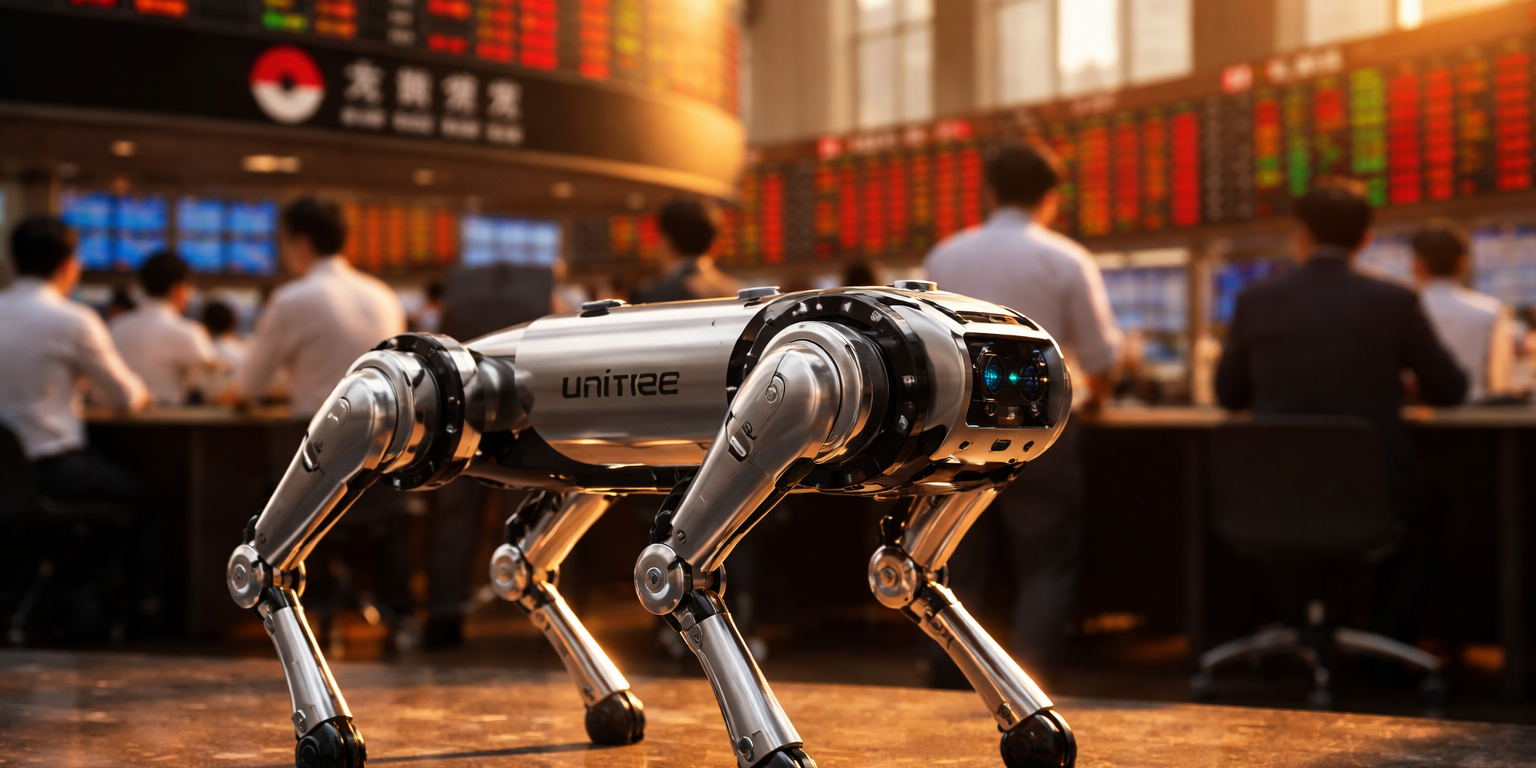
Unitree built its reputation on aggressive cost engineering. The company's Go2 quadruped retails for $1,600, compared to roughly $75,000 for Boston Dynamics' Spot. Its G1 humanoid launched last year at $16,000 for the base educational model, a fraction of competitors' pricing even as performance metrics trail only slightly. That strategy won Unitree volume: the company reportedly shipped more than 15,000 quadrupeds in 2025, making it one of the highest-volume producers of legged robots globally. But volume at low margins demands capital, both for inventory and for the R&D required to close the capability gap with US rivals. The IPO timing reflects that reality. Unitree's prospectus, filed with the Shanghai Stock Exchange in March 2026, showed the company turned operationally profitable in the second half of 2025 but remains cash-constrained relative to its product roadmap. Public markets offer a path to fund development without ceding board control to private investors who might balk at the margin compression inherent in Unitree's market-share-first approach.
The listing also arrives amid a broader wave of Chinese robotics IPOs. Shenzhen-based Deep Robotics filed for a Shenzhen listing in April 2026, while Beijing's Fourier Intelligence completed its Hong Kong IPO in February at a $1.2 billion valuation. All three companies design humanoid or quadruped platforms. All three cite US competition explicitly in their prospectuses. The pattern suggests coordination, or at least shared recognition that the window for capturing commercial humanoid deployment contracts is narrow. Figure AI announced partnerships with BMW and Amazon Web Services in late 2025, aiming for pilot deployments in automotive manufacturing by mid-2026. Boston Dynamics' Atlas humanoid, now fully electric, is undergoing trials with Hyundai and unspecified logistics customers. Chinese manufacturers see the next 18 months as a race to demonstrate comparable reliability at lower cost, before US incumbents lock in long-term service contracts with major industrials. Capital markets access accelerates that timeline. Unitree's prospectus dedicates 40 percent of IPO proceeds to expanding production capacity and 35 percent to AI model training for manipulation tasks, according to regulatory filings reviewed by local financial press.
Wang Xingxing founded Unitree in 2016 after working on quadruped locomotion at Shanghai Jiao Tong University. The company's early prototypes borrowed openly from MIT's Cheetah architecture, a fact that drew criticism from US researchers but proved immaterial in Chinese markets where IP enforcement remains selective. Unitree's advantage was never novel algorithms. The company instead focused on supply chain optimization and modular design, sourcing actuators and sensors domestically to avoid tariffs and simplify logistics. That approach paid off during pandemic-era supply disruptions, when Boston Dynamics and other US manufacturers faced months-long lead times for imported components. Unitree scaled production while competitors struggled. The company now operates three manufacturing facilities in Zhejiang province with combined annual capacity exceeding 50,000 units across quadruped and humanoid lines, per industry estimates. Wang's dual-class control preserves his ability to prioritize long-term capacity investment over near-term profitability, a structure increasingly common among Chinese tech IPOs but still controversial with institutional investors who prefer traditional governance.
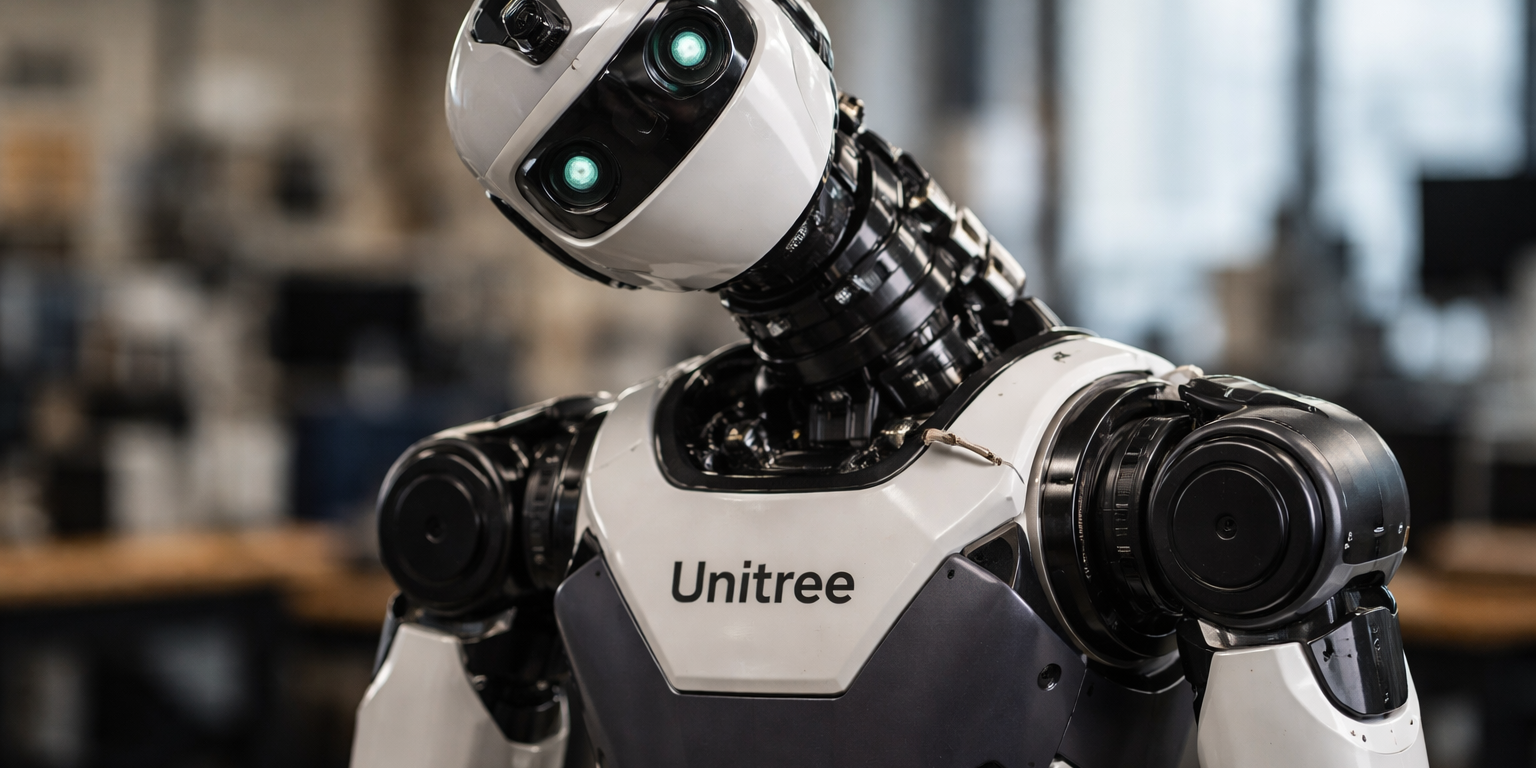
The competitive landscape extends beyond hardware. Unitree announced in June 2026 that its G1 humanoid would integrate foundation models from Alibaba's Qwen team for natural language tasking, positioning the robot as a platform for third-party AI developers. That mirrors strategies from Figure AI, which partners with OpenAI, and from Tesla, which uses proprietary models trained on Optimus. The difference is deployment scale. Unitree claims more than 800 G1 units in field testing across manufacturing, logistics, and research institutions, compared to fewer than 100 Figures deployed by Figure AI as of mid-2026. If those numbers hold, Unitree is generating real-world training data faster than US competitors, a crucial advantage for reinforcement learning approaches to manipulation. The IPO proceeds fund continued data collection. Unitree's roadmap includes a $12,000 G1 Pro variant launching in Q4 2026 with improved dexterity, targeting the same warehouse automation customers courted by Amazon Robotics and Agility Robotics. Price remains the wedge. Whether Western customers will trust Chinese platforms for critical operations remains an open question, but Unitree's volume suggests the calculus is shifting.
What to Watch: Track whether Unitree's IPO pricing, expected to be disclosed by August 2 when books close, values the company above or below the $1.2 billion Fourier Intelligence achieved in Hong Kong. Monitor BMW and other European manufacturers for partnerships with Chinese humanoid suppliers, which would signal comfort with non-US robotics platforms in strategic operations. Watch for Unitree's G1 Pro launch in Q4 2026 and whether the company meets its stated $12,000 price point while delivering meaningful dexterity improvements over the base model.