Unitree's G1 humanoid now costs $16,000 per unit at volume, a price point the Hangzhou manufacturer claims makes warehouse automation financially viable for mid-tier logistics operators across eastern China. UBTECH, meanwhile, is betting that hyper-realistic facial expressions and natural language conversation justify asking consumers to pay luxury car prices for household robots. Both companies are Chinese. Both build full-size humanoids with dexterous hands. But their 2026 product roadmaps couldn't be more different, and the gap reveals a fundamental disagreement about what embodied AI is actually for.
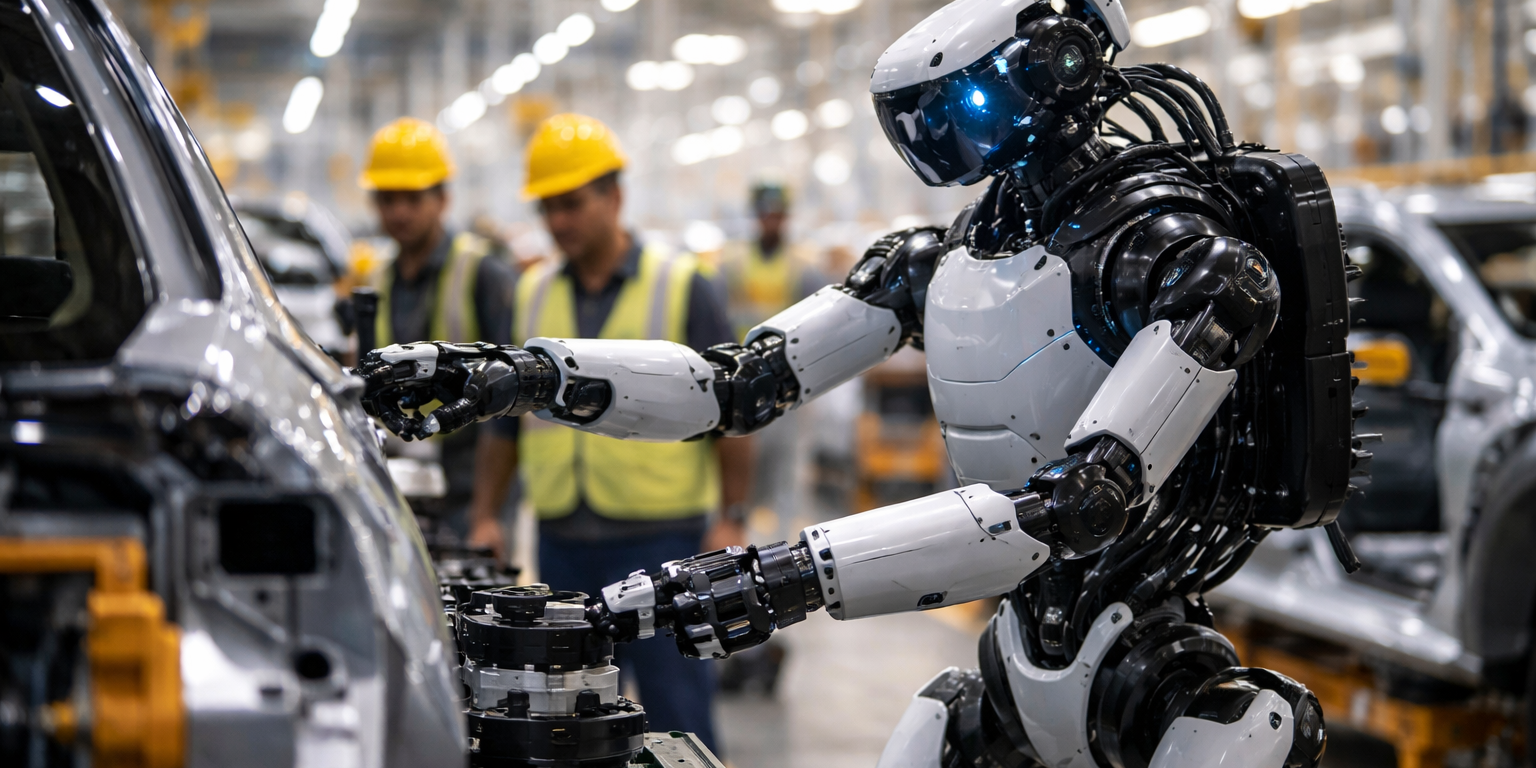
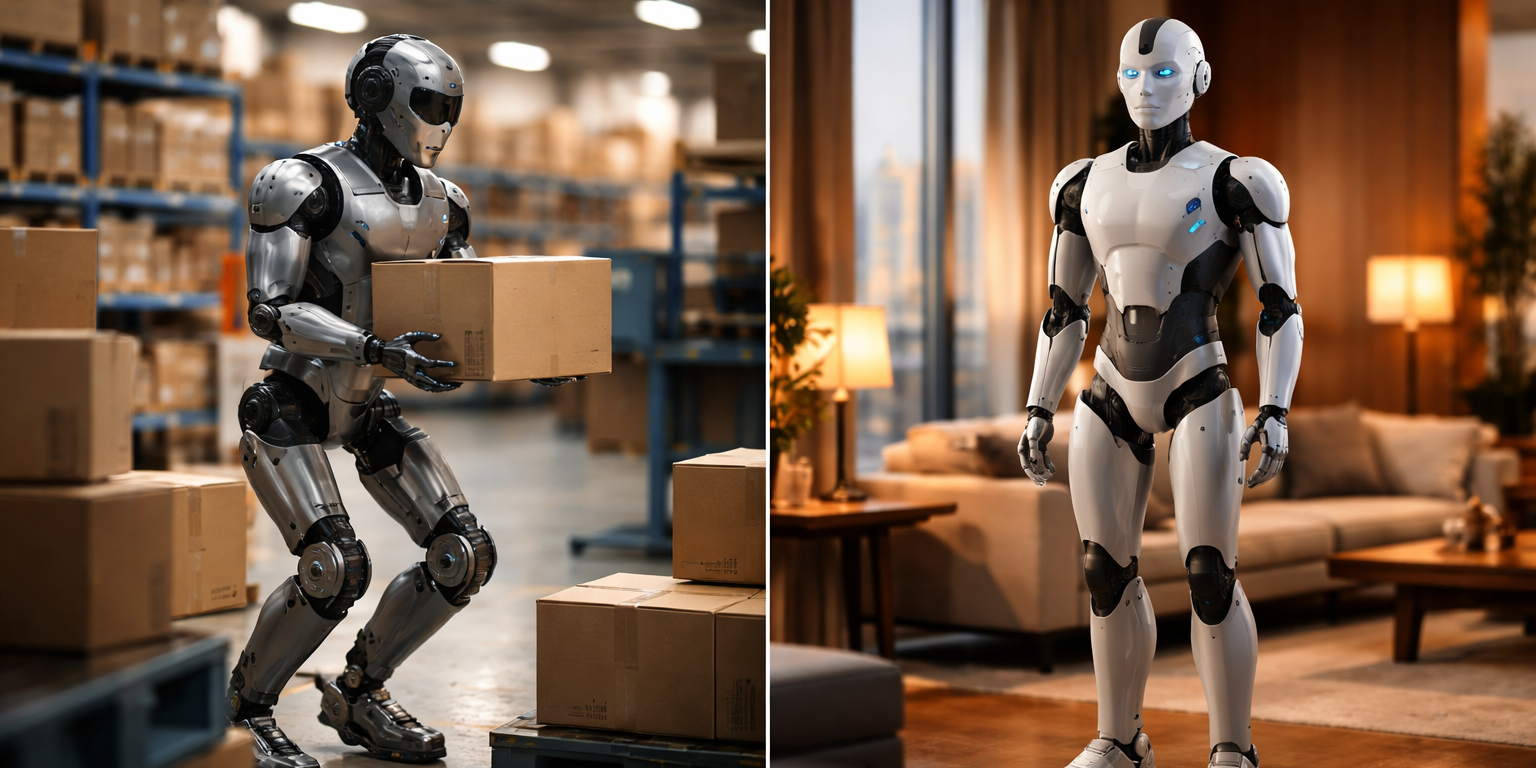
Unitree built its reputation on quadruped robots that undercut Boston Dynamics on price by an order of magnitude. The company's Go2 robot dog sells for under $2,000, compared to $75,000 for Spot. That same cost-obsessed engineering philosophy now drives the G1, a 1.5-meter humanoid capable of lifting 10 kilograms and walking at 2 meters per second. The machine lacks human-like faces or conversational AI. It doesn't need them. Factories in Guangdong and Zhejiang provinces are piloting G1 units for repetitive pick-and-place tasks, pallet handling, and inventory checks in environments too dynamic for fixed automation but too cost-sensitive for human labor at scale. Unitree has disclosed agreements with three unnamed automotive suppliers and two contract manufacturers in the Pearl River Delta, with initial deployments targeting second-half 2026. The company claims breakeven ROI within 18 months based on displacing shift work at current Shenzhen wage rates.
UBTECH takes the opposite approach. Its Walker S humanoid features silicone skin, animated facial expressions synchronized to speech, and a conversational AI stack trained on Mandarin social interactions. The robot stands 1.7 meters tall, closer to average human height, and uses computer vision to maintain eye contact during conversations. UBTECH positions Walker S as a luxury product for affluent households and premium hospitality venues, with pricing expected to start above $50,000 when general sales begin later this year. Early prototypes have appeared in high-end hotels in Shenzhen and Beijing, where they greet guests and provide concierge services. The company argues that consumer acceptance of humanoid robots depends on emotional design and social presence, not just task completion. UBTECH's investors include Tencent and CDH Investments, and the Shenzhen-based firm has publicly stated its intent to list on a major exchange by 2027, a timeline that requires demonstrating consumer traction well before industrial humanoids reach cost parity with human labor in most applications.
The split reflects broader uncertainty about where embodied AI finds product-market fit first. Industrial robotics has always been about ROI measured in months, not years. Humanoid form factors only make sense in factories if they cost less than fixed automation for flexible tasks and Unitree is racing toward that threshold. Consumer robots face a different calculus entirely. No one needs a $50,000 household android, which means UBTECH must create desire through design and interaction quality. The company's bet is that China's upper-middle class will pay for social companionship and status signaling, the same way they pay for luxury cars that spend most of their time parked. Both strategies carry existential risk. Unitree could get undercut by even cheaper manufacturers, or discover that industrial customers aren't ready to trust humanoids with mission-critical tasks regardless of price. UBTECH could build beautiful robots that no one buys because the value proposition remains unclear, or because conversational AI fails to cross the uncanny valley at scale. What's certain is that by late 2027, at least one of these approaches will have failed in the market.
What to Watch: Track whether Unitree discloses specific deployment numbers and customer names in Q4 2026 earnings actual unit sales will reveal if industrial humanoids are moving beyond pilot programs. Monitor UBTECH's retail partnerships; if Walker S appears in consumer electronics chains by early 2027, it signals confidence in near-term demand. Watch for pricing pressure from competitors like Fourier Intelligence and LimX Dynamics, both of which have humanoid programs targeting the sub-$20,000 industrial segment. Finally, pay attention to which companies Western automotive and logistics giants partner with for Asia-Pacific deployments those deals will validate one business model over the other.