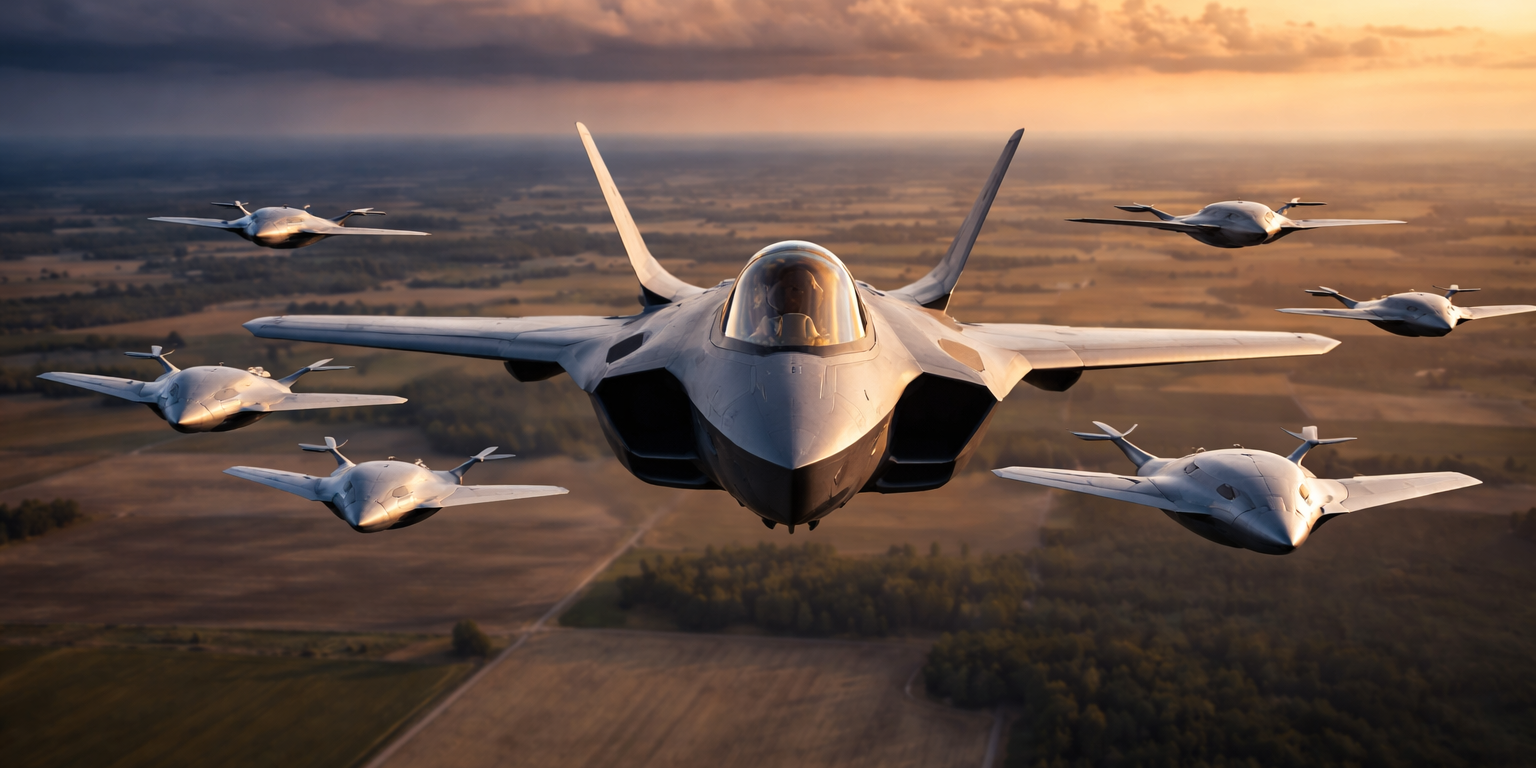
The unmanned aerial vehicle industry will triple in size by 2034, reaching $123.01 billion in annual revenue as defense contractors accelerate procurement of autonomous platforms and commercial operators expand beyond early-stage pilots into operational fleets. The forecast, released this week by The Insight Partners, projects a compound annual growth rate of 13.24 percent through the end of the decade, propelled by two distinct market forces that have converged faster than earlier models anticipated. Military investments in reconnaissance drones, loitering munitions, and autonomous resupply aircraft now account for the largest share of projected spending, while commercial applications in package delivery, infrastructure inspection, and precision agriculture are scaling from regional tests to national deployments.
Defense budgets have absorbed UAV technology at a pace that surprised even optimistic observers. The war in Ukraine demonstrated the tactical value of small quadcopters and fixed-wing reconnaissance platforms at price points far below traditional manned aircraft, prompting procurement officers across NATO and allied nations to reassess force structure assumptions. Turkey's Bayraktar TB2, used extensively by Ukrainian forces, costs roughly $5 million per unit compared to $150 million for an F-35 fighter jet. That cost differential has reshaped thinking about air superiority and close air support, pushing defense ministries to allocate billions toward UAV programs that were ancillary budget items as recently as 2020. Israel's Elbit Systems, Northrop Grumman, and General Atomics have reported order backlogs extending into 2027 for tactical and medium-altitude platforms. China's state-owned aviation groups are expanding production lines for export models sold to Southeast Asian and Middle Eastern militaries.
Commercial drone adoption has moved beyond the proof-of-concept phase in logistics, energy, and agriculture. Walmart operates drone delivery in seven U.S. states through partnerships with Zipline and DroneUp, completing more than 20,000 deliveries in 2023. Wing, the Alphabet subsidiary, has flown over one million commercial deliveries across Australia, Finland, and select U.S. markets, establishing that regulatory frameworks can scale with demand when operators meet safety benchmarks. Energy companies including BP and Shell have replaced manned helicopter inspections of offshore platforms with autonomous rotorcraft, cutting inspection costs by 40 to 60 percent while reducing safety incidents. Agricultural users, particularly large row-crop operations in the U.S. Midwest and Brazilian Cerrado, have integrated multispectral imaging drones into precision farming workflows, using real-time data to adjust fertilizer application and irrigation with measurable yield improvements. The shift from experimental to operational status in these sectors creates recurring revenue streams for manufacturers, service providers, and sensor suppliers that earlier market models underestimated.
Regulatory clarity has emerged as a growth enabler in markets that previously throttled commercial deployment. The Federal Aviation Administration's Remote ID mandate, effective since September 2023, established a digital infrastructure for tracking drones in controlled airspace, allowing the agency to approve beyond-visual-line-of-sight operations in defined corridors. The European Union Aviation Safety Agency published a similar framework that took effect across member states in early 2024, harmonizing rules that had fragmented the European market. Japan and South Korea enacted legislation permitting autonomous drone flights over populated areas under specific insurance and geofencing requirements. These regulatory shifts have unlocked billions in private investment; venture capital funding for drone startups reached $4.8 billion globally in 2023, up from $2.1 billion in 2021, according to PitchBook data. Public equity markets have responded as well, with shares of publicly traded drone manufacturers and sensor providers posting gains that outpaced broader aerospace and defense indexes over the past 18 months.
What to Watch: Monitor defense procurement announcements from NATO members through the first quarter of 2025, particularly orders for tactical UAVs under $10 million per unit, as budget reallocation from legacy platforms continues. Track FAA approvals for new beyond-visual-line-of-sight corridors, especially routes connecting distribution centers to suburban delivery zones, which will signal whether commercial drone delivery can achieve unit economics that compete with ground vehicles. Watch for annual production volume disclosures from DJI, Autel Robotics, and Skydio, as manufacturing scale determines whether commercial platforms can reach consumer price points below $1,000 while maintaining enterprise-grade reliability.