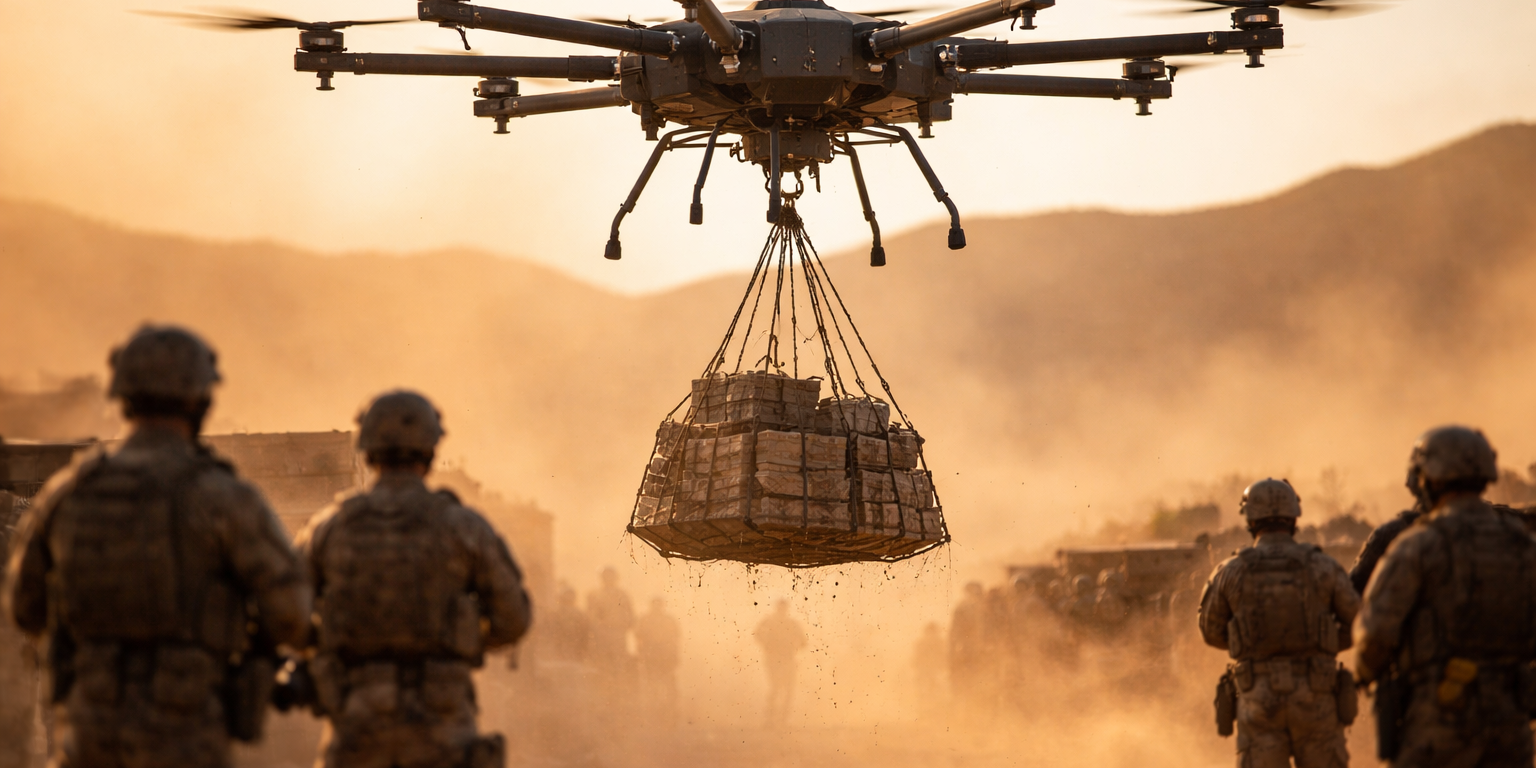
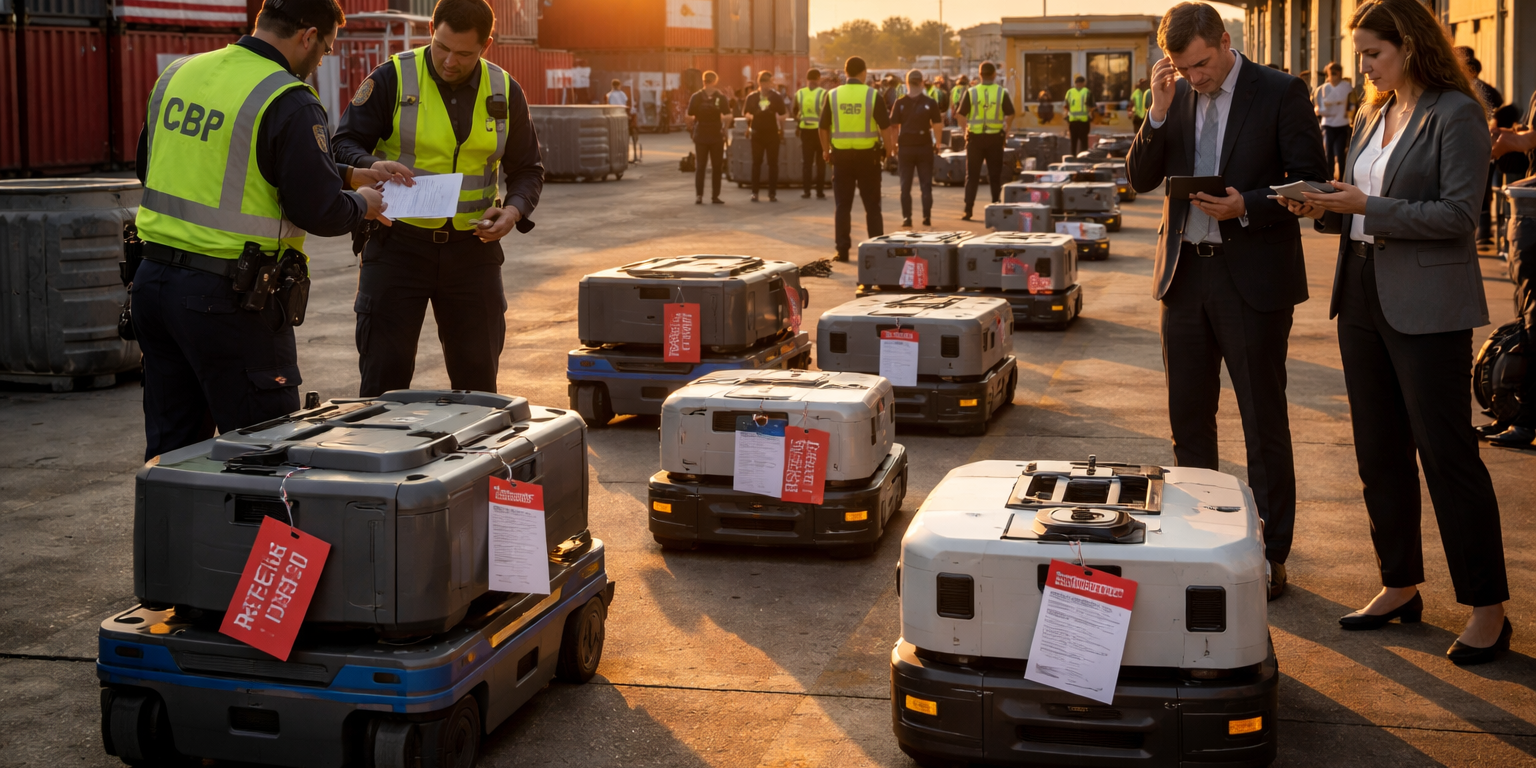
Mobile robots weighing more than 2 kilograms with communications capabilities can no longer enter the United States as new products from foreign manufacturers, a regulatory shift that landed without warning on supply chain managers across the robotics sector. The FCC's July 28 update to its Covered List, first published in 2021 to identify communications equipment posing national security risks, extends beyond the original focus on Chinese telecommunications giants to encompass a product category central to warehouse automation, last-mile delivery, and defense applications. The 2-kilogram threshold excludes consumer toys and hobby drones while capturing nearly every industrial mobile robot, AMR platform, and field-deployable system currently in commercial use.
The Department of Defense pushed for the expansion, according to industry sources familiar with the rulemaking process, as part of a broader effort to limit foreign-manufactured electronics in critical infrastructure. Unlike earlier iterations of the Covered List, which named specific companies such as Huawei and ZTE, the robot provision applies categorically to any foreign country of origin. That means a warehouse AMR built in Germany faces the same import restrictions as one manufactured in China, a departure from the targeted approach that characterized previous updates. Solar power inverters, also added to the list, share a common concern with robots: both contain embedded communications modules, microprocessors, and the potential for remote access that defense planners view as vulnerable entry points for surveillance or disruption. The FCC has not published detailed technical criteria defining what constitutes a "communicating" robot, leaving importers and customs officials to interpret whether Wi-Fi, Bluetooth, cellular, or proprietary RF links trigger the ban.
U.S. robotics companies with offshore manufacturing partnerships now face a choice between relocating production domestically, redesigning products to fall below the 2-kilogram threshold, or eliminating wireless connectivity altogether. None of these options can be executed quickly. Boston Dynamics, which assembles Spot in the United States but sources components globally, declined to comment on how the rule affects its supply chain. Fetch Robotics, now part of Zebra Technologies, ships warehouse AMRs that typically weigh between 60 and 150 kilograms and rely on Wi-Fi for fleet coordination, placing them squarely within the Covered List scope. A Zebra spokesperson confirmed the company is "evaluating the guidance" but offered no specifics on whether production would shift or product lines would be discontinued. Startups face steeper challenges. A seed-stage autonomous delivery company based in San Francisco, which had contracted with a Shenzhen manufacturer for its first 500 units, saw its import clearance application rejected in early August. The company's CEO, who requested anonymity to avoid jeopardizing ongoing investor negotiations, estimates that switching to a U.S. contract manufacturer would triple per-unit costs and delay the planned pilot program by at least six months into mid-2027.
The regulatory environment for robotics has tightened considerably since 2023, when the CHIPS and Science Act began steering federal subsidies toward domestic semiconductor production. This latest move extends that logic to finished goods. Industry observers note that U.S. manufacturing capacity for mobile robots remains limited, with most high-volume assembly still concentrated in China, Taiwan, South Korea, and increasingly Vietnam. Domestic contract manufacturers like Jabil and Flex have robotics capabilities, but their focus has historically been on medical devices, aerospace components, and defense systems rather than commercial mobile platforms. Scaling that capacity to absorb demand previously met by imports would require capital investment in tooling, workforce training, and supply chain development that could take 18 to 24 months. Defense contractors, meanwhile, stand to benefit. Firms like Teledyne FLIR and AeroVironment, which already manufacture in the United States for government customers, may see commercial clients migrate toward their platforms as offshore alternatives become unavailable. The unintended consequence: a regulatory framework designed to protect national security may also insulate domestic producers from foreign competition, raising prices and slowing innovation in a sector that has thrived on global collaboration. Trade groups including the Association for Advancing Automation and the Robotics Industries Association have been uncharacteristically quiet, issuing no public statements in the three weeks since the Covered List update. Behind the scenes, lobbyists are reportedly seeking clarification on whether robots assembled in the U.S. from foreign components remain compliant, a question with enormous implications for companies like Tesla, which builds Optimus humanoid prototypes domestically but sources actuators, sensors, and compute modules internationally.
What to Watch: Monitor whether the FCC publishes technical definitions clarifying which communication protocols trigger the ban by late September, as industry groups push for exemptions for encrypted or air-gapped systems. Track whether major warehouse automation buyers like Amazon and Walmart issue new requests for proposal specifying U.S.-manufactured AMRs in Q4 2026. Watch for announcements from contract manufacturers like Jabil or Sanmina regarding new robotics production lines in the U.S., particularly in states offering CHIPS Act incentives. Follow litigation from foreign robotics firms challenging the Covered List expansion, likely to be filed in federal court before year-end.