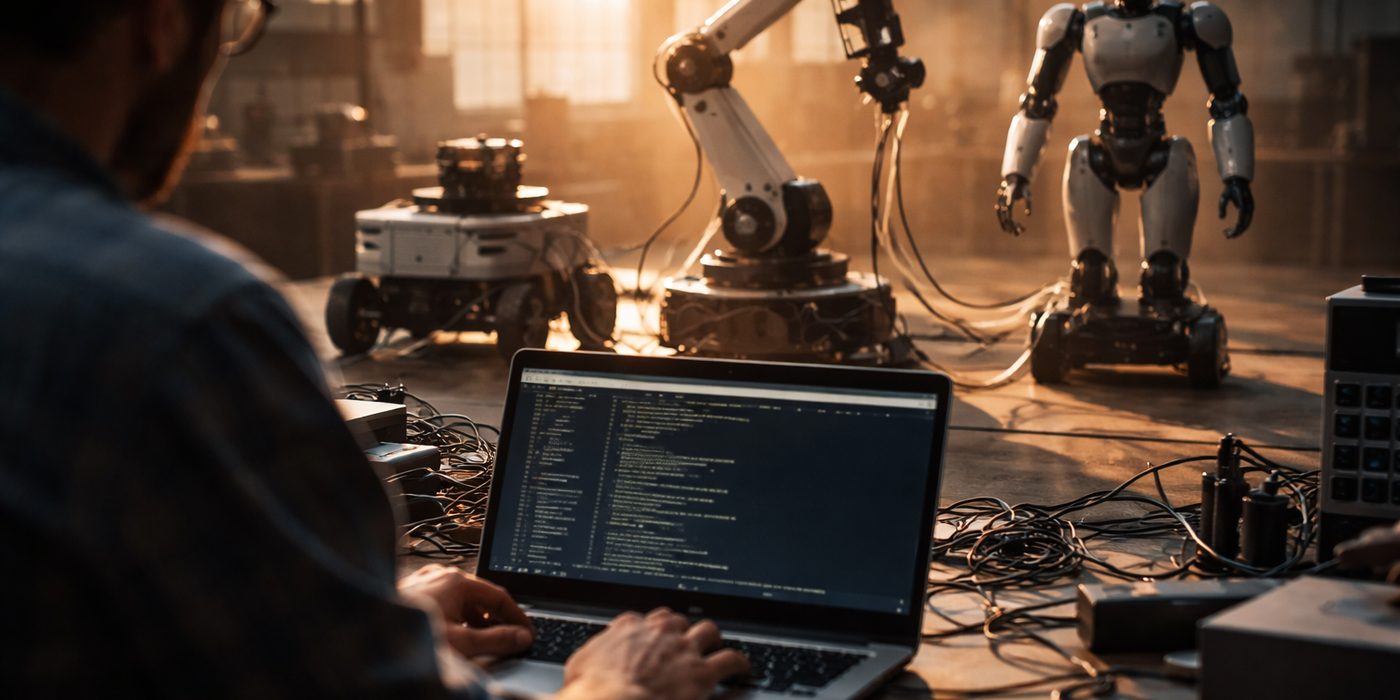

Thirty-eight days. That is how long Turkish companies have to turn a humanoid robot concept into a fundable application under a new government call that will pay for half of the project budget. Industry and Technology Minister Mehmet Fatih Kacir announced the Humanoid Robot Development for Industrial Applications Call on November 23, 2026, with submissions closing December 31, 2026. The grant structure is simple on its face: the state covers 50% of eligible costs, and the applicant carries the rest. What makes it notable is the timeline. A call this short, running through the end-of-year budget crunch, tells the market that the ministry expects applicants to arrive with technical groundwork already done.
The stated goals are broader than any single prototype. According to the announcement, the program is meant to spread AI-supported robot solutions across Turkish industry, deepen domestic robotics expertise, and reduce reliance on foreign suppliers for the technology. That last objective carries the most weight. Turkiye has spent the past decade building a reputation in uncrewed aerial systems and defense electronics, and the ministry has repeatedly used cost-sharing grants to pull private firms into capabilities it considers strategic. Humanoids are now being placed in the same category as drones and domestic chip design: something to own rather than import, even if the first generation of machines is imperfect.
The industrial framing matters, and it narrows the field in useful ways. The call targets humanoids for factory and production settings, not consumer companions or research showpieces. That puts the emphasis on the unglamorous problems that decide whether a bipedal or wheeled-torso machine earns its place on a line: payload against battery life, reliable grasping of mixed parts, safe operation near human workers, and integration with existing manufacturing execution systems. Turkiye has a deep base of automotive, white goods, and machinery producers, many of them tier-one suppliers to European assemblers. Those buyers are exactly the customers a domestic humanoid would need, and several already run the kind of repetitive material-handling tasks where early deployments are being piloted elsewhere.
For the wider industry, the program is a data point in a pattern that has been building through 2026: governments are no longer content to wait for Silicon Valley or Shenzhen to decide who gets humanoids. China has folded embodied AI into its industrial policy, South Korea has funded national humanoid consortia, and now Ankara is offering direct project subsidies. A 50% grant lowers the cost of failure for a young robotics firm, and it also creates a demand signal for component makers. Actuators, harmonic reducers, tactile sensors, and edge compute modules all become easier to sell when a funded domestic program needs them. Foreign vendors should read the call as both a threat to import-dependent business and an invitation to partner with whichever Turkish teams win funding.
The sharper question is what 'domestic' will actually mean in practice. Every humanoid program, however nationalist in rhetoric, depends on a global supply chain for precision gearing, high-density batteries, and accelerated compute. The ministry's own stated aim of reducing foreign dependence will run into the reality that no country has yet localized the full stack. Applicants who can show a credible path to producing key subsystems in-country, rather than assembling imported parts under a Turkish badge, will likely stand out. Teams that treat the grant as a way to buy a kit and rebrand it will find the objective harder to defend. How the ministry scores that distinction will shape the quality of whatever emerges from the call.
What to Watch First, the ministry's evaluation criteria and any published scoring weights after the December 31, 2026, deadline; look for whether local content requirements are explicit. Second, which established Turkish players enter bids, particularly automotive suppliers, white goods manufacturers, and the defense electronics firms that already hold robotics talent. Third, announcements of foreign component or software partnerships in the first quarter of 2027, which will show how much of the stack applicants plan to import. Finally, watch for any follow-on calls or funding tranches, since a single 38-day window is more likely a first step than the full program.