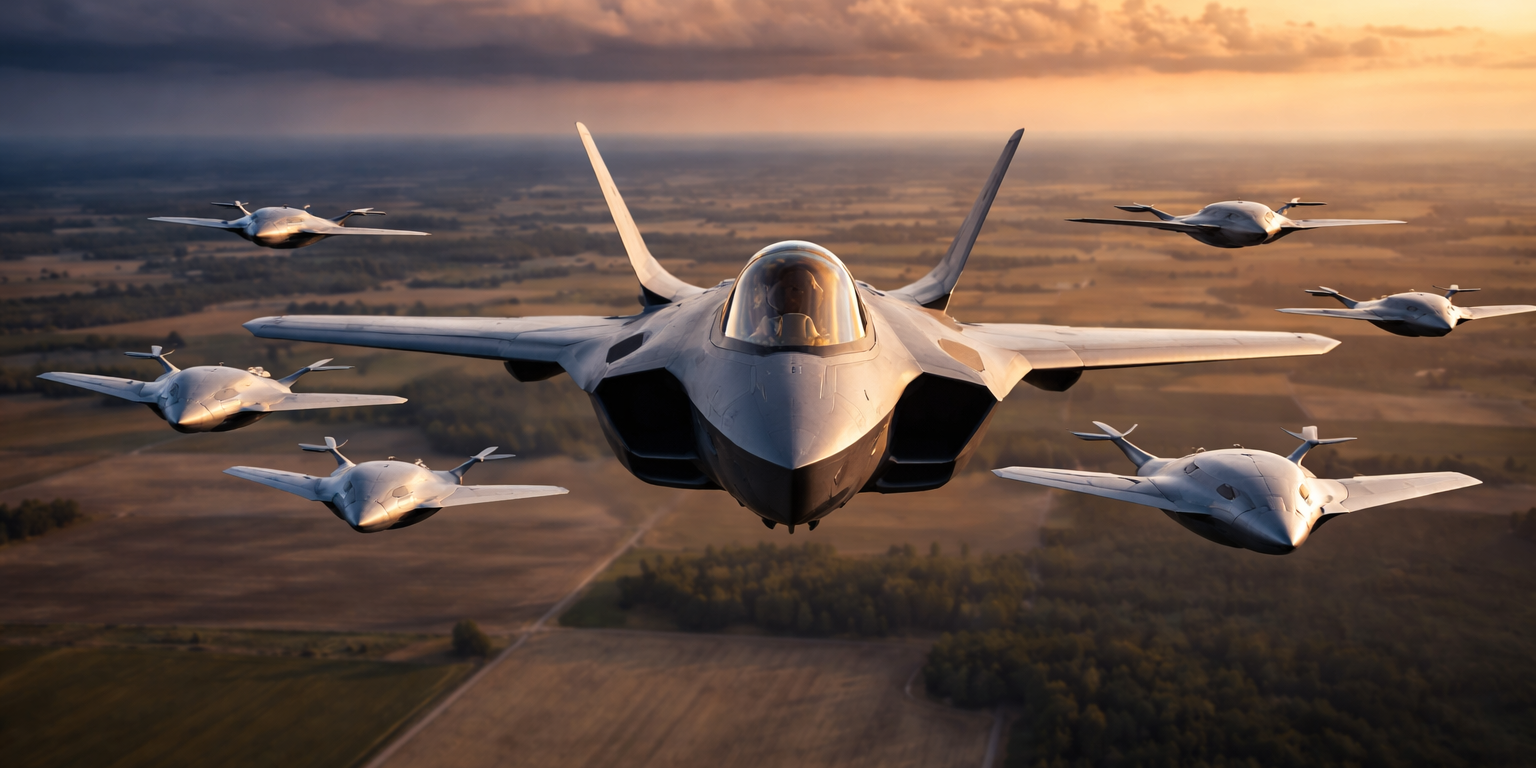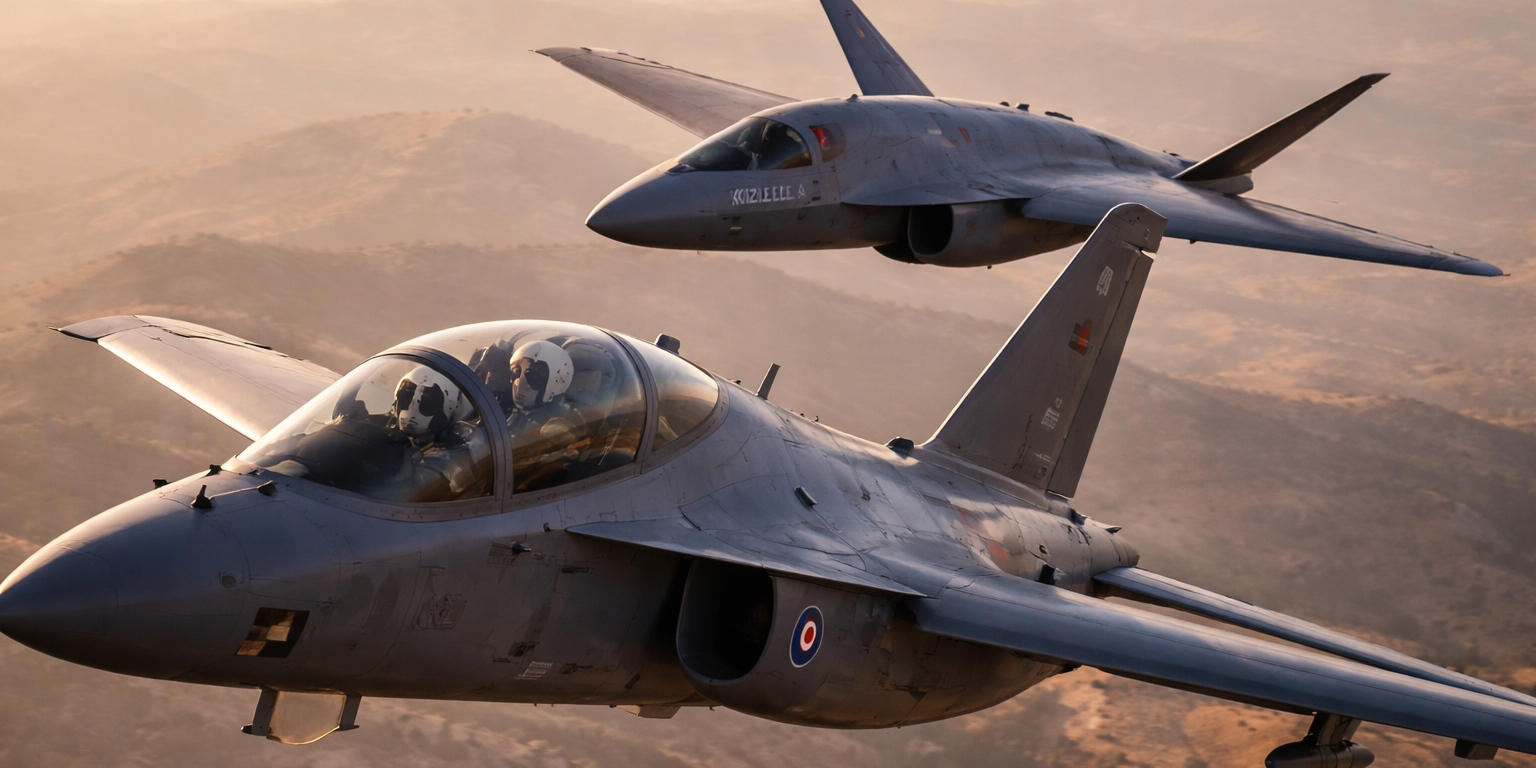
Baykar Defense conducted a series of autonomous teaming flights between its Kızılelma jet-powered unmanned combat air vehicle and an Alenia Aermacchi M-346 Master fighter-trainer over Turkish airspace, marking Turkey's entry into an exclusive group of nations demonstrating operational crewed-uncrewed teaming capabilities. The flights validated command handoff protocols, formation management algorithms, and threat response coordination between the piloted jet and the autonomous platform. Turkey now joins the United States, United Kingdom, and Australia in progressing beyond ground simulation to live-flight validation of loyal wingman concepts, though Ankara's timeline to operational deployment appears more aggressive than Western programs currently targeting late-decade fielding.
The choice of the M-346 as the crewed platform carries technical and diplomatic significance. Turkey operates a fleet of these Italian-built trainers for advanced jet instruction, providing an existing airframe with modern avionics architecture suitable for integration testing without exposing frontline F-16 fighters to developmental risk. The M-346's open-architecture mission computer and Link 16 datalink capability allowed Baykar engineers to establish bidirectional communications with Kızılelma's onboard autonomy suite. More subtly, conducting these trials with a NATO-standard platform signals interoperability ambitions even as Turkey pursues indigenous defense systems following its removal from the F-35 program. Turkish officials have repeatedly emphasized that Kızılelma's architecture permits integration with both Western and indigenous command systems, a dual-track approach reflecting Ankara's current geopolitical positioning between traditional alliance structures and independent capability development.
Kızılelma represents Turkey's most ambitious unmanned aerial system to date, built around a single AI-322F turbofan producing 4,200 pounds of thrust and granting the aircraft a claimed maximum speed exceeding Mach 0.9. Baykar has disclosed a service ceiling above 45,000 feet and an internal weapons bay designed for precision-guided munitions up to 1,500 kilograms total payload. The aircraft's autonomy package, developed domestically by Turkish software teams, handles not just flight envelope management but tactical decision-making within commander-defined rules of engagement. During the M-346 trials, the Kızılelma reportedly executed delegated tasks including forward reconnaissance, electronic attack simulation, and coordinated weapons employment against simulated ground targets. These mission sets align with the core loyal wingman concept pioneered by the U.S. Air Force's Collaborative Combat Aircraft program and Boeing's MQ-28 Ghost Bat developed for Australia, though Turkey's willingness to demonstrate weapons integration at this stage suggests a faster path from concept validation to operational test.
The broader competitive landscape for collaborative combat aircraft has intensified markedly since 2024. The U.S. Air Force's CCA program awarded initial design contracts to multiple vendors in late 2025, with flight articles expected in 2027. Australia's Ghost Bat completed its first international deployment exercises earlier this year, operating alongside Royal Australian Air Force F-35As during multi-domain scenarios. The United Kingdom's Future Combat Air System technology demonstrator has logged over 200 autonomous flight hours, though integration with crewed Typhoons remains in simulation phases. China has displayed what Western analysts assess as loyal wingman prototypes at defense exhibitions, though operational status remains opaque. Turkey's demonstrations with Kızılelma position Baykar as a credible exporter in this emerging market segment, particularly to nations seeking alternatives to Western platforms or faster acquisition timelines. Several Middle Eastern air forces have expressed interest in Baykar's larger TB2 and Akıncı unmanned systems; a combat-credible loyal wingman would represent a significant capability leap for those same customers. Turkish defense officials have indicated they expect initial Kızılelma operational capability with the Turkish Air Force by late 2027, an aggressive timeline that assumes smooth progression from current flight testing through weapons certification and tactics development. Whether that schedule holds depends largely on how quickly pilots and mission planners adapt doctrine to incorporate autonomous teammates, a human factors challenge every nation pursuing this technology must solve.
What to Watch: Monitor whether Turkey announces specific squadron assignments for Kızılelma integration by early 2027, which would validate the aggressive deployment timeline. Track international defense exhibitions in the UAE, Malaysia, and Pakistan through late 2026 for potential export announcements, as Baykar has historically leveraged demonstration successes into rapid foreign sales. Watch for details on the autonomy software architecture, particularly whether Baykar licenses or partners on the AI decision-making layer, which could reveal dependencies on Western or indigenous technology stacks. Finally, observe F-16 integration trials if announced, as Turkey's legacy fighter fleet represents the operationally relevant platform for any near-term loyal wingman deployment.