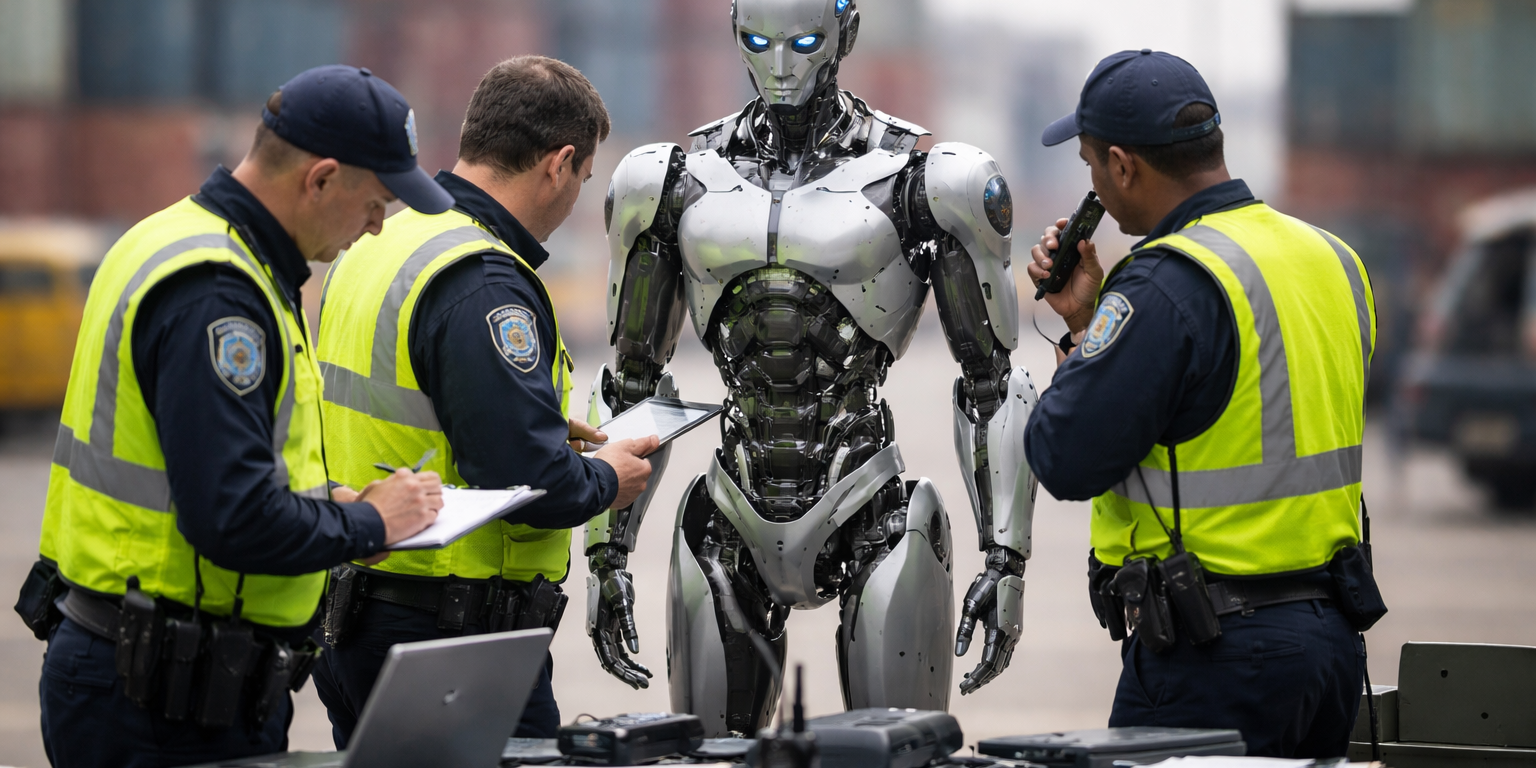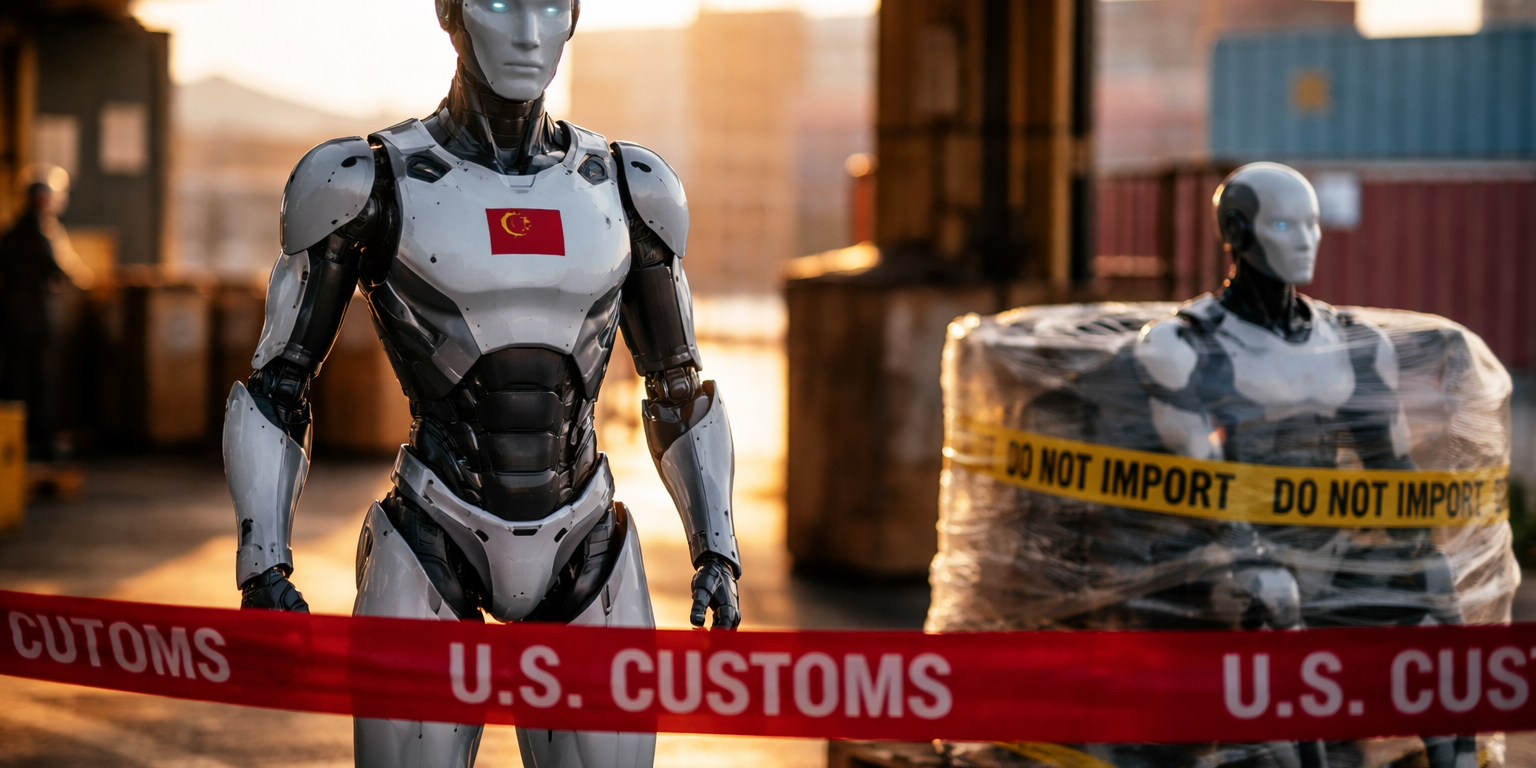
The Trump administration signed an executive order blocking foreign-manufactured humanoid robots from entering the United States, a directive aimed squarely at Chinese robotics firms that have dominated global humanoid sales since late 2024. The order, issued through the Department of Commerce on July 28, prohibits the import, sale, and deployment of any bipedal humanoid robot system manufactured by a foreign entity, with enforcement beginning September 1. Companies operating humanoid platforms from manufacturers including Unitree, Fourier Intelligence, and LimX Dynamics now face a complete market shutdown in the United States, affecting warehouse operators, manufacturing facilities, and research institutions that deployed Chinese-built units over the past eighteen months.
Washington framed the ban around national security concerns tied to networked robotics systems capable of physical manipulation in critical infrastructure. The Commerce Department's Bureau of Industry and Security cited the potential for remote exploitation of humanoid platforms operating in logistics facilities, defense contractors, and semiconductor fabrication plants as justification for the sweeping restriction. The order specifically calls out concerns around data collection through onboard sensors and the possibility of embedded backdoors in control software developed by Chinese manufacturers. That explanation mirrors arguments the administration used to justify restrictions on telecommunications equipment from Huawei and ZTE, though robotics industry executives note that humanoid platforms typically operate on closed networks with limited external connectivity compared to telecommunications infrastructure.
The timing reflects a market reality that has unsettled American robotics investors and defense planners alike. Unitree shipped approximately 1,200 G1 humanoid units globally in the first half of 2026, with an estimated 180 deployed across United States-based operations, primarily in e-commerce fulfillment and automotive parts manufacturing. Fourier Intelligence placed its GR-1 platform in roughly 90 North American facilities during the same period, while domestic manufacturers including Agility Robotics and Apptronik reported combined deployments under 150 units. The price gap explains much of that disparity. Unitree sells the G1 for approximately $16,000 per unit, while Agility's Digit costs north of $90,000 and Apptronik's Apollo commands similar pricing. Chinese manufacturers leveraged vertically integrated supply chains and subsidized component costs to undercut American firms by factors of five or more, a dynamic that accelerated after Unitree began volume production at its Hangzhou facility in October 2025.
Several robotics executives and industry analysts speaking off the record characterized the ban as a tariff by another name, designed to insulate American humanoid developers from price competition they cannot currently match. Figure AI, Agility Robotics, Apptronik, and Sanctuary AI have collectively raised over $2.8 billion in venture funding since 2023, yet none have achieved the manufacturing scale or cost structure to compete directly with Chinese hardware on price. Figure AI's Series C round in March 2026 valued the company at $4.1 billion despite shipping fewer than 60 commercial units, a valuation predicated on future deployment potential rather than current market position. The import ban eliminates the immediate threat of Chinese platforms capturing market share while American firms work through engineering challenges around actuator cost, battery efficiency, and control software reliability. Whether that protection translates into technological advancement or simply delays the inevitable reckoning remains an open question among engineers working on competing platforms.
The ban creates immediate operational problems for companies that standardized on Chinese humanoid hardware. Amazon tested Unitree G1 units across four fulfillment centers in Texas and Pennsylvania earlier this year, evaluating the platforms for package sorting and shelf restocking tasks. BMW's Spartanburg plant deployed eight Fourier GR-1 units in quality inspection roles, while Tesla evaluated LimX units at its Austin facility before ultimately deciding to continue internal development of its Optimus platform. Those deployments now face uncertain futures, as the executive order prohibits not only new imports but also technical support, software updates, and replacement parts for existing units. The Commerce Department has indicated it will provide limited exceptions for research institutions and defense contractors operating Chinese-built humanoids under controlled conditions, though the specific criteria for those exemptions remain undefined as of late July.
What to Watch: The Commerce Department's Bureau of Industry and Security must publish detailed implementation guidance by August 15, including the exception process for existing deployments and research programs. Agility Robotics plans to announce production numbers from its Salem, Oregon manufacturing facility in mid-September, which will indicate whether domestic manufacturers can scale output to meet demand previously filled by Chinese imports. Several Chinese robotics firms are exploring Mexican manufacturing partnerships to circumvent the import ban through USMCA provisions, with Unitree reportedly in discussions with contract manufacturers in Monterrey.