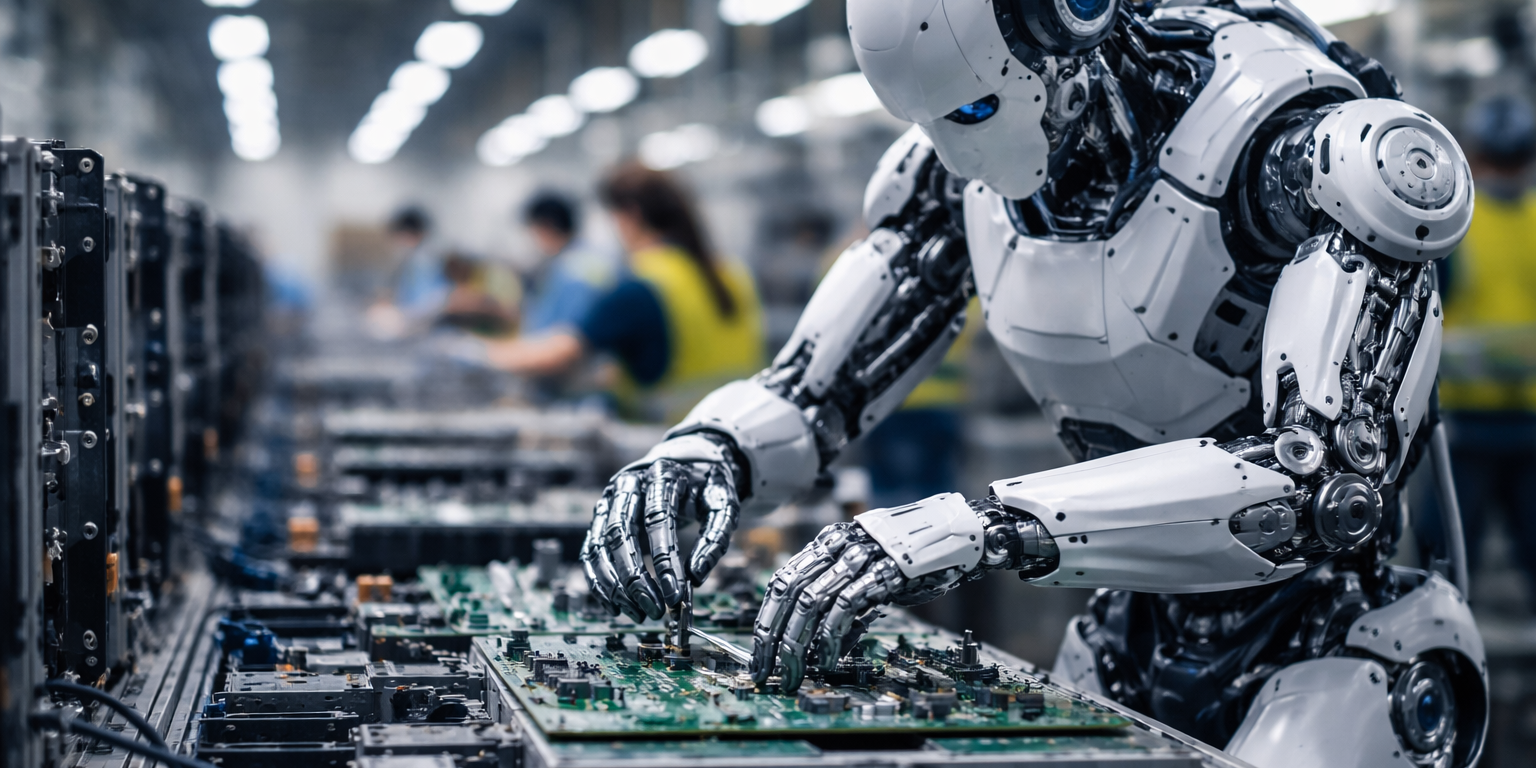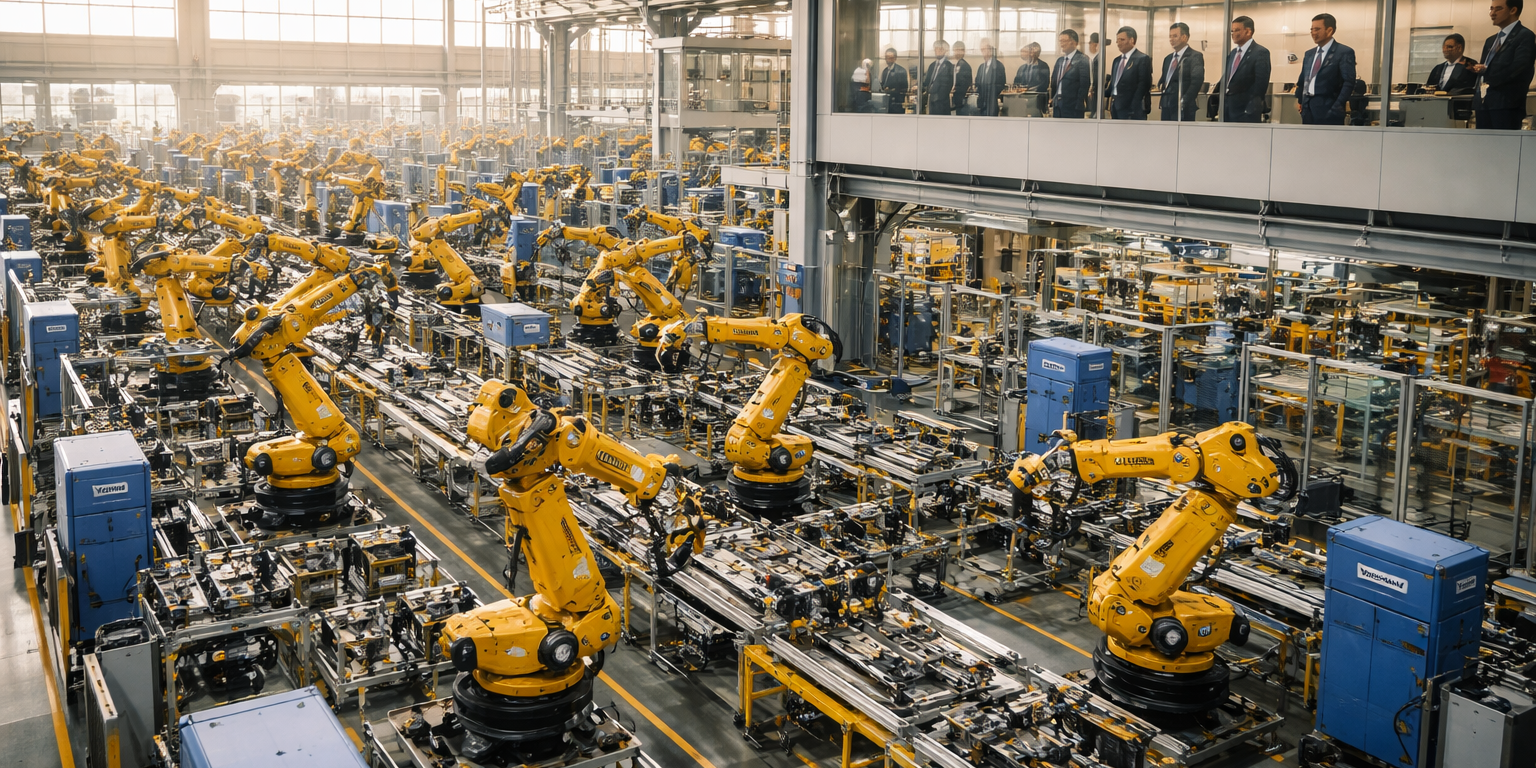
Andreessen Horowitz closed a $1.7 billion Series A for Atoms, the industrial robotics venture Travis Kalanick launched after stepping back from CloudKitchens. The round included participation from Uber, Kalanick's former company, along with undisclosed strategic investors. The funding ranks among the ten largest single rounds ever raised by a robotics company and marks one of the few times a16z has led a deal of this size in the industrial automation sector. Atoms has operated in stealth since its quiet founding, revealing almost nothing about its technology stack or deployment sites. What is known: the company positions itself as an industrial AI platform aimed at modernizing legacy infrastructure in sectors like logistics, manufacturing, and food service. Kalanick has described the vision as applying the same operational discipline that powered Uber's marketplace to physical systems that have resisted digitization.
The involvement of Uber as an investor adds weight to speculation that Atoms may be developing systems specifically for the food delivery and logistics supply chain. Kalanick maintains close ties to Uber's leadership despite his 2017 departure, and his CloudKitchens venture already serves as a key partner for multiple delivery platforms. Industry sources suggest Atoms may be working on robotic fulfillment systems for ghost kitchen facilities, though neither Atoms nor Uber confirmed details. CloudKitchens operates more than 400 locations globally, each of which could theoretically serve as a test bed for automation technology. That built-in distribution advantage alone would justify investor interest, even without breakthrough robotics IP. The a16z partnership is notable because the firm has historically avoided large capital-intensive hardware bets, preferring software and AI infrastructure plays. Marc Andreessen himself has been vocal about the potential for AI to finally deliver on the promise of flexible industrial automation, a theme that aligns with Atoms' public messaging.
Kalanick's track record cuts both ways. Uber transformed urban transportation but also became synonymous with regulatory battles, labor disputes, and cultural dysfunction during his tenure. CloudKitchens has drawn criticism for opaque lease terms and high fees charged to restaurant tenants, leading some operators to abandon the platform. Yet investors clearly believe his operational intensity translates to physical systems. The CloudKitchens model proved that centralized, software-managed physical infrastructure could scale profitably in a low-margin industry. Atoms appears designed to generalize that approach. The company has reportedly hired aggressively from Boston Dynamics, Amazon Robotics, and Tesla's Optimus team, focusing on engineers with experience deploying automation in unstructured environments. Job postings visible earlier in 2026 referenced computer vision for dynamic object manipulation, fleet orchestration software, and real-time adaptability in variable conditions. Those requirements point toward mobile manipulation robots rather than fixed automation, though Atoms has not confirmed product details.
The $1.7 billion raise comes as industrial robotics funding has cooled from its 2023 peak. Venture capital deployed to the sector dropped 31 percent year-over-year in the first half of 2026, according to PitchBook data, with investors favoring later-stage companies showing clear paths to profitability. That Atoms secured this sum in a Series A suggests either exceptional early traction or extraordinary confidence in Kalanick's ability to execute. The round also reflects continued belief that AI-native approaches can finally crack the flexibility problem that has limited industrial robots for decades. Traditional automation excels at repetitive tasks in controlled settings but struggles when conditions change. Vision-language models and reinforcement learning have shown potential to create systems that adapt on the fly, but few companies have demonstrated this capability at commercial scale. If Atoms has made progress here, the valuation becomes more understandable. The competitive landscape is crowded. Companies like Robust AI, Sanctuary AI, and Covariant already offer AI-powered robotic systems for warehouses and factories, while established players like ABB and FANUC are integrating AI into their platforms. Atoms will need differentiation beyond capital and founder pedigree.
What to Watch: Atoms is expected to emerge from stealth before year-end 2026, likely with initial deployment announcements. Watch for partnerships with major logistics providers or retailers, which would signal go-to-market strategy. Uber's third-quarter earnings call in late October may include comments on the Atoms investment and strategic rationale. Monitor hiring at CloudKitchens facilities in Los Angeles, Phoenix, and New York, where Atoms is rumored to be testing systems. Any public demos or technical papers from Atoms' engineering team would provide the first real look at the technology behind the $1.7 billion bet.