The sports rehabilitation equipment market will grow at a 9.35% compound annual rate through 2030, reaching $6.84 billion from a 2026 baseline of $4.79 billion, according to market analysis released this month. The $2.05 billion increase reflects accelerating deployment of robotic exoskeletons, AI-driven motion analysis systems, and sensor-laden recovery devices across clinical, athletic, and home care settings. Stryker Corporation, Smith & Nephew, Enovis, Performance Health, and Life Fitness hold dominant positions as the sector transitions from passive equipment to active, data-generating platforms that adjust resistance, track biomechanics, and communicate with cloud-based care teams in real time.
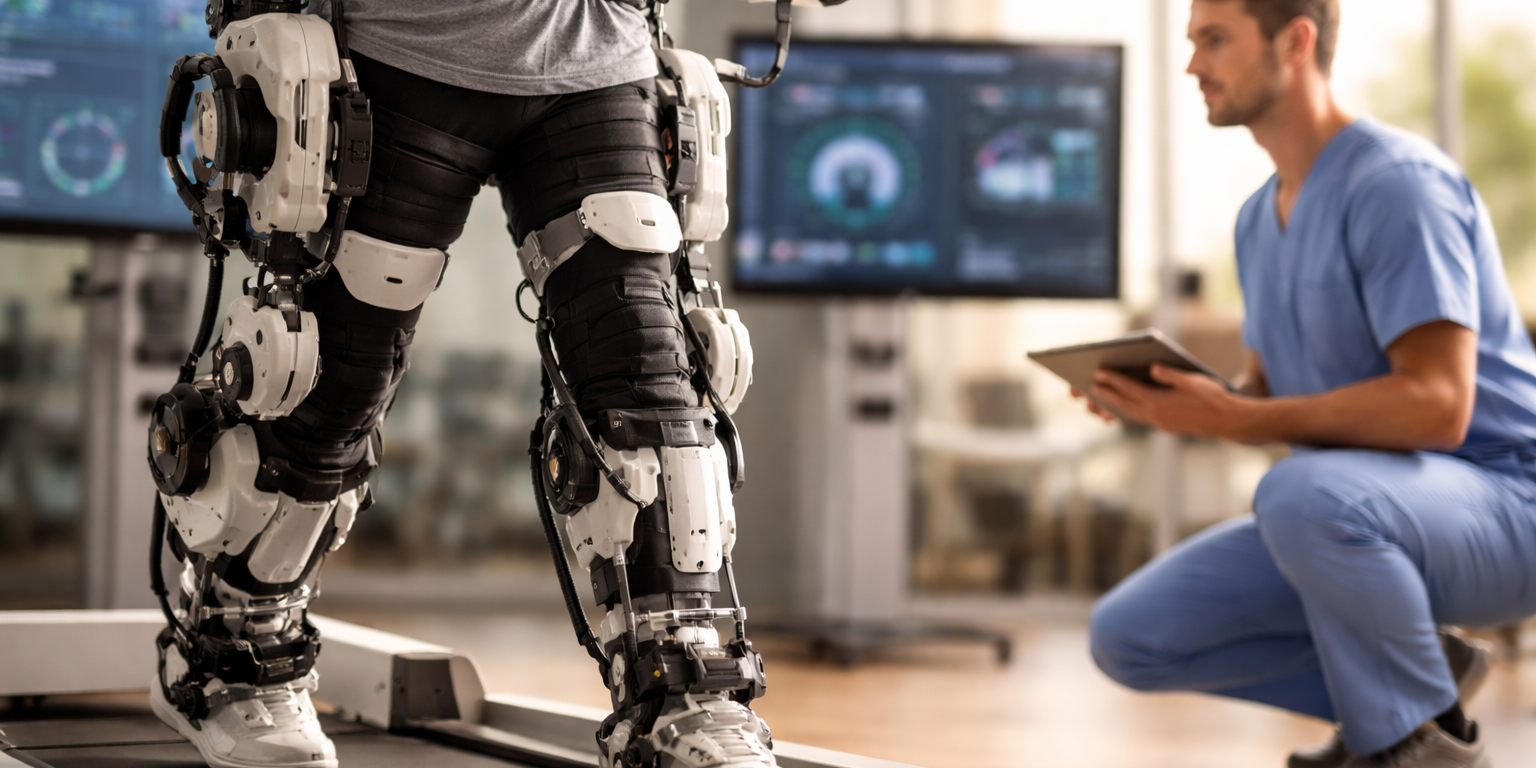
Three technology categories drive the transformation. Robotic-assisted therapy systems now account for the fastest-growing segment, with devices like powered gait trainers and upper extremity rehabilitation robots moving from research hospitals into community clinics and professional sports facilities. These systems combine force sensors, computer vision, and adaptive algorithms to personalize treatment intensity based on patient fatigue, range of motion, and strength metrics captured during each session. Second, electrotherapy and neuromuscular stimulation devices have evolved from simple TENS units into programmable platforms that integrate with wearable sensors to modulate stimulation patterns based on muscle activation data. Third, continuous passive motion machines and hydrotherapy equipment increasingly feature embedded IoT connectivity, allowing remote clinicians to adjust treatment protocols without requiring patients to return for in-person visits. The integration represents a fundamental shift from equipment as durable goods to equipment as service platforms.
Stryker's medical division and Smith & Nephew's advanced wound management and sports medicine units dominate the institutional market, supplying hospitals and orthopedic surgery centers with post-operative rehabilitation systems. Enovis, formed through the 2022 merger of Colfax's medical technology business, brings strength in bracing and supports alongside powered rehabilitation devices. Performance Health operates across the supply chain, from manufacturing to distribution, serving physical therapy clinics with everything from resistance bands to computerized balance training platforms. Life Fitness, traditionally focused on commercial gym equipment, has expanded into clinical rehabilitation with cardiovascular and strength training systems adapted for post-injury recovery. The competitive landscape fractures further when considering regional players in Asia-Pacific markets, where domestic manufacturers produce lower-cost alternatives to Western brands, and specialty robotics firms like Bionik Laboratories and Ekso Bionics target niche applications in neurological rehabilitation that overlap with sports injury recovery.
The revenue surge coincides with structural changes in healthcare reimbursement and sports medicine practice. Insurance providers in North America and Europe have begun covering robotic-assisted therapy for select conditions, removing a major adoption barrier for hospitals operating on tight capital equipment budgets. Professional sports teams, meanwhile, invest in advanced rehabilitation infrastructure as competitive advantage, deploying systems that cost $150,000 to $400,000 per unit to reduce athlete recovery time by even marginal amounts. The same technology filters into collegiate athletic programs, though at slower rates constrained by budget limitations. Home care represents an emerging but uncertain growth vector. Compact rehabilitation robots and AI-powered apps promise to extend clinical-grade therapy into patients' living rooms, but regulatory classification, liability concerns, and the lack of established reimbursement pathways have limited commercial deployment. Companies developing these home systems face the challenge of designing devices simple enough for unsupervised use while maintaining therapeutic efficacy comparable to clinic-based equipment operated by licensed physical therapists.
Broader adoption hinges on interoperability and data standards. Rehabilitation equipment generates vast quantities of biomechanical data, but proprietary software ecosystems prevent seamless information exchange between devices from different manufacturers and between rehabilitation platforms and electronic health records systems. Industry consortia have proposed open standards for motion capture data formatting and device communication protocols, but adoption remains voluntary and incomplete. For robotics engineers and investors, the sports rehabilitation market offers a proving ground for human-robot interaction design, adaptive control algorithms, and sensor fusion techniques applicable to broader assistive technology domains. The clinical setting provides structured environments where robot performance can be rigorously measured against patient outcomes, generating validation data valuable for regulatory submissions and product development cycles. Capital requirements remain substantial: developing a rehabilitation robot from prototype to commercial product typically requires $15 million to $40 million in engineering, clinical trials, and regulatory clearance, with FDA 510(k) pathways offering faster routes to market than de novo classifications. The financial calculus improves as component costs decline and as software differentiation allows hardware commoditization, enabling companies to build recurring revenue through data analytics subscriptions and cloud-based therapy management platforms rather than relying solely on equipment sales.
What to Watch: Monitor FDA clearance announcements for home-use rehabilitation robots, particularly from companies like Bionik Laboratories and Motorika, expected to submit applications in Q4 2026 and Q1 2027. Track Stryker's capital equipment sales in quarterly earnings calls for signals about hospital rehabilitation spending trends. Watch for pilot programs integrating rehabilitation equipment data into electronic health records systems, as interoperability will determine whether device makers can build sustainable software revenue streams. Follow reimbursement policy updates from CMS and major private insurers regarding coverage criteria for robotic-assisted therapy beyond current neurological indications.