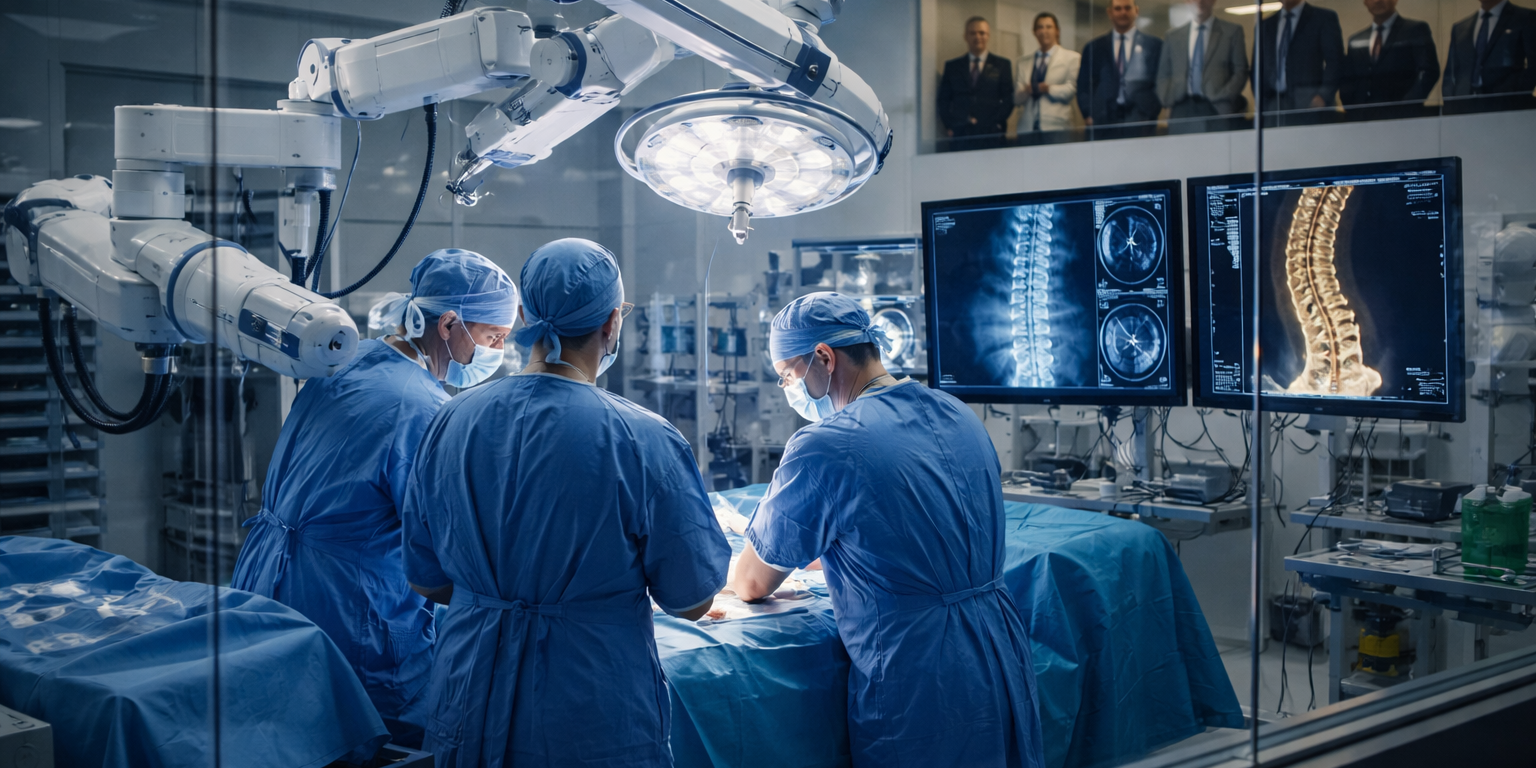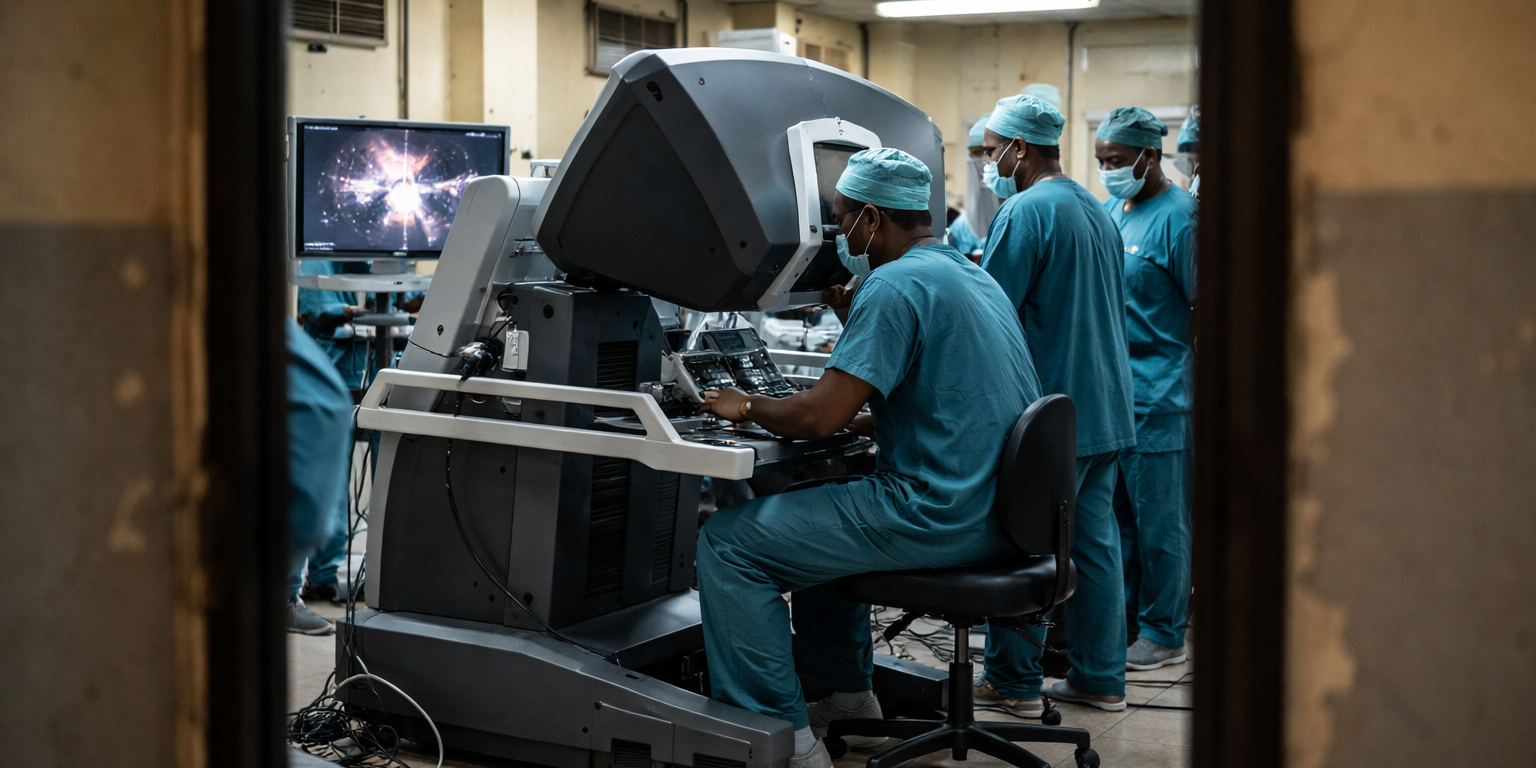
A surgical team at a Lagos teaching hospital controlled robotic instruments located in another medical facility to complete what Nigerian health officials are calling the country's first successful tele-robotic operation. The procedure, confirmed by multiple sources including representatives from the Federal Ministry of Health, demonstrated that bandwidth and latency conditions in Nigeria's largest city can support real-time surgical manipulation across distances. Yet the achievement, performed using equipment brought in for the demonstration, underscores a larger challenge: Nigeria has no domestic infrastructure to replicate the feat routinely. The country's medical robotics landscape remains defined by sporadic imports and isolated pilot projects rather than sustained deployment. For robotics engineers watching Africa's largest economy, the question is whether this marks the beginning of a buildout or another false start in a region where capital flows to energy and agriculture before healthcare technology.
Nigeria's healthcare system operates across a vast and unevenly connected geography. With a population exceeding 220 million spread across 36 states, specialist surgical care concentrates in Lagos, Abuja, and a handful of teaching hospitals. Rural facilities lack both trained surgeons and basic imaging equipment. Tele-robotic surgery, in theory, could allow a single specialist in Lagos to operate on patients hundreds of kilometers away, guided by sensors and actuators that replicate hand movements with sub-millimeter precision. The technology has been standard in parts of Europe, Asia, and North America for years, where Intuitive Surgical's da Vinci systems dominate hospital installations. But sub-Saharan Africa has seen minimal adoption. High upfront costs, maintenance contracts requiring foreign technicians, and unreliable power grids have kept robotic surgical platforms out of most African markets. The Lagos demonstration proved the concept works within Nigerian infrastructure, at least under controlled conditions. What it did not prove is economic viability or political will to fund ongoing programs.
The editorial published in The Punch, one of Nigeria's most widely circulated newspapers, frames the surgery as both achievement and indictment. The piece argues that Nigeria's scientific and medical communities have the talent to operate advanced robotic systems but lack the institutional support to move beyond demonstrations. It calls for dedicated budget lines, partnerships with robotics manufacturers, and training programs that go beyond sending a few surgeons abroad for certification courses. The editorial stops short of naming specific funding figures or proposed timelines, but the implication is clear: without sustained investment, the Lagos procedure will remain a footnote rather than the first step in a broader rollout. For robotics companies evaluating African markets, the message is that demand exists but procurement pathways remain murky. Nigeria's federal health budget has historically prioritized infectious disease programs and primary care over capital equipment. Medical robotics falls into a procurement gray zone where individual hospitals lack purchasing authority and federal agencies move slowly.
The timing of the surgery coincides with broader shifts in how robotics manufacturers approach emerging markets. Companies like CMR Surgical in the UK and Asensus Surgical in the United States have developed modular, lower-cost platforms explicitly designed for markets where da Vinci's multi-million-dollar price tags are prohibitive. These systems sacrifice some dexterity and feature sets in exchange for simpler maintenance and training requirements. Neither company has announced sales or partnerships in Nigeria, but both have engaged with health ministries in Kenya, South Africa, and Egypt. Nigeria represents a larger addressable market than any of those countries, yet also a more fragmented procurement environment. The Lagos surgery, assuming it used equipment from an established manufacturer, likely involved a temporary installation or loan arrangement rather than a permanent sale. That model allows hospitals to claim milestones without committing capital, but it also means the equipment leaves once the demonstration concludes. Industry observers note that this pattern has repeated across multiple African countries over the past decade, with robotic surgery remaining perpetually in the pilot phase.
What to Watch: Monitor whether Nigeria's Federal Ministry of Health issues procurement tenders for robotic surgical platforms by mid-2027, which would signal movement beyond demonstration projects. Track CMR Surgical and Asensus Surgical for announcements regarding sub-Saharan distribution agreements, as both have indicated interest in African markets. Watch for follow-up procedures in Lagos or other Nigerian cities using the same or different robotic systems, which would confirm whether local institutions retained access to equipment. Pay attention to World Bank or African Development Bank healthcare infrastructure loans to Nigeria, as tele-robotic surgery could qualify for multilateral funding if framed as bridging rural care gaps.