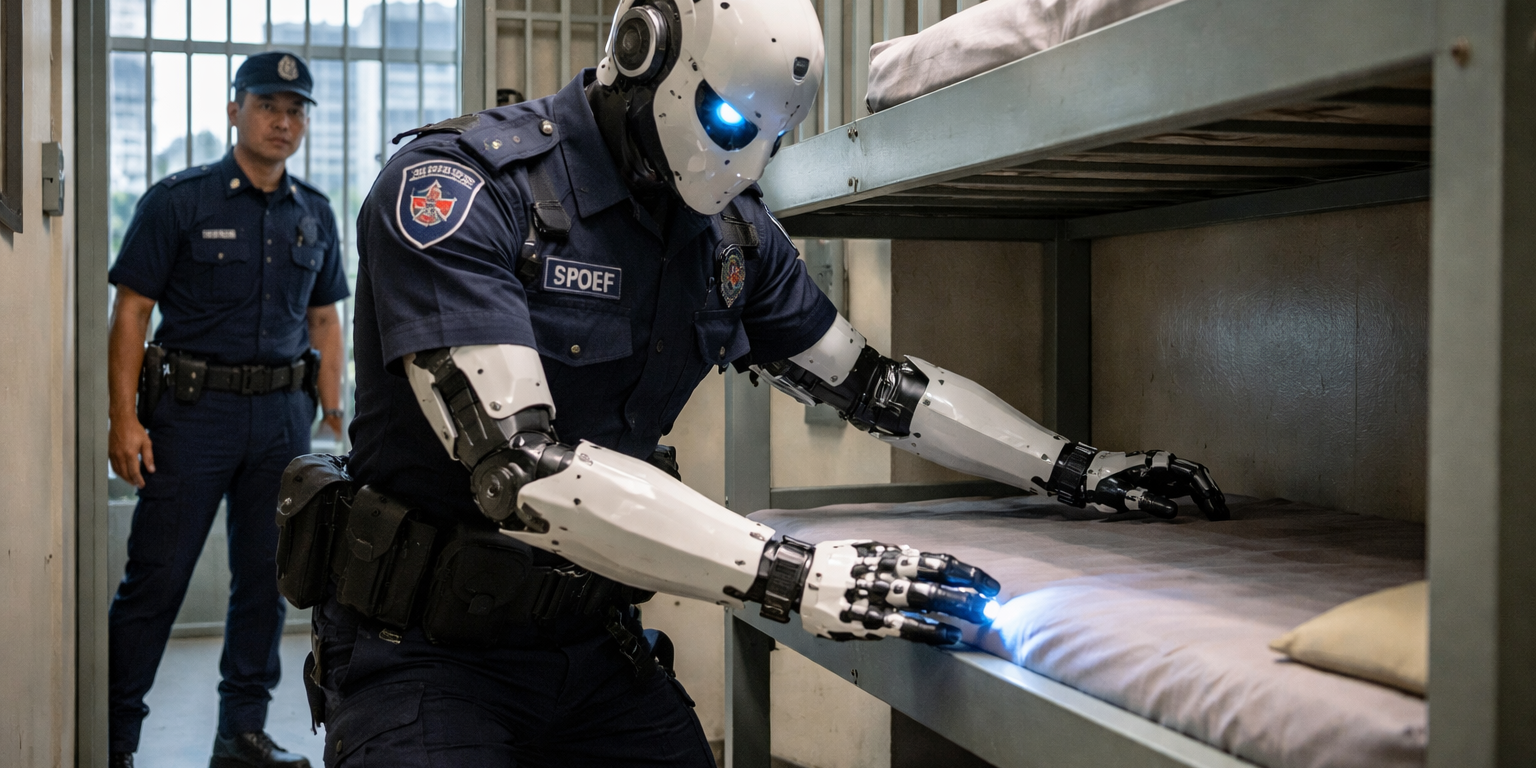
Singapore's Ministry of Home Affairs has opened a 2,000-square-meter facility in the One-North research district dedicated solely to developing humanoid robots for high-risk public safety operations. The Home Team Humanoid Robotics Centre will focus on three initial deployment scenarios: post-blast crime scene investigation, prison cell searches in confined spaces, and perimeter security patrol in correctional facilities. Engineers at the facility are working with commercially available humanoid platforms to customize sensors, manipulation capabilities, and autonomy software for environments too dangerous or restrictive for human officers.
The 2028 target date reflects a measured approach to field deployment that contrasts sharply with the rushed timelines common in commercial humanoid development. Ministry officials have structured the programme in phases: hardware selection and modification through mid-2027, followed by controlled environment testing at Singapore Police Force and Singapore Prison Service training facilities, then limited pilot deployments in late 2027 before full operational rollout the following year. The Singapore Civil Defence Force is also evaluating humanoid robots for hazardous materials response, though that application remains in early feasibility studies. Unlike warehouse or manufacturing deployments where humanoids can be recalled for adjustment, public safety operations demand reliability standards closer to aerospace or medical devices.
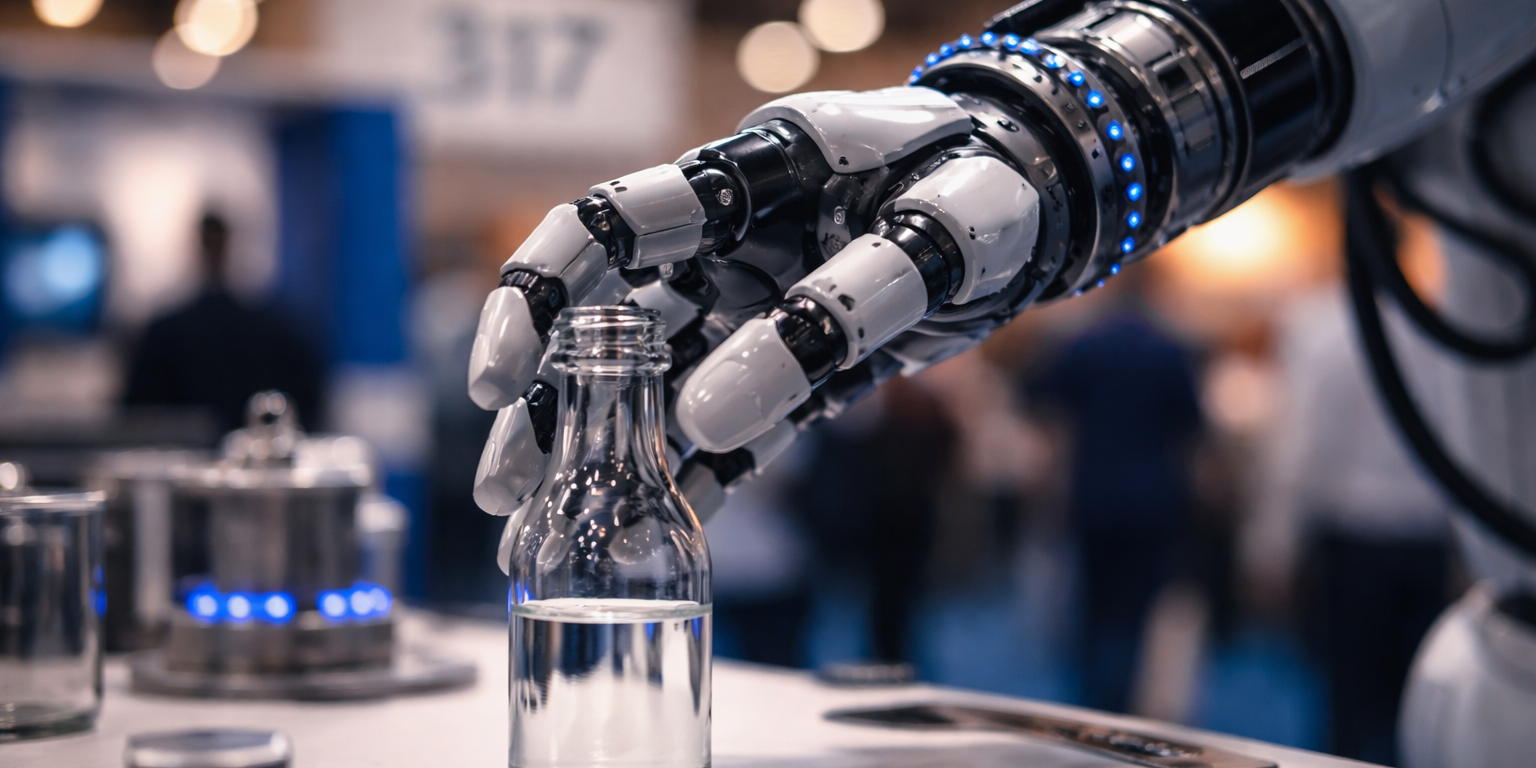
The facility houses motion capture systems, explosive simulators, and mock-ups of prison cell blocks and urban bombing scenarios. Engineering teams are addressing challenges specific to public safety: maintaining chain-of-custody for evidence collected by robotic hands, ensuring sensors can operate in smoke or chemical contamination, and developing fail-safe protocols when communication links drop inside reinforced concrete structures. One technical focus involves bilateral manipulation for tasks like safely lifting debris or opening doors with one hand while stabilizing a sensor payload with the other. The centre has not disclosed which humanoid platforms are under evaluation, though procurement documents suggest at least three vendors are involved. Singapore's approach prioritizes dexterous manipulation and sensor integration over the walking speed or payload capacity that dominate warehouse robotics specifications.
Beyond the immediate operational goals, the centre represents Singapore's broader strategy of establishing technical leadership in niche robotics applications where the city-state's compact geography and centralized governance enable faster iteration. The Home Team encompasses police, civil defense, immigration, and prison services under unified command, eliminating the inter-agency coordination problems that slow technology adoption in federated systems. Singapore already operates extensive networks of surveillance cameras, biometric immigration gates, and autonomous security patrol robots at Changi Airport. Humanoid robots extend that infrastructure into scenarios requiring physical manipulation rather than just sensing. The economic calculation differs from commercial deployments: public safety agencies measure return on investment in reduced injury rates and expanded operational capability rather than labor cost displacement.
The international implications extend beyond Singapore's borders. Law enforcement and correctional agencies worldwide face similar challenges with confined spaces, explosive threats, and high-risk inspections, but lack the budget or technical infrastructure to develop custom robotic solutions. If Singapore demonstrates reliable humanoid operation in these scenarios by 2029, the centre could become a reference architecture for public safety robotics procurement globally. Several Middle Eastern governments have already sent delegations to tour the facility. The centre's focus on post-blast investigation also aligns with growing international demand for robotic EOD systems that can handle improvised explosive devices too sophisticated for traditional tracked robots with simple grippers.
What to Watch: Monitor Singapore's vendor selection announcements expected in Q1 2027 for specific humanoid platforms and sensor packages. Track any joint development agreements between the Home Team and commercial humanoid manufacturers, particularly around bilateral manipulation or hazmat-rated enclosures. Watch whether Singapore Civil Defence Force commits budget for hazmat response humanoids in its 2027-2028 procurement cycle. Follow pilot deployment reports from Singapore Prison Service in late 2027 for first real-world performance data on humanoids in correctional environments.