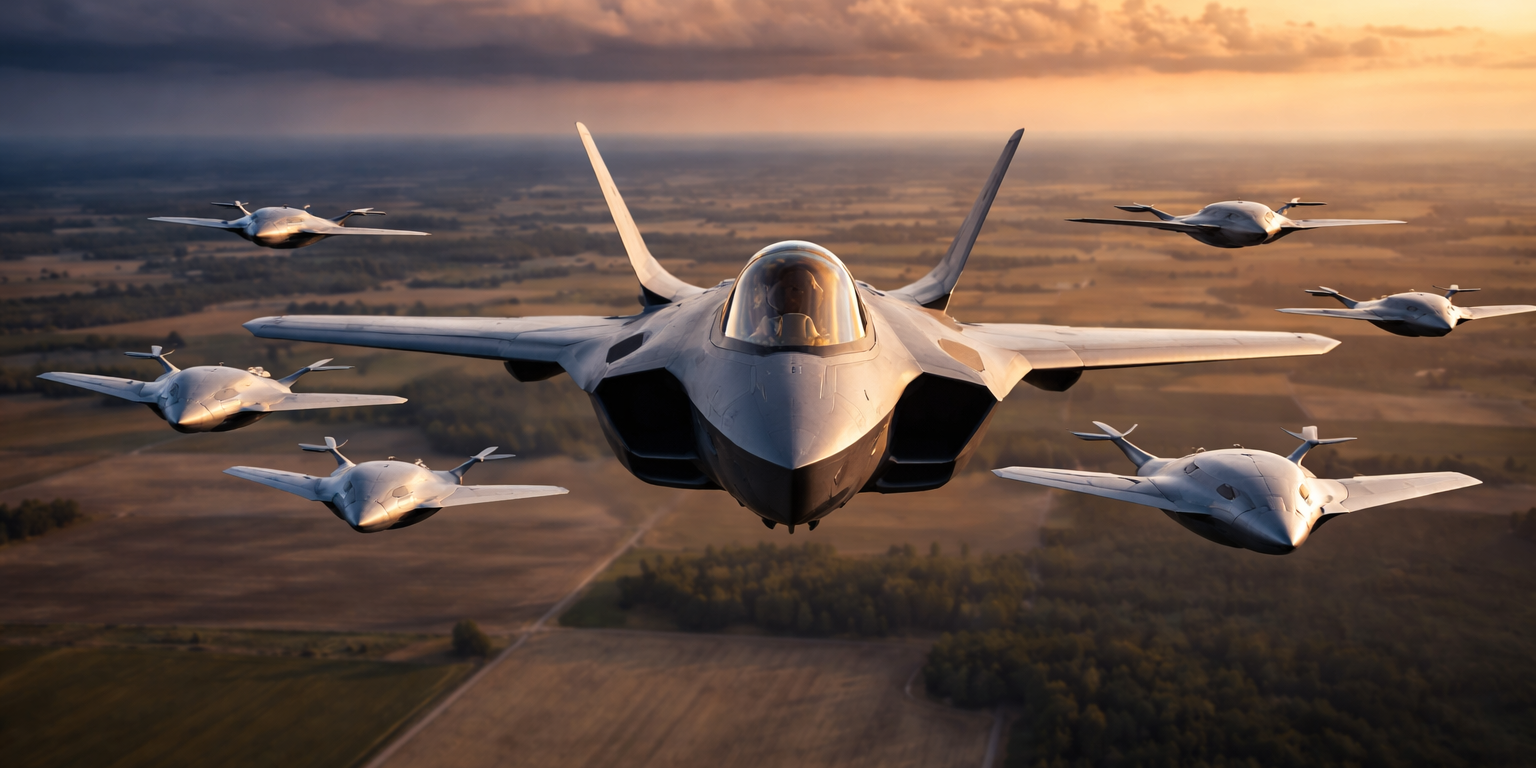
A Destinus Hornet interceptor executed a fully autonomous strike mission outside Paris in what Shield AI and Destinus describe as a successful demonstration of collaborative autonomy for counter-drone operations. The flight exercise, conducted in early June 2026, validated the ability of Shield AI's Hivemind artificial intelligence pilot to operate on the Hornet platform while coordinating with other autonomous systems to detect and neutralize simulated threats. The companies disclosed the results on June 15 but provided limited technical detail about the engagement parameters or the number of targets defeated during the exercise.
The demonstration addresses a capability gap that military planners have identified as critical since drone swarms emerged as a persistent threat in Ukraine and the Middle East. Small unmanned aerial systems and loitering munitions have proven difficult to counter with traditional air defense architectures, which remain optimized for larger aircraft and ballistic missiles. Interceptor systems like the Hornet offer a kinetic solution sized to match the threat, but effective deployment at scale requires autonomy that can process sensor data, prioritize targets, and execute engagements faster than human operators. Shield AI has positioned Hivemind as a platform-agnostic solution for exactly this problem, and the company has now demonstrated the software on fixed-wing aircraft, quadcopters, and ground vehicles in addition to the Hornet interceptor. Destinus, based in Switzerland, has focused its development efforts on high-speed platforms including hypersonic concepts, but the Hornet represents a nearer-term application designed for immediate operational relevance.
The flight exercise tested multi-agent coordination, with the Hornet operating as part of a networked team rather than a standalone asset. Shield AI has emphasized teaming capabilities as a core feature of Hivemind since the software's early development, arguing that autonomous systems must share information and coordinate actions to be effective in contested environments. During the June demonstration, the Hornet received cueing data from other sensors in the network, processed that information onboard using Hivemind, and executed intercepts without requiring remote pilot commands. The level of autonomy demonstrated falls into what defense officials typically classify as supervised autonomy, where human operators maintain oversight and can intervene, but the system executes tactical decisions independently within predefined rules of engagement. Shield AI declined to specify whether the demonstration included live kinetic intercepts or used scoring systems to simulate successful engagements, a common practice in developmental flight tests.
Both companies stand to benefit from growing defense budgets allocated to counter-UAS systems. The United States Department of Defense requested $1.3 billion for counter-small UAS programs in its fiscal 2026 budget, an increase from $876 million the previous year, and European NATO members have accelerated procurement following lessons learned from the war in Ukraine. Destinus has positioned the Hornet as an exportable system compatible with allied defense networks, while Shield AI has pursued integration partnerships that allow Hivemind to operate across multiple platforms from different manufacturers. The business model mirrors the approach taken by software-defined vehicle companies in the commercial sector, where a single autonomy stack supports diverse hardware configurations. Ryan Tseng, co-founder and president of Shield AI, has stated publicly that the company aims to become the de facto standard for military autonomy software, analogous to how Microsoft Windows dominated personal computing. The Paris demonstration with Destinus represents another data point in that strategy, showing Hivemind operating on hardware developed entirely outside Shield AI's own product line.
The timing of the announcement coincides with the Eurosatory defense exhibition, where counter-UAS systems and autonomous platforms have featured prominently among exhibitors. European defense primes including Thales, Rheinmetall, and Leonardo have all announced counter-drone initiatives in the past eighteen months, creating a competitive landscape where smaller companies like Destinus must demonstrate technical differentiation to win contracts. Autonomous engagement authority represents one potential differentiator, as many existing counter-UAS systems require humans in the loop for final firing decisions. Shield AI and Destinus did not disclose whether military customers observed the June flight exercise or whether the demonstration was conducted in support of a specific procurement process. Both companies have existing relationships with U.S. and European defense agencies, though details of those contracts remain largely classified.
What to Watch: Shield AI is expected to announce additional platform integrations for Hivemind before the end of third quarter 2026, with defense industry analysts speculating that a European unmanned ground vehicle manufacturer may be next. Destinus will likely pursue export certifications for the Hornet system through NATO's standardization process, a multi-month effort that would open the platform to alliance-wide procurement. Watch for U.S. Department of Defense guidance on autonomous weapons systems expected in late 2026, which could either accelerate or constrain the deployment timelines for systems like those demonstrated in Paris.