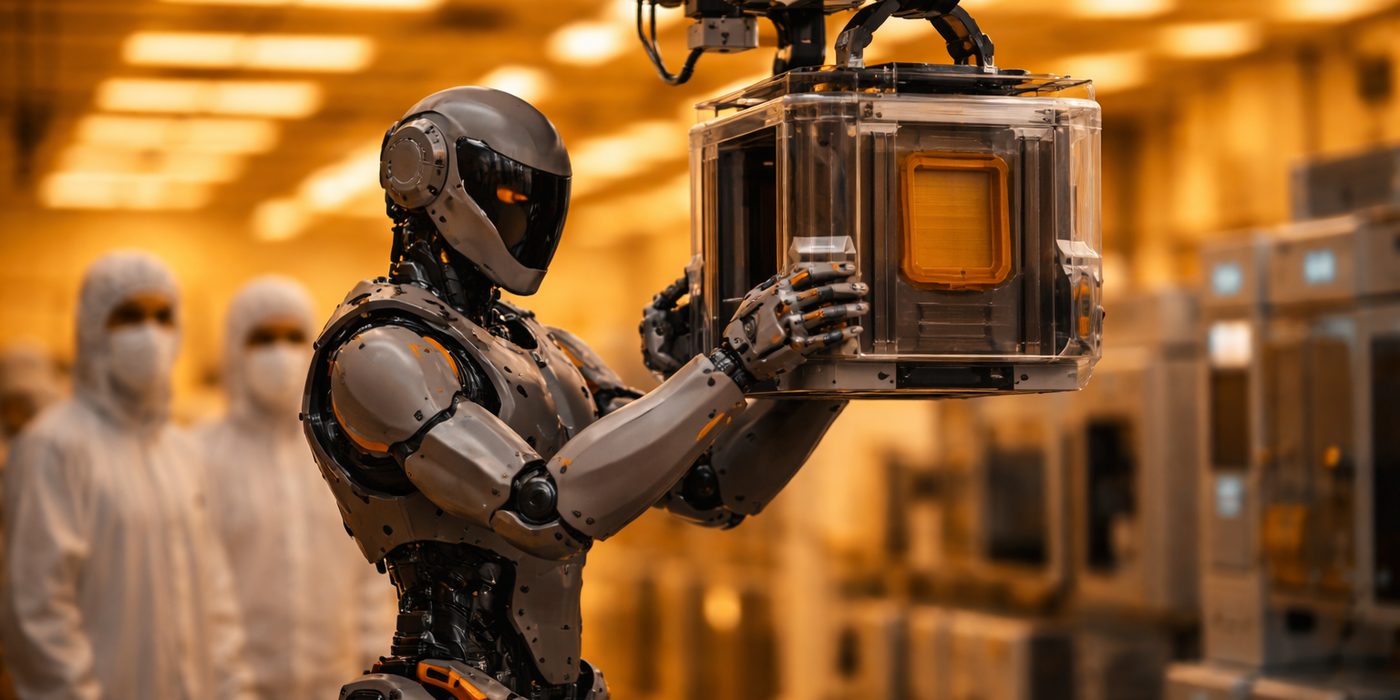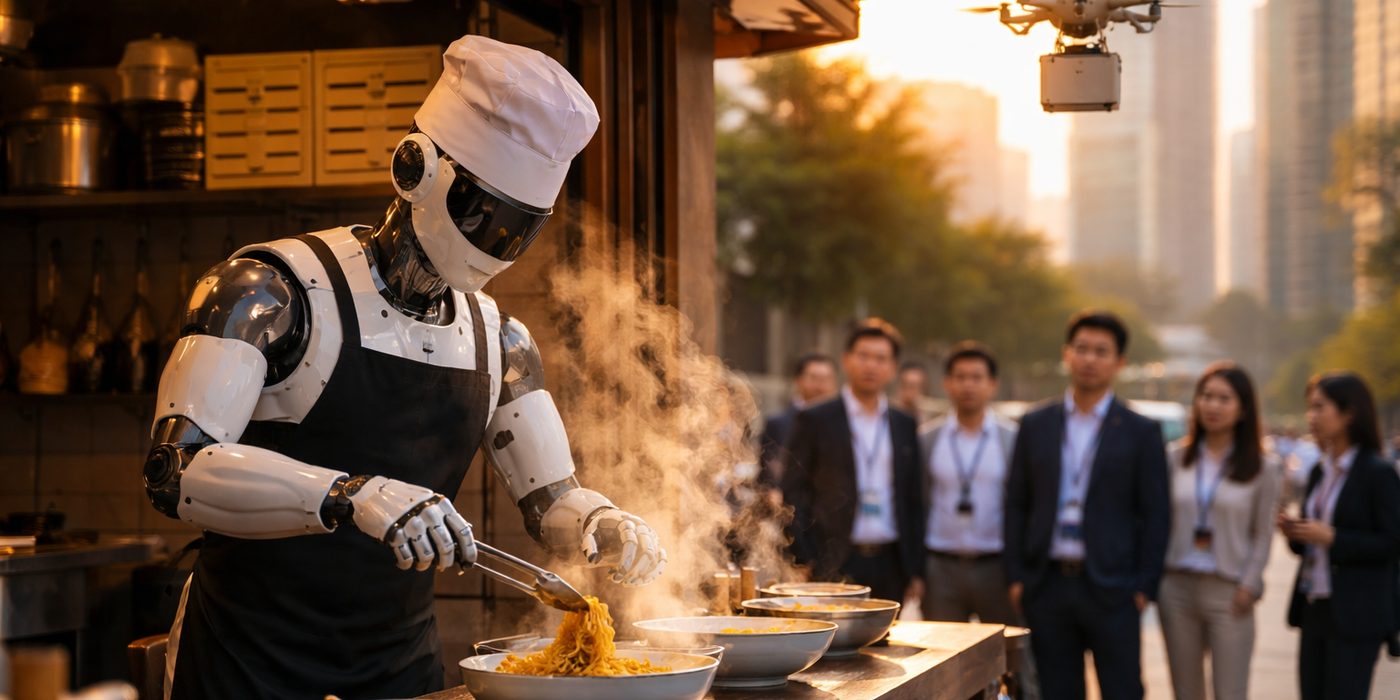
Shenzhen's pitch to visiting APEC delegations did not rely on a single hero robot. It relied on a city where humanoid machines cooking meals and drones dropping parcels are treated as ordinary parts of the urban fabric. That framing, more than any specific demo, is what Chinese officials were selling. The coverage from RT, which toured the showcase on video, centered on exactly this: a municipal government presenting automation as a lived environment rather than a laboratory exercise. Details on individual machines were thin in the broadcast, and neither unit counts nor pricing were disclosed. What was clear is the intent. Shenzhen wants foreign delegations to leave believing the future is already operational.
The backdrop explains why the city can credibly make that argument. Shenzhen sits at the heart of the Pearl River Delta manufacturing cluster, where actuator suppliers, battery makers, sensor vendors, and contract assemblers operate within a few hours of one another by road. A humanoid prototype that might take months to source parts for in Europe or North America can be iterated in weeks. Local government has reinforced the advantage with subsidies, testing zones, and low-altitude airspace policies that have made Shenzhen one of the most permissive environments in the world for commercial drone logistics. DJI is headquartered here, and delivery operators such as Meituan have run drone routes across the city for several years. The robot chef is the newer addition to a stack that was built piece by piece.
Food service is a revealing choice of demonstration. Commercial kitchens are structured enough for current robotics to handle repeatable tasks, yet unstructured enough to expose the limits of perception, grasping, and timing. Frying, plating, and handing off orders involve deformable objects, heat, and human proximity, all at once. Most deployed kitchen automation worldwide remains purpose-built machinery, such as fry stations and bowl assemblers, rather than general-purpose humanoids. When a city stages a humanoid in that role for international visitors, it is signaling confidence in the form factor as much as the task. Engineers should read that carefully. A humanoid chef is a marketing asset and a data-collection platform before it is a cost-saving tool, since a wheeled arm cell will typically win on throughput and unit economics.
The sharper observation is about sequencing. Western humanoid developers tend to pitch factory and warehouse labor as the first beachhead, with consumer-facing roles years away. Shenzhen is inverting that order for public demonstration, putting machines in front of diners and delivery customers while industrial deployments proceed quietly in the background. That approach builds public familiarity and political tailwind, and it gives Chinese firms a continuous stream of real-world interaction data that lab-bound competitors lack. It also carries reputational risk, since a visible failure in a restaurant travels faster than a missed cycle-time target on a factory floor. For investors, the signal to extract is infrastructure maturity, not any one demo: the airspace rules, charging networks, and supplier base are what compound over time and are hardest for foreign rivals to replicate.
What to Watch
Track whether Shenzhen's municipal authorities publish expanded low-altitude flight corridors or new commercial drone permits in the first quarter of 2027, since regulatory capacity is the real constraint on drone logistics scale. Watch for order disclosures from Chinese humanoid makers such as UBTech and Unitree, particularly any contract that specifies unit volumes for service-sector use rather than research sales. Monitor Meituan's quarterly reporting for drone delivery order counts, which offers one of the few hard metrics on whether aerial logistics is moving beyond pilot status. Finally, look for follow-up deployments in other APEC member economies, which would indicate whether the showcase produced real commercial interest or remained a diplomatic exercise.