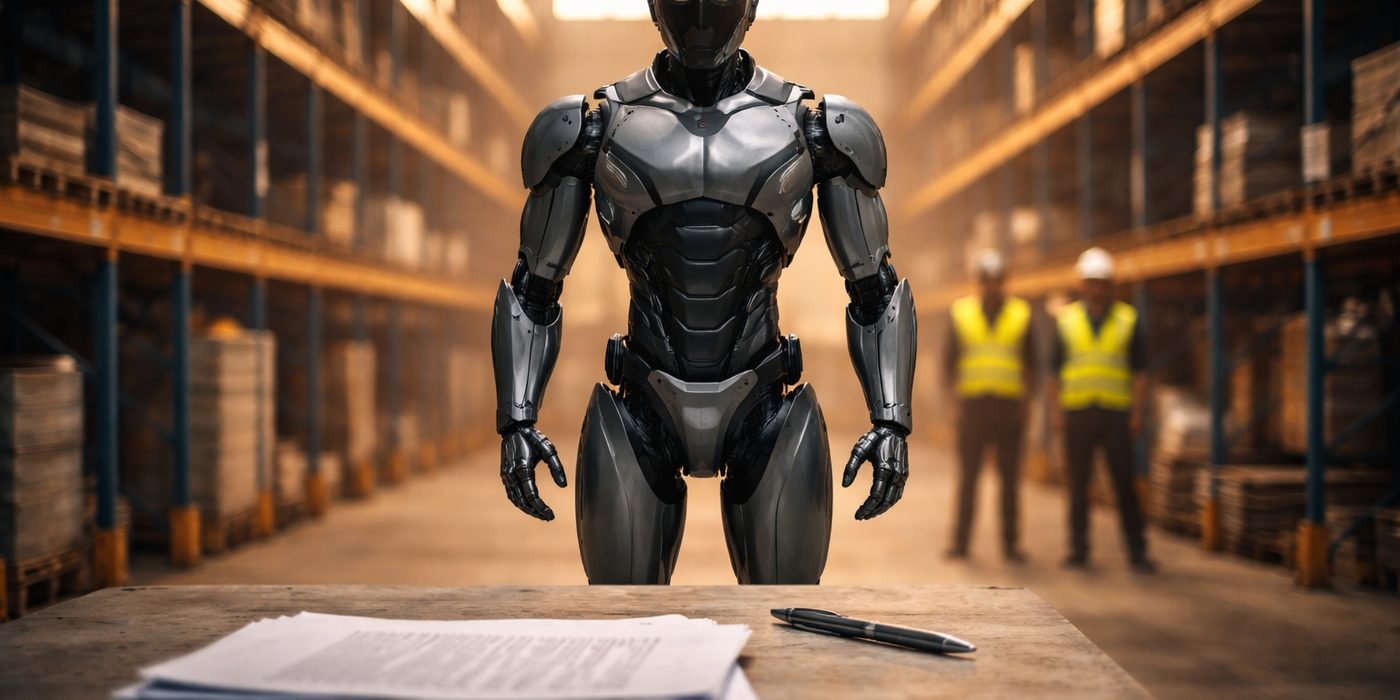
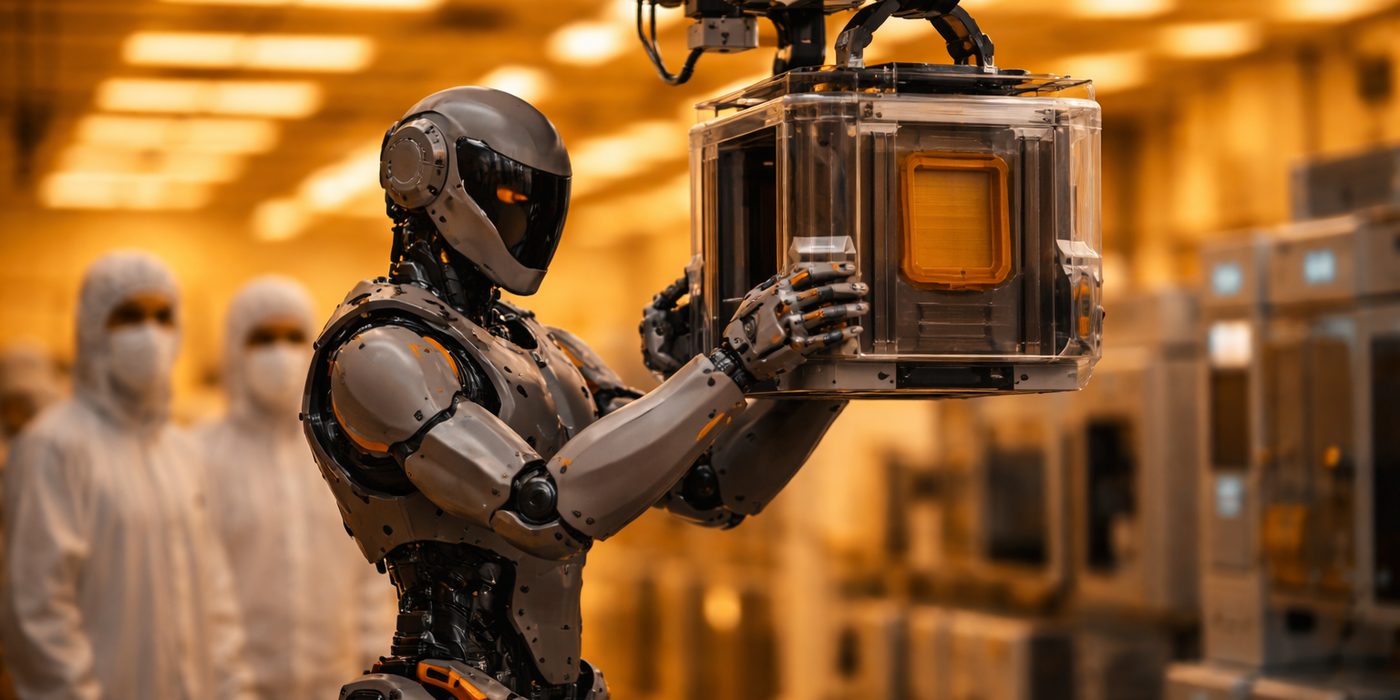
The first place Atlas will prove itself outside a car factory is a semiconductor fab, and that choice says more than the deployment itself. Boston Dynamics plans to begin trials with a major chipmaker in early 2027, according to reporting by The Robot Report, extending the humanoid beyond the automotive work that has defined its commercial story. Fabs are unforgiving. Particle counts are policed in single digits, tool uptime is measured against revenue per hour, and a dropped wafer carrier can erase a day of output. Automotive plants tolerate a clumsy robot far better than a fab tolerates a shedding one. The company has not publicly named the manufacturer.
How Atlas got here matters. Boston Dynamics retired the hydraulic Atlas in April 2024 and introduced an all-electric successor within a day, a deliberate break from a research platform toward a product. The company then aligned that product with Hyundai Motor Group, its majority owner, which put the robot into automotive pilots and pointed to plant-floor tasks like parts sequencing and material handling. That arrangement gave Atlas a captive customer and a forgiving proving ground. It also left a question hanging over the whole program: would a humanoid built around one parent company's factories generalize to anyone else's? The semiconductor trial is the first real attempt to answer it.
The technical gap between the two environments is wide. Automotive logistics rewards payload, reach, and tolerance for large, rugged parts. Semiconductor logistics rewards precision, cleanliness, and integration with automated material handling systems that already move wafers through a fab with little human contact. Front-opening unified pods, the sealed carriers that hold wafers, are standardized and heavy enough to matter, which makes them a plausible target for a humanoid that can walk between tools and exchange loads where overhead transport falls short. But fabs are also dense with automation built specifically to keep people and anything people-shaped away from product. Atlas will have to justify its presence against purpose-built systems that are cheap, fast, and boringly reliable.
That last point is the sharpest observation in the story for anyone writing checks. Humanoids have been sold on the promise of working in spaces built for humans, yet the most automated factories in the world are precisely the ones that have already engineered humans out of the loop. A fab is a stress test of that premise from the opposite direction: if a general-purpose robot can find defensible work in the most optimized building in manufacturing, the addressable market widens considerably. If it cannot, the humanoid thesis narrows toward legacy facilities with manual handling gaps. Competitors including Agility Robotics, Apptronik, and Figure AI have each chased logistics and automotive pilots, so a semiconductor foothold would differentiate Boston Dynamics on customer type rather than on specs alone.
The commercial stakes extend past one pilot. Chipmakers are expanding capacity across the United States, Taiwan, Japan, and Europe under heavy subsidy, and labor availability for fab operations is a recurring constraint in those buildouts. Any vendor that can credibly offload repetitive handling tasks gains leverage with an industry that spends enormously and buys carefully. Qualification cycles in semiconductors are long and conservative, which means a trial beginning in early 2027 is a starting gun for a multi-quarter evaluation rather than a purchase order. Expect the customer to scrutinize failure modes, particulate behavior, safety certification, and mean time between interventions long before discussing volume. For Boston Dynamics, the prize is a reference customer in a sector that confers credibility on everything that follows.
What to Watch Watch whether Boston Dynamics names the semiconductor partner or discloses trial scope, such as task type and shift length, ahead of the early 2027 start. Track Hyundai Motor Group's own humanoid deployment updates, since Atlas production capacity and cost targets will shape how many units can reach outside customers. Monitor competitor announcements from Agility Robotics, Apptronik, and Figure AI for similar moves into electronics or semiconductor facilities over the next 90 days. Finally, follow any cleanroom or particulate certification claims, because a published compliance benchmark would be the clearest early signal that Atlas is being built for fabs and not merely tested in one.