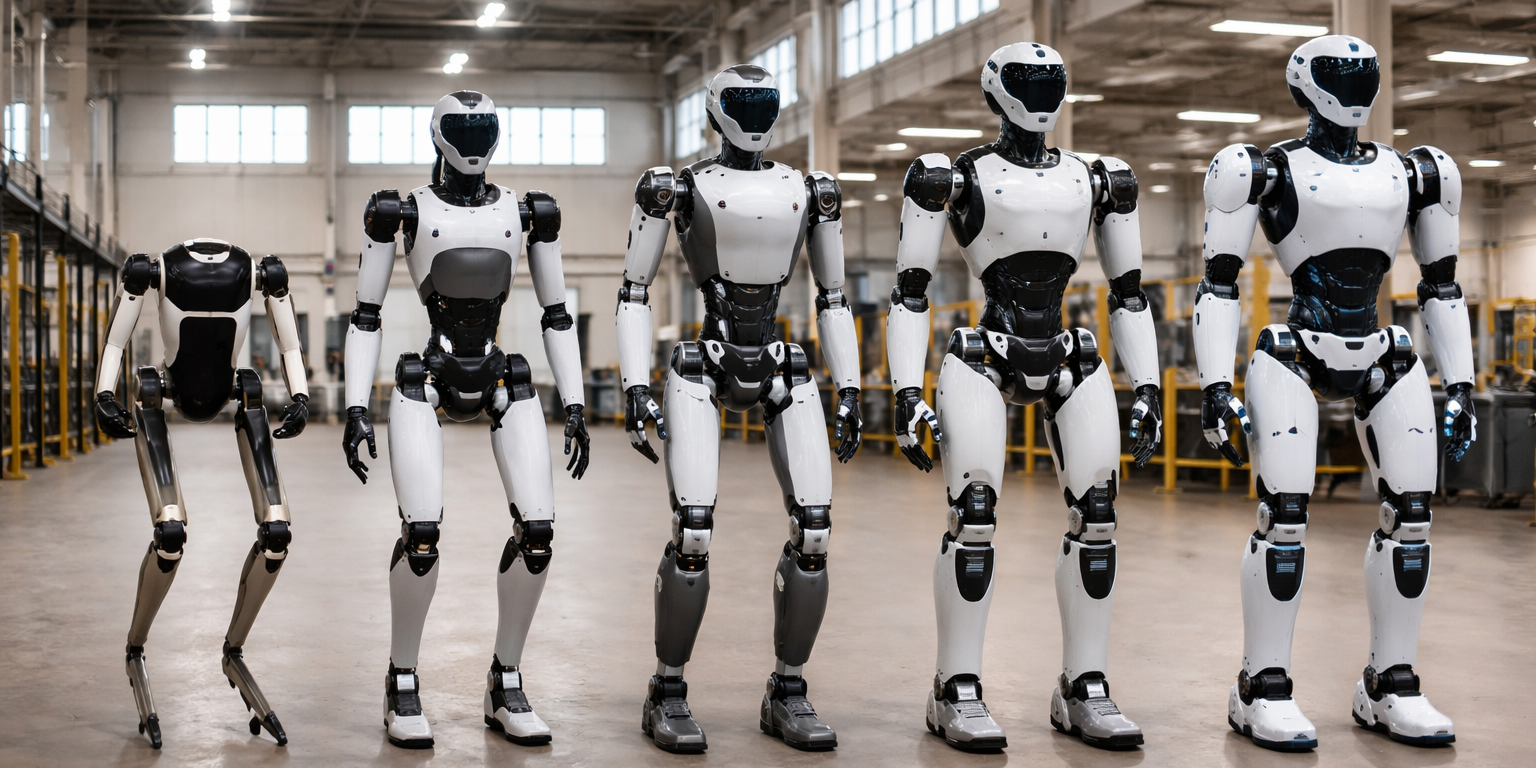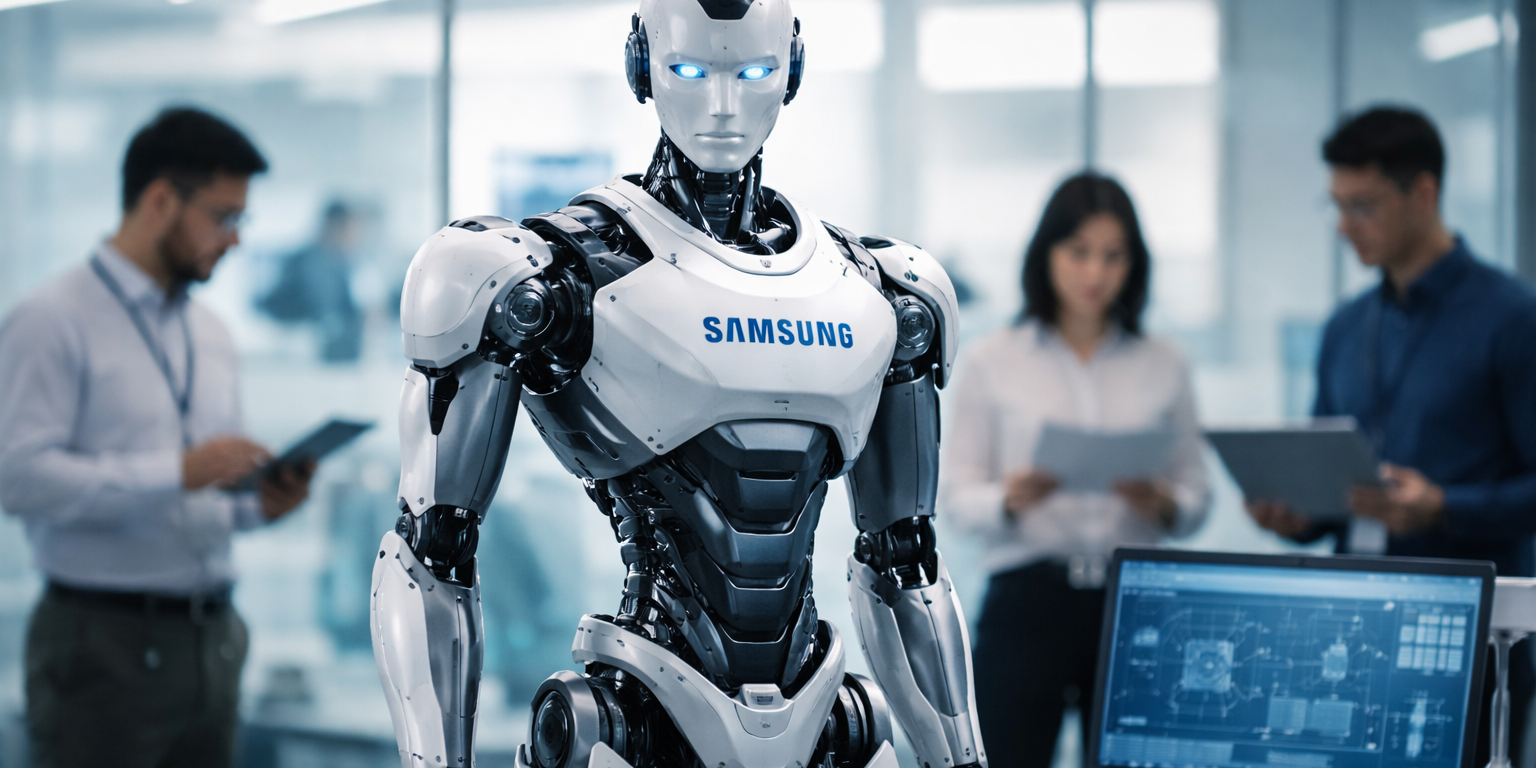
Samsung has established RX, a dedicated robotics division that will operate as a distinct business unit within the conglomerate's organizational structure. The division's inaugural product line centers on humanoid robotics, according to internal planning documents, representing Samsung's most significant commitment to embodied AI since the company shuttered its previous robotics experiments in the mid-2010s. The timing aligns with a broader industry shift as hardware manufacturers race to capitalize on foundation models that promise to give robots general-purpose capabilities rather than narrow task-specific programming.
The RX division represents a departure from Samsung's previous approach to robotics, which treated the category as a research curiosity rather than a revenue-generating business. Between 2014 and 2018, Samsung Advanced Institute of Technology published papers on bipedal locomotion and manipulation but never commercialized the work. The company's most visible robotics effort, a rolling ball-shaped assistant called Ballie announced at CES 2020, remained a concept product that never reached consumer channels. RX changes that calculation by creating a profit-and-loss structure with dedicated engineering resources, manufacturing capacity, and go-to-market operations. Samsung Electronics has not disclosed the division's headcount or capital allocation, but the decision to create a standalone unit typically signals investment in the hundreds of millions of dollars range. The company's semiconductor and display businesses give it vertical integration advantages that pure-play robotics startups lack.
Humanoid robotics has emerged as the dominant form factor among companies betting on embodied AI, driven by the logic that human-shaped robots can navigate infrastructure built for human bodies without requiring facility redesigns. Figure AI raised $675 million at a $2.6 billion valuation earlier this year to build its Figure 02 humanoid for warehouse and manufacturing applications. Tesla continues development of its Optimus platform, which Elon Musk has described as potentially more valuable than the company's automotive business. Chinese manufacturers including Unitree, Fourier Intelligence, and UBTech have brought humanoids to market at price points below $20,000, intensifying competitive pressure on Western developers. Samsung's entry adds another well-capitalized player with manufacturing scale and global distribution channels. The company ships more than 250 million smartphones annually and operates fabrication facilities across South Korea, Vietnam, and India that could be adapted for robotics production.
What remains unclear is whether Samsung will pursue a hardware-only strategy or attempt to build its own foundation model for robot control. The company has invested in large language model development through Samsung Research but trails competitors like Google, OpenAI, and Anthropic in AI capabilities. Most humanoid developers are betting that foundation models trained on massive datasets of robot interactions will enable general-purpose manipulation and navigation, reducing the need for task-specific programming. Physical Intelligence recently demonstrated a single model controlling multiple robot morphologies, while Google DeepMind's RT-2 system allows robots to follow natural language instructions for novel tasks. If Samsung licenses third-party AI rather than developing proprietary models, it would follow the path of hardware manufacturers like Xiaomi and LG that use Android for software layers. The alternative is a vertically integrated approach similar to Apple's, but that requires AI research capabilities Samsung has not yet demonstrated at scale. The company's mobile division uses Google's AI models for on-device features in its Galaxy smartphones.
What to Watch: Samsung typically previews new hardware categories at CES in January or its developer conference in October. RX's first public demonstration could arrive at CES 2027, giving engineers roughly 18 months to reach prototype stage. Monitor partnerships with AI labs like Anthropic, Cohere, or OpenAI, which would signal a licensing approach rather than in-house model development. Track headcount growth in Samsung's Seoul and Silicon Valley offices for robotics-specific roles, particularly hirings from Boston Dynamics, Agility Robotics, or Figure AI. Also watch for Samsung's response to expected price cuts from Chinese humanoid manufacturers, which could compress margins before Samsung even enters the market.