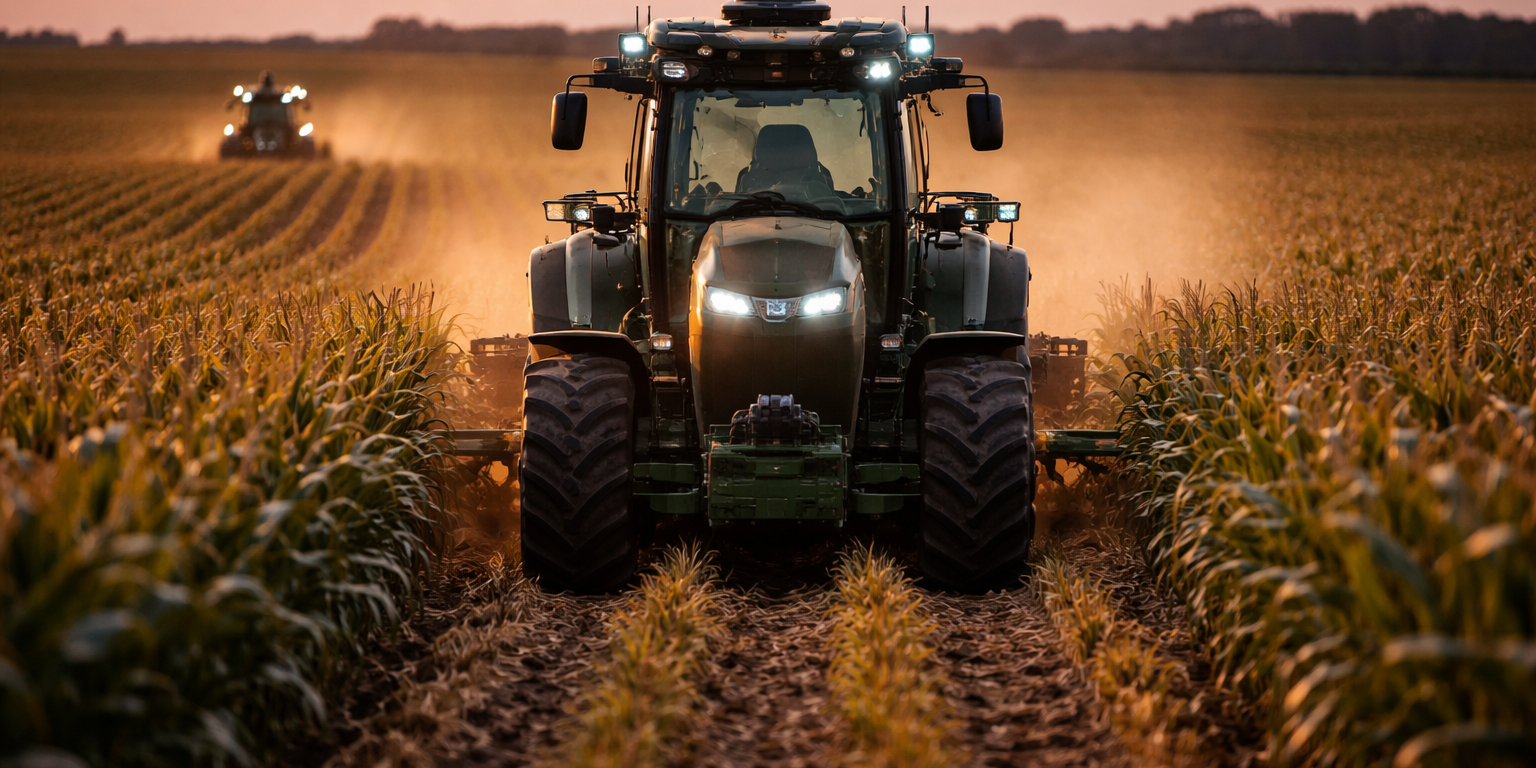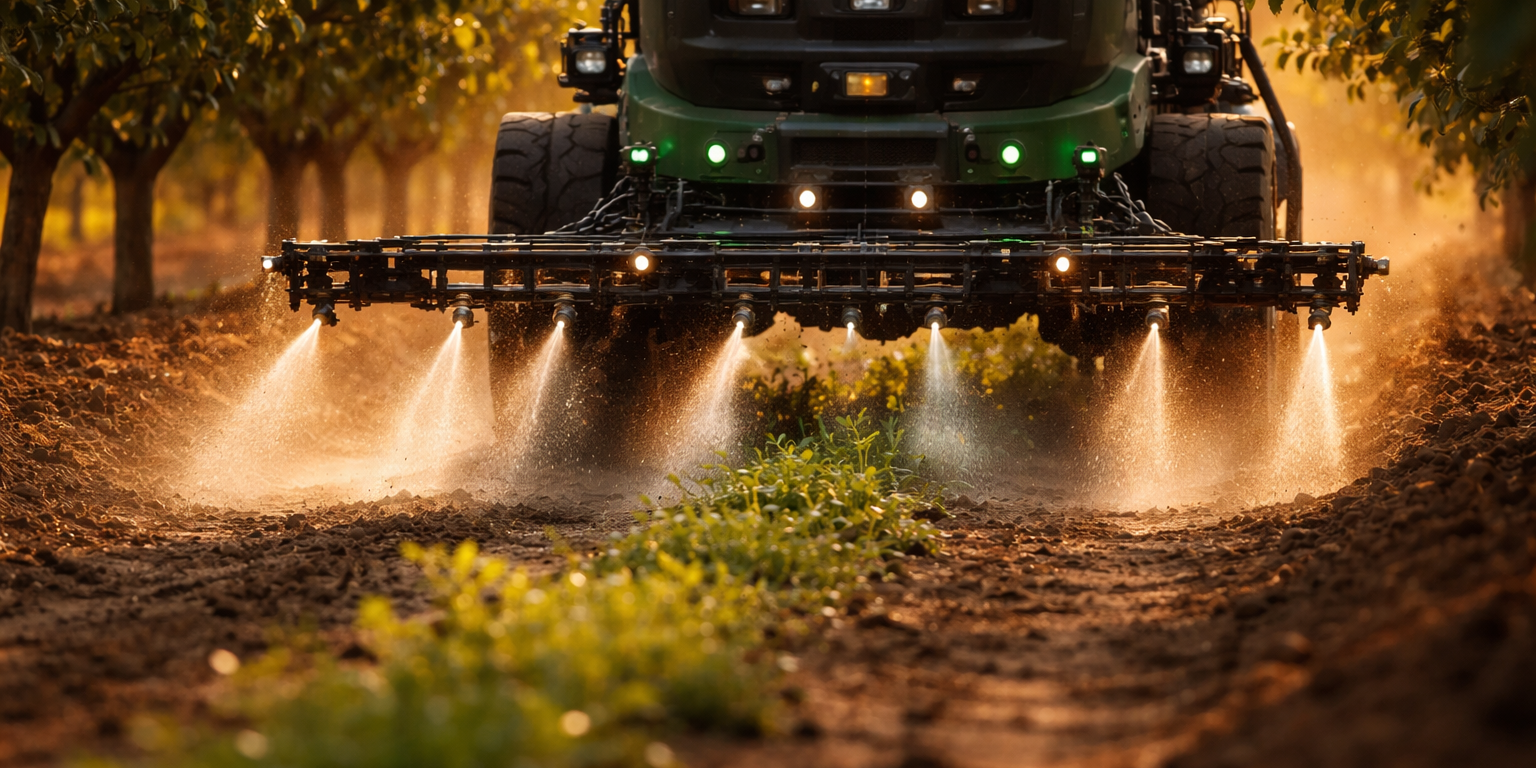
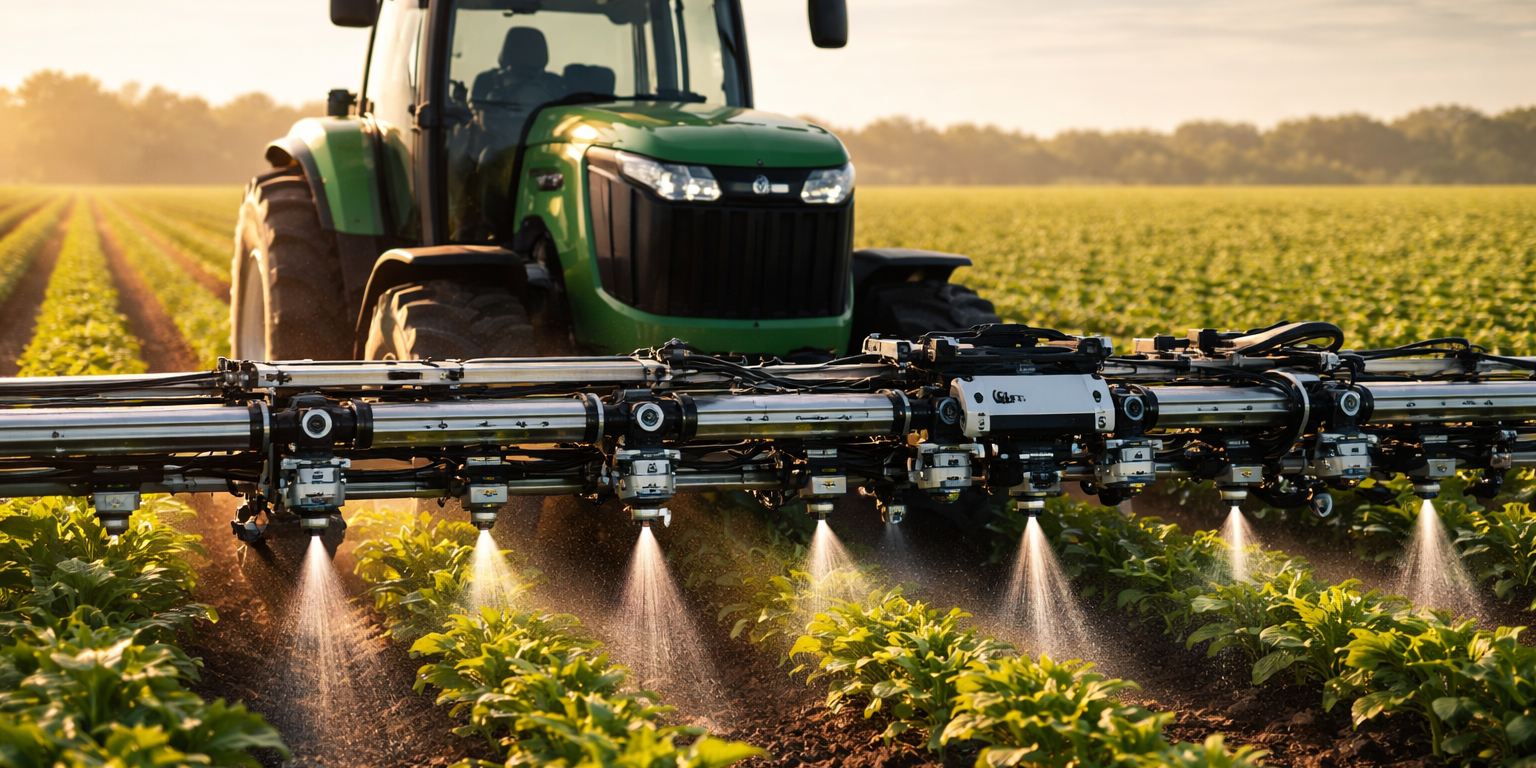
A farmhand can now walk away from the tractor entirely. Sabanto Inc. and Verdant Robotics have completed a technical integration that combines autonomous vehicle control with plant-level precision application in a single operational system, eliminating the need for a human operator during field work. The partnership links Sabanto's self-driving tractor platform with Verdant's SharpShooter application technology, which uses computer vision to identify individual plants and apply chemicals only where needed, down to the milliliter.
The configuration addresses two persistent cost drivers in modern agriculture: the shrinking availability of skilled equipment operators and the rising expense of agricultural inputs. Traditional broadcast spraying applies chemicals uniformly across entire fields, regardless of whether weeds are present. SharpShooter's camera-based targeting system reduces herbicide use by identifying and treating only problem plants, cutting chemical costs by margins that Verdant has previously reported in the range of 70 to 95 percent depending on weed pressure. Sabanto's autonomous tractor operation, meanwhile, allows that precision work to proceed around the clock without requiring a human in the cab, extending productive hours beyond traditional daylight shifts and operator availability.
Sabanto has been deploying autonomous tractors commercially since 2019, primarily for tillage and planting operations across the Midwest. The company retrofits existing John Deere, Case IH, and New Holland tractors with sensor arrays, compute hardware, and autonomous control software, allowing farms to convert their current equipment rather than purchase purpose-built autonomous machines. Verdant Robotics, based in Hayward, California, developed the SharpShooter as a self-contained implement that mounts to tractors and combines real-time computer vision with precision nozzle control. Each unit carries its own camera system, processing hardware, and liquid delivery infrastructure. The integration required engineering work on both sides: Sabanto needed to hand off operational control to Verdant's system during application passes, while Verdant's software needed to interface with Sabanto's navigation and safety protocols to maintain autonomous operation throughout the field.
The merged system operates through a phased handoff. Sabanto's platform handles field ingress, path planning, and navigation to the work area. Once in position, control shifts to Verdant's SharpShooter system, which manages ground speed, nozzle actuation, and chemical delivery while Sabanto's sensors continue to monitor for obstacles and safety boundaries. The tractor remains unmanned throughout. Both companies have existing customer bases in row crop production, particularly in corn and soybean operations where weed management costs represent a substantial portion of input expenses. The integration gives those customers a path to combine two existing robotics investments into a single workflow, rather than requiring separate passes for autonomous transport and precision application.
The announcement reflects a broader trend in agricultural robotics toward interoperability between platforms. Unlike consumer robotics, where vertical integration dominates, agricultural systems face extreme variability in field conditions, crop types, and equipment compatibility. No single manufacturer can address every use case, pushing companies toward modular architectures and open interfaces. John Deere has pursued vertical integration with its acquisition of Bear Flag Robotics and proprietary autonomy development, but smaller players like Sabanto and Verdant have positioned themselves as implement-agnostic solutions that work across equipment brands. The partnership also signals a maturation point for agricultural autonomy: the technology has moved beyond proof-of-concept demonstrations and into operational questions about workflow efficiency and system coordination. Growers care less about whether a tractor can drive itself and more about whether autonomous operation delivers measurable cost savings or productivity gains over conventional methods.
Commercial deployment timelines for the integrated system were not disclosed in the announcement, though both companies have active field operations underway. Sabanto currently operates a fleet-as-a-service model in addition to selling retrofit kits, while Verdant has been conducting commercial trials of the SharpShooter across multiple crop types. The integration will likely roll out first to existing customers already using one or both platforms, minimizing the training and support burden while generating field data on operational reliability. Future development may extend beyond herbicide application to fertilizer delivery, fungicide treatment, or other precision input tasks that benefit from plant-level targeting.
What to Watch: Monitor commercial deployment announcements from Sabanto and Verdant through the 2026 growing season, particularly fleet expansion numbers and customer testimonials with specific cost reduction metrics. Watch for additional interoperability partnerships between agricultural robotics firms as modular integration becomes a competitive differentiator. Track responses from vertically integrated competitors like John Deere, particularly any moves toward open interfaces or third-party implement compatibility on their autonomous platforms.