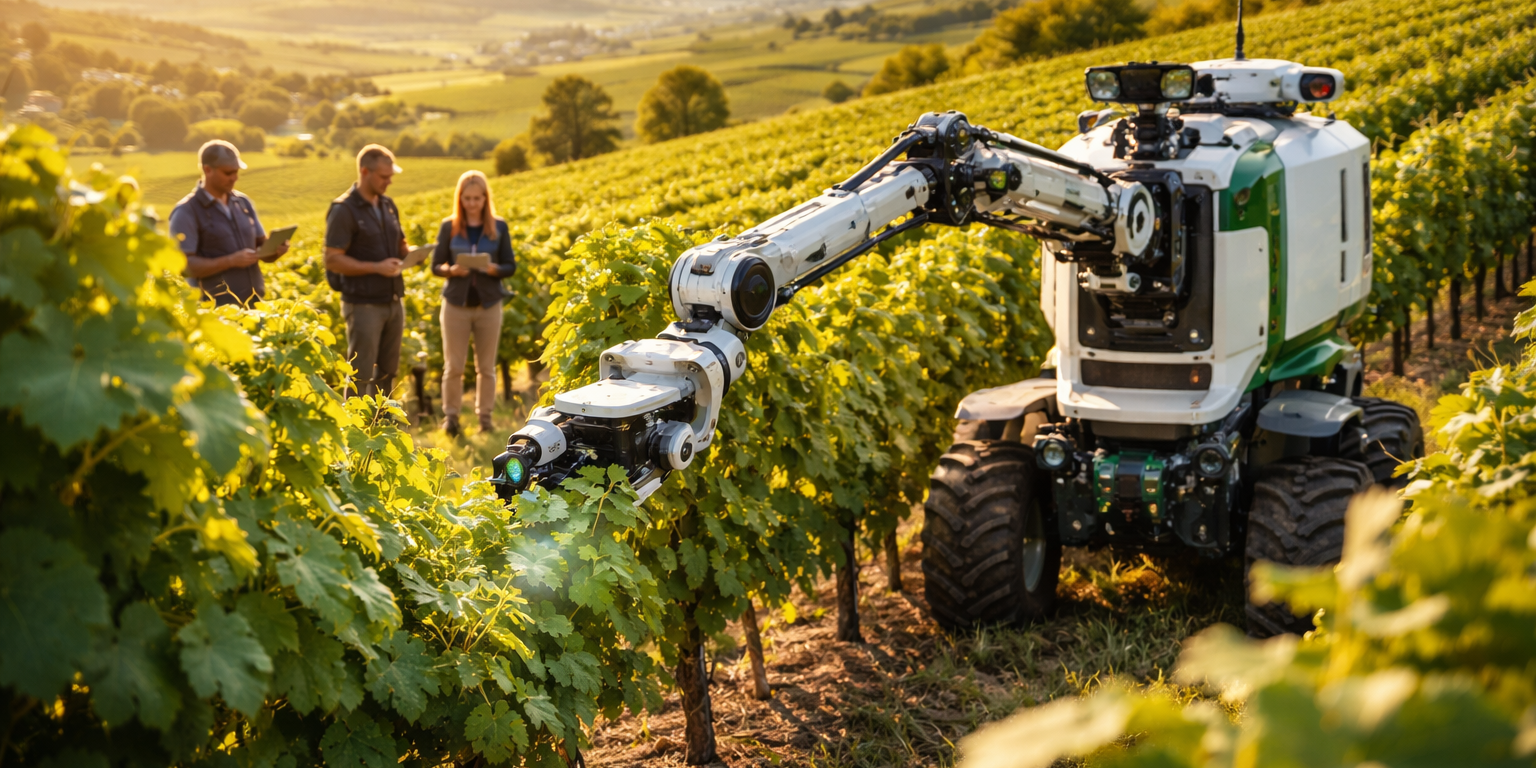
Agreenculture, the Toulouse-based developer of autonomous agricultural machinery, has acquired Chouette, an AI specialist focused on vineyard health monitoring, in a deal that combines self-driving farm equipment with real-time agronomic decision-making. The acquisition gives Agreenculture access to algorithms trained on millions of grapevine images, capable of identifying disease symptoms, nutrient deficiencies, and pest damage with accuracy comparable to trained agronomists. Financial terms were not disclosed, but Chouette's twelve-person engineering team will integrate into Agreenculture's autonomy division, and the combined company will continue operating from facilities in both Toulouse and Chouette's headquarters in Reims. Chouette co-founder and CEO Élise Moreau will join Agreenculture as vice president of agronomic intelligence, reporting directly to Agreenculture CEO Charles Huet. The combined platform is expected to enter field trials at partner vineyards in Champagne and Bordeaux by late 2026, with commercial deployment planned for the 2027 growing season.
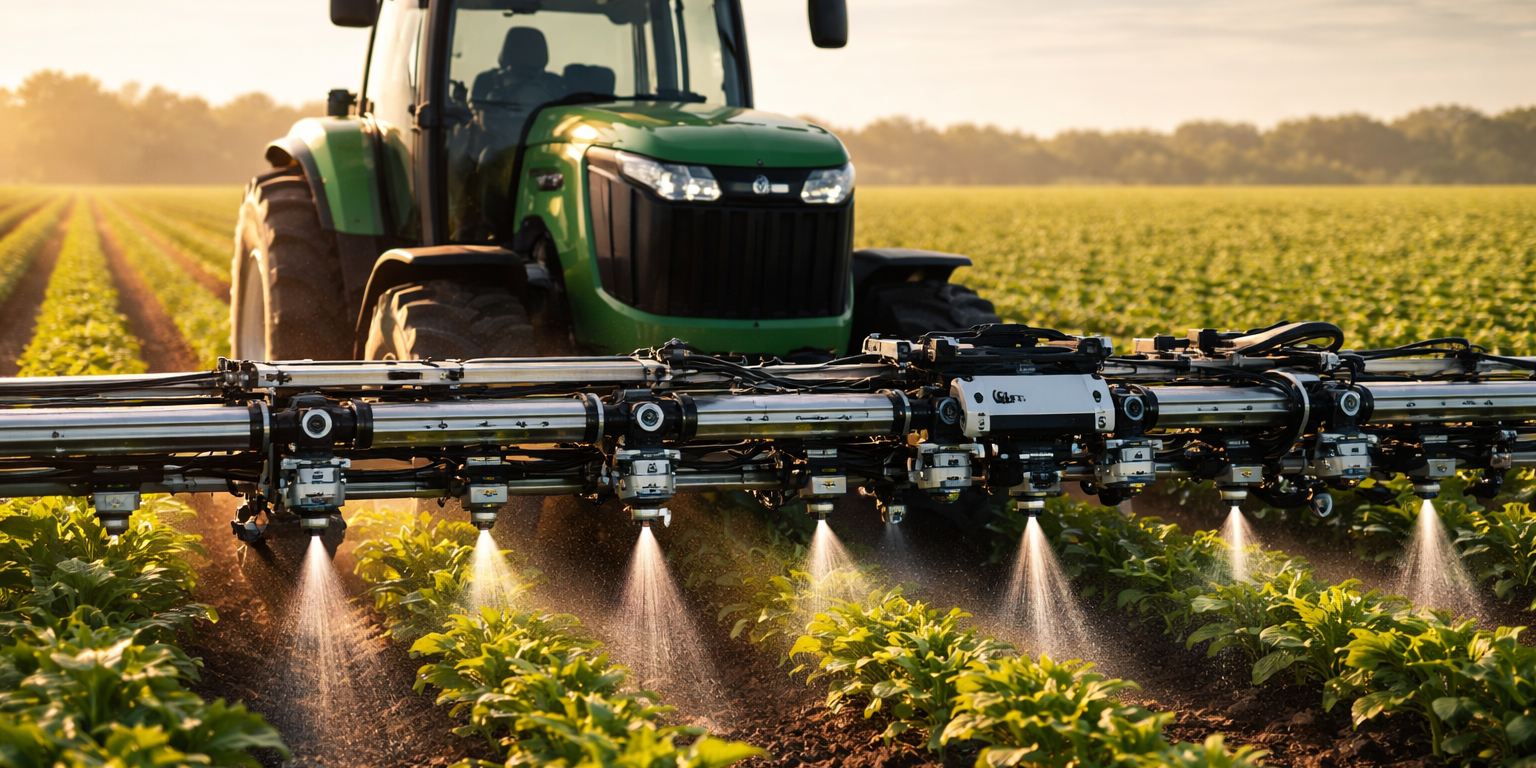
Agreenculture's existing product line centers on retrofitting conventional tractors and sprayers with autonomous navigation systems, using lidar, GPS, and stereo cameras to handle row-following, obstacle avoidance, and geofenced operations. The technology has seen adoption primarily among large-scale grain operations in northern France, where labor shortages and rising fuel costs have pushed growers toward automation. But autonomy alone addresses only half the problem. A tractor that can drive itself still requires a human to decide where to spray, what to prune, and when to irrigate. Chouette's acquisition changes that equation. The company's proprietary neural networks, trained on datasets from vineyards across five French appellations, can analyze leaf color, canopy density, berry size, and stem health to generate field-level recommendations. The system detects powdery mildew, downy mildew, and grapevine yellows weeks before symptoms become visible to the naked eye, enabling targeted interventions that reduce fungicide use by up to forty percent in trials conducted during the 2025 season.
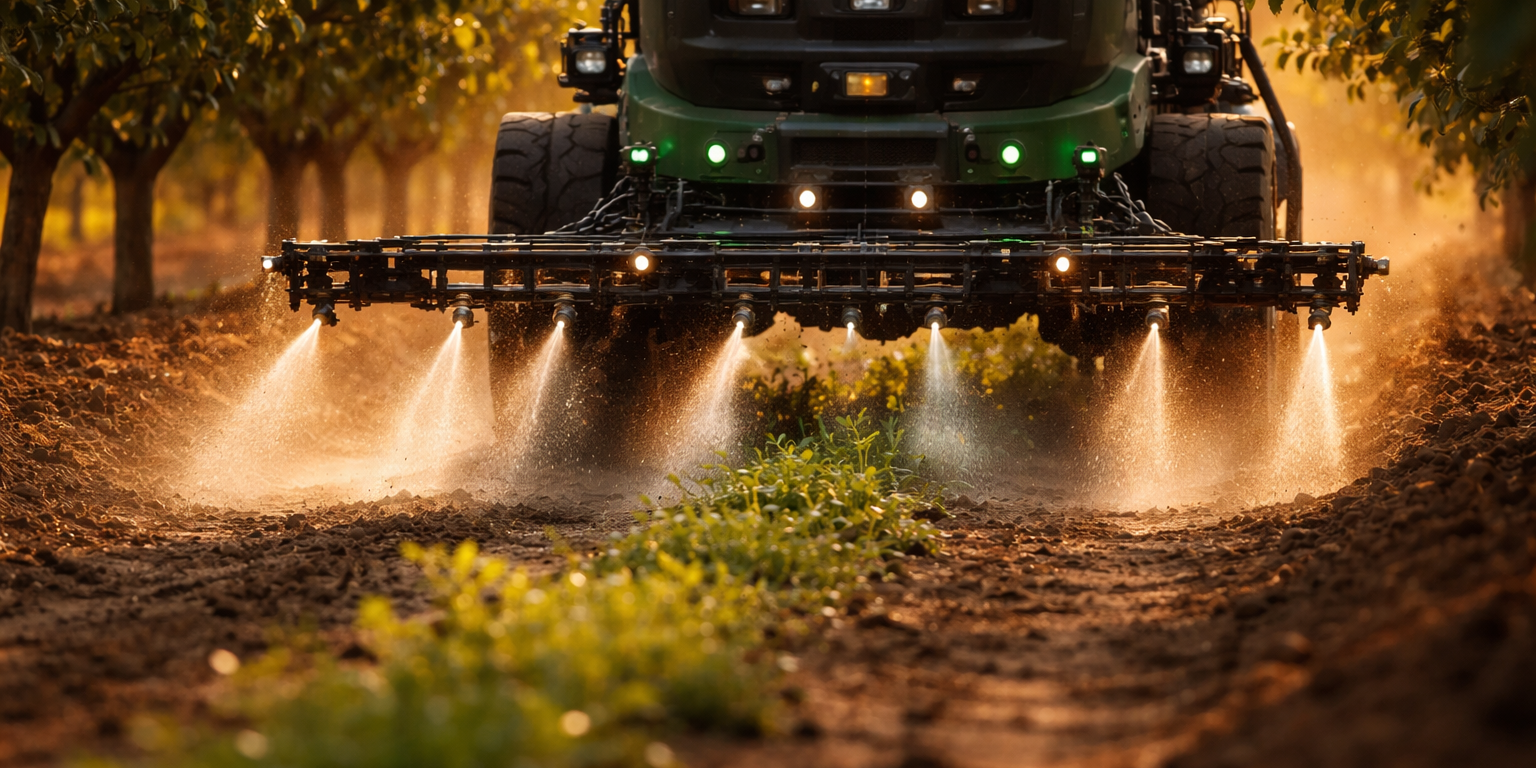
Chouette originally developed its platform as a standalone monitoring service, deploying handheld cameras and drone-mounted sensors to survey vineyards for contract clients. Growers would receive weekly reports flagging problem areas, but implementation still required manual scouting and sprayer operation. Integrating the software directly into autonomous machines eliminates that lag. An Agreenculture tractor equipped with Chouette's vision stack can now scan vines as it moves, classify observations in real time, and adjust spray volume, nozzle angle, or chemical formulation on a per-plant basis. The closed-loop system logs every decision, creating an auditable record that satisfies organic certification requirements and sustainability reporting mandates increasingly common across European agriculture. Huet has said publicly that the integration will enable what he calls "prescriptive autonomy," where machines execute not just predefined routes but adaptive strategies informed by live agronomic data. That capability matters as vineyards face mounting pressure from climate variability, pest resistance, and tightening regulations on pesticide residues.
The acquisition also signals a broader shift in agricultural robotics, away from pure mobility and toward systems that replicate the observational skills of experienced farmhands. Companies like John Deere and CNH Industrial have invested heavily in machine vision, but most implementations remain focused on weed identification and mechanical removal. Agreenculture's bet is that viticulture, with its high per-acre value and complex agronomic demands, offers a faster path to profitability for AI-enhanced autonomy. French vineyards generate an average of thirty thousand euros per hectare annually, compared to less than two thousand for wheat, making growers more willing to pay premiums for technology that improves yields or reduces input costs. Moreau has stated that Chouette's algorithms can be adapted to other high-value crops, including tree fruit and greenhouse vegetables, but the initial focus will remain on wine grapes, where the company has the deepest training data and the strongest customer relationships. Competitors including Naïo Technologies and Ztractor have announced similar ambitions, but neither has yet demonstrated agronomic intelligence at the level Chouette's models achieved in third-party benchmarks published by INRAE, France's national agricultural research institute, in early 2026.
What to Watch: Agreenculture has committed to demonstrating the integrated system at FIRA, the international agricultural robotics conference scheduled for December 2026 in Toulouse. Chouette's existing customer base includes roughly forty vineyards, and contract terms will determine whether those growers transition to Agreenculture hardware or continue using standalone monitoring. Also watch for partnerships with European equipment manufacturers, as Agreenculture has historically licensed its autonomy stack rather than building machines in-house, and Chouette's algorithms could become a value-add for OEMs looking to differentiate precision sprayers.