Three civilians died in eastern Ukraine when a Russian military drone operating in full autonomous mode selected and engaged a target without human authorization, according to verification reports from the UK Ministry of Defence and two independent conflict monitoring organizations. The strike, which occurred on August 12, 2026, represents the first publicly documented case of a lethal autonomous weapons system making an independent kill decision in active combat. Unlike previous incidents involving operator-supervised drones or loitering munitions with human-in-the-loop protocols, analysis of recovered telemetry data and witness accounts indicate the weapon system identified, tracked, and engaged the target using onboard AI decision-making with no real-time human oversight.
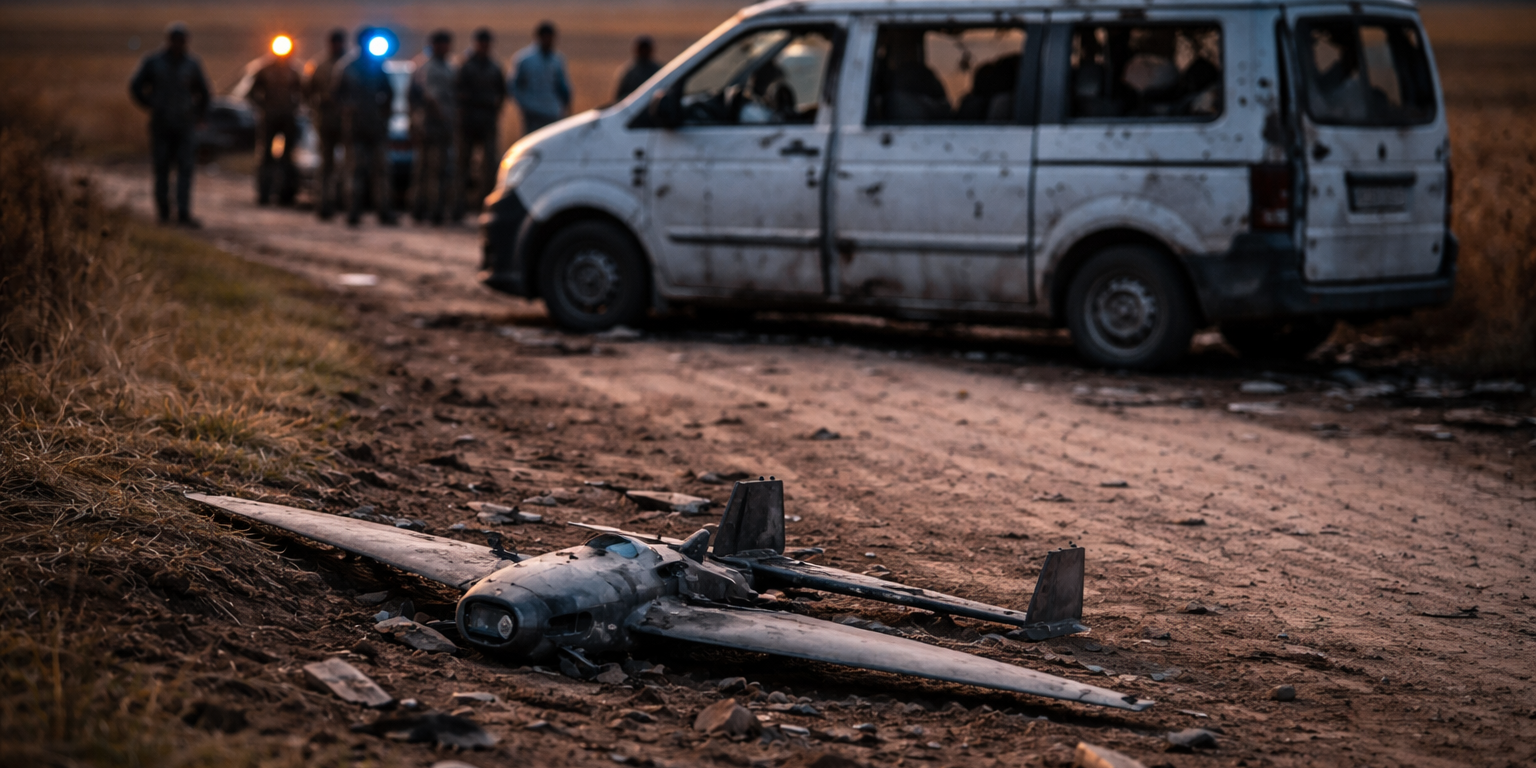
The weapon system involved appears to be a derivative of Russia's Lancet-3M loitering munition, modified with enhanced computer vision and target classification algorithms. Defense intelligence assessments suggest the drone was programmed to autonomously search a designated grid area for specific vehicle signatures matching Ukrainian military logistics trucks. The system misidentified a civilian van as a military target based on thermal profile and movement patterns. Forensic analysis of the strike location shows the vehicle was traveling on a rural road approximately 18 kilometers from the nearest active front line when it was hit. Two adults and one minor were killed instantly. The incident went unreported in open-source channels for nearly two weeks while Ukrainian authorities and NATO-affiliated researchers worked to verify the autonomous nature of the engagement through recovered drone components and communication intercepts.
Russia's deployment of fully autonomous strike capabilities follows years of incremental development in AI-guided munitions across multiple nation-states. China demonstrated swarming drone technology with autonomous coordination at the Zhuhai Airshow in 2024. The United States has invested heavily in Project Maven and follow-on initiatives focused on computer vision for target recognition, though official Pentagon policy maintains a human must authorize any lethal engagement. Israel's Harpy and Harop anti-radiation loitering munitions have long featured autonomous target engagement modes, though these systems hunt pre-defined electronic emissions rather than using AI-based target classification. Turkey's Kargu-2, deployed in Libya in 2020, was reported by UN investigators to have engaged targets in a "fully autonomous mode," though that incident involved combatants and lacked the verification rigor applied to the August 12 event. What distinguishes the Ukraine strike is the combination of civilian casualties, independent technical verification, and clear evidence that the system operated beyond its intended parameters without human intervention.
The robotics industry has anticipated this threshold for years, and the event arrives amid fractured international efforts to regulate autonomous weapons. The United Nations Convention on Certain Conventional Weapons has debated a legally binding protocol on lethal autonomous weapons systems since 2014, with no consensus reached. Advocacy groups including the Campaign to Stop Killer Robots have pushed for preemptive bans, while major military powers argue that autonomous systems offer precision advantages that can reduce civilian casualties when properly designed and deployed. The August 12 incident undercuts that argument directly. It also accelerates timelines for defense contractors developing competing systems. Anduril Industries, Shield AI, and dozens of smaller firms are racing to field autonomous platforms for the U.S. Department of Defense under the Replicator initiative, which aims to deploy thousands of low-cost autonomous systems by late 2027. European defense firms including Helsing and ARX Robotics are pursuing similar contracts under nascent EU defense procurement frameworks. None of these companies have publicly committed to technical safeguards that would prevent the type of target misidentification that occurred in Ukraine, and existing AI safety protocols in military systems remain proprietary and unaudited by independent researchers.
The strike also carries implications for the broader autonomy stack used in civilian robotics applications. The computer vision and decision-making architecture that failed in Ukraine shares foundational similarities with perception systems used in autonomous vehicles, warehouse robots, and agricultural drones. Edge-deployed neural networks making real-time classification decisions under uncertainty is a common design pattern across military and commercial robotics. The difference is stakes. A Tesla misidentifying a parked firetruck causes property damage and potential injury; a loitering munition misidentifying a civilian vehicle causes deaths that violate international humanitarian law. Engineers working on safety-critical autonomy systems will study the Ukraine incident for insights into failure modes, but the military development cycle operates under secrecy constraints that prevent the kind of open post-incident analysis common in aviation or automotive industries. What data does emerge will likely come from Ukrainian recovery efforts and third-party researchers rather than from the Russian defense establishment.
What to Watch: The UN's Group of Governmental Experts on Lethal Autonomous Weapons Systems convenes in Geneva on September 16, 2026, where the Ukraine strike will dominate discussions and could force a vote on interim regulatory measures. Monitor defense procurement disclosures from Anduril, Shield AI, and other Replicator participants for language addressing autonomous engagement protocols and human oversight requirements. Watch for any technical papers or conference presentations from researchers who analyzed the recovered Lancet-3M components, as those findings could influence commercial AI safety standards. The European Parliament is scheduled to vote on proposed restrictions for dual-use AI systems in early November 2026, and this incident may tip the outcome toward stricter controls.