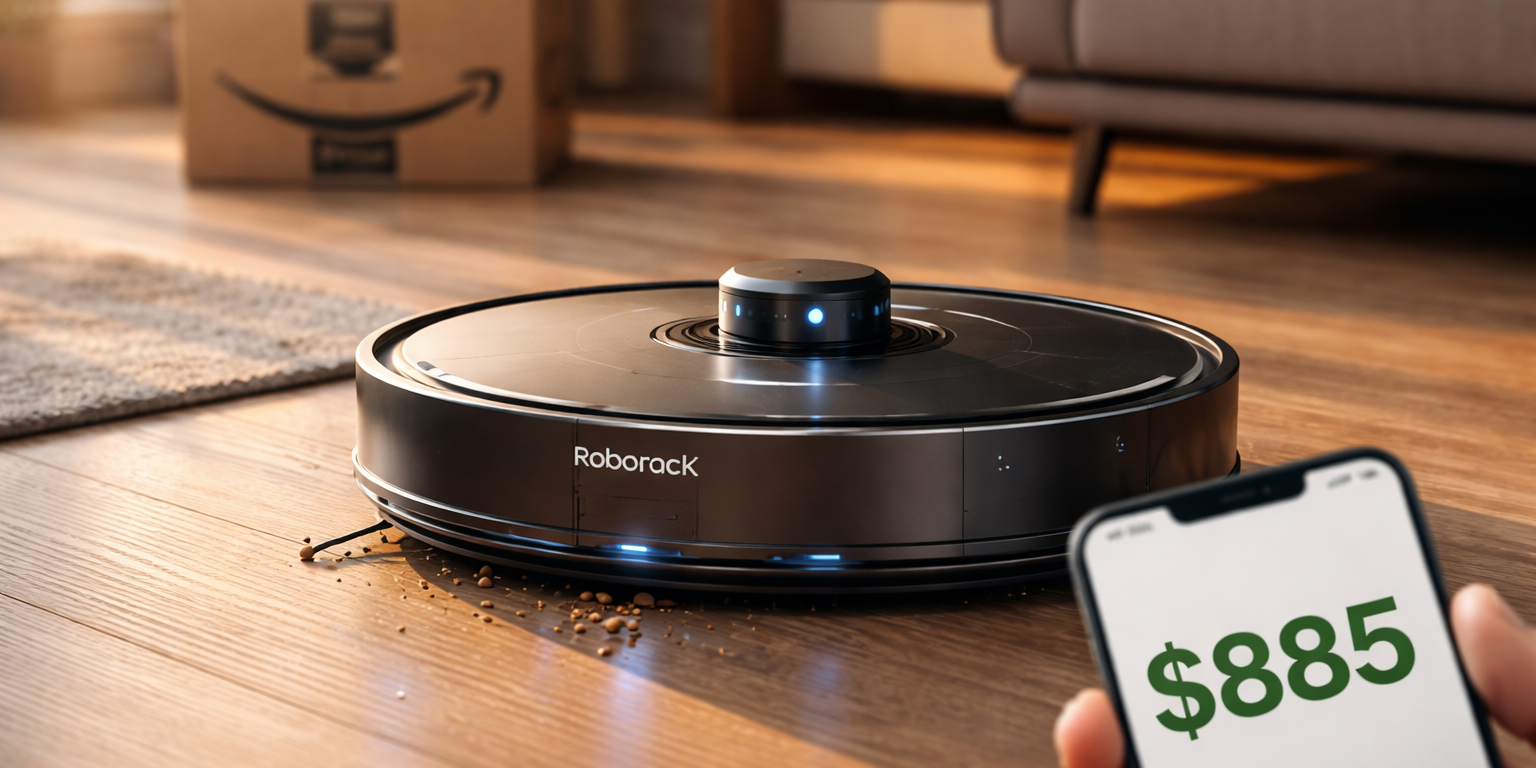
A 33% discount on a flagship product six months into its market life tells you something about either the competitive landscape or the product's reception. Roborock's Qrevo Edge 2, which carried a $1,300 launch price when it debuted in December 2025, moved through Amazon's storefront at $865 in late June 2026. The deal, flagged by price-tracking site Dealnews and requiring Amazon Prime membership, represents a $435 markdown on what the Chinese manufacturer positioned as its top-tier robot vacuum and mop combination unit. For context, iRobot's Roomba Combo j9+ held a $1,399 list price through the same period with street prices hovering around $999, while Ecovacs pushed its Deebot X2 Omni at $1,549 with minimal discounting. The consumer floor-cleaning robot market shipped an estimated 18.3 million units globally in 2025 according to IDC figures, making it the single largest robotics category by volume, but average selling prices compressed 11% year-over-year as feature parity increased across mid-tier and premium segments.
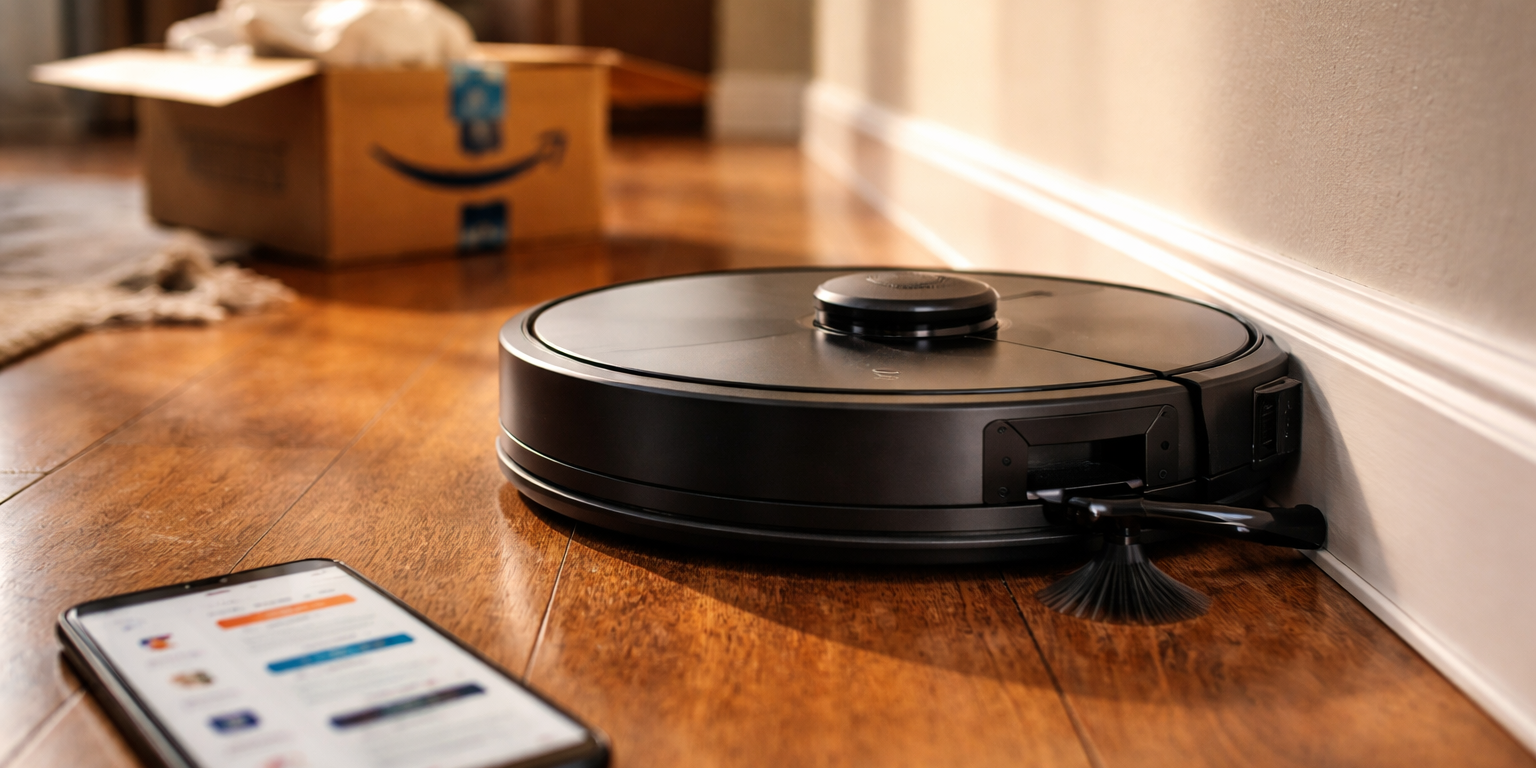
The Qrevo Edge 2's distinguishing feature—an extendable cleaning arm designed to hug baseboards and wall edges more tightly than fixed-geometry competitors—represents the kind of incremental mechanical innovation that defines progress in mature consumer robotics categories. Most robot vacuums leave a 10-15mm gap along walls due to their circular footprints and side-mounted brushes. Roborock's extending arm mechanism, which deploys outward during edge-cleaning passes, reduces that gap to approximately 3mm according to the company's specifications. The engineering challenge involves sensor integration for edge detection, motor control for arm extension synchronized with navigation algorithms, and structural reinforcement to prevent damage when the arm contacts obstacles. Patents filed by Roborock's parent company, Beijing Roborock Technology Co., between 2023 and 2025 detail a spring-loaded mechanism with force feedback that retracts the arm when resistance exceeds preset thresholds. Whether consumers value this refinement enough to sustain premium pricing remains the open question, particularly as competitors like Dreame Technology and Narwal Robotics introduced similar extending-brush designs in their own 2026 model lineups.
Beijing Roborock Technology, which spun out from Xiaomi in 2017 but maintains supply chain ties to the broader Xiaomi ecosystem, reported 2025 revenue of RMB 7.2 billion (approximately $1.01 billion) across its global vacuum and mop product lines. The company held roughly 14% share of the premium robot vacuum segment—defined as units above $600 street price—in North America and Western Europe combined, trailing iRobot's 22% but ahead of Ecovacs at 11%, according to Euromonitor International data through Q4 2025. Roborock's product strategy has consistently emphasized hardware differentiation through mechanical innovation rather than software or AI-driven features, a contrast to competitors like iRobot which invested heavily in computer vision and machine learning for object recognition after Amazon's $1.7 billion acquisition in August 2022. The Qrevo Edge 2 runs on a relatively conventional SLAM navigation stack using LiDAR for mapping and ultrasonic sensors for obstacle avoidance, competitive but not groundbreaking in a market where even $400 models now ship with visual SLAM capabilities. The extending arm represents one of the few remaining vectors for patent-defensible hardware differentiation in a category where core functionality—navigation, suction, mopping—reached commoditization between 2023 and 2025.
Pricing pressure across consumer robotics reflects both oversupply from Chinese manufacturers ramping capacity and softer-than-projected demand in key markets. U.S. robot vacuum unit sales grew just 4% in 2025 after 18% growth in 2024, per NPD Group tracking, while European sales declined 2% as cost-of-living concerns dampened discretionary purchases above €800. The premium segment—where Roborock positions the Qrevo Edge 2—saw particular weakness, contracting 7% by units even as the overall market expanded slightly on strength in the $200-$400 mid-tier. Manufacturing overcapacity in Shenzhen and surrounding Pearl River Delta production zones drove aggressive discounting across multiple brands through late 2025 and into 2026, with retailer margins compressed to low single digits on many SKUs. Amazon's decision to feature the Qrevo Edge 2 at $865 likely reflects inventory management as much as Roborock's pricing strategy, though the company has historically maintained tighter control over street prices than many peers. For robotics engineers and investors, the broader lesson involves market maturity: when hardware capabilities converge and software differentiation proves difficult to monetize at consumer price points, profitability migrates to those with the lowest manufacturing costs or strongest brand equity. Roborock, despite engineering competence, possesses neither advantage relative to its most formidable competitors.
What to Watch: Track whether Roborock holds the $865 price point through the third quarter or allows further erosion, particularly around Amazon's Prime Day in July 2026 and pre-holiday promotional periods starting September. Monitor iRobot's response pricing on the Roomba Combo j9+ and whether Amazon leverages its ownership to undercut third-party premium brands systematically. Watch for Dreame Technology's U.S. market entry with its extending-brush L20 Ultra, expected to street around $799 based on Chinese pricing, which could force another round of premium-segment repricing. Finally, observe whether Roborock shifts messaging toward subscription revenue through its app-based features or continues to position as a hardware-first brand, a strategic choice that will determine margin sustainability as hardware commoditizes further.