
A robotics startup that was worth roughly half a billion dollars at the start of the year is now a unicorn, and the money that got it there did not come from a new funding round. RobCo said in a Monday, Oct. 5 press release that an employee secondary share sale has valued the company above $1 billion, twice the mark it hit nine months earlier. In a secondary, existing shareholders sell stock to incoming buyers rather than the company issuing new shares, so the cash goes to staff and early holders, not to RobCo's balance sheet. The distinction matters, and it cuts in the company's favor.
Secondary sales of this kind tend to happen when demand for a company's stock outstrips what the company needs to raise. RobCo was not scrambling for runway. Investors were lining up to own more of it, and employees got liquidity at a price that would have been hard to imagine a year ago. For a hardware company in a sector where capital intensity usually forces dilutive rounds every 12 to 18 months, that is a notable position to be in. It also helps with retention: engineers who can monetize part of their equity before an IPO are less likely to be poached by better-funded humanoid developers.
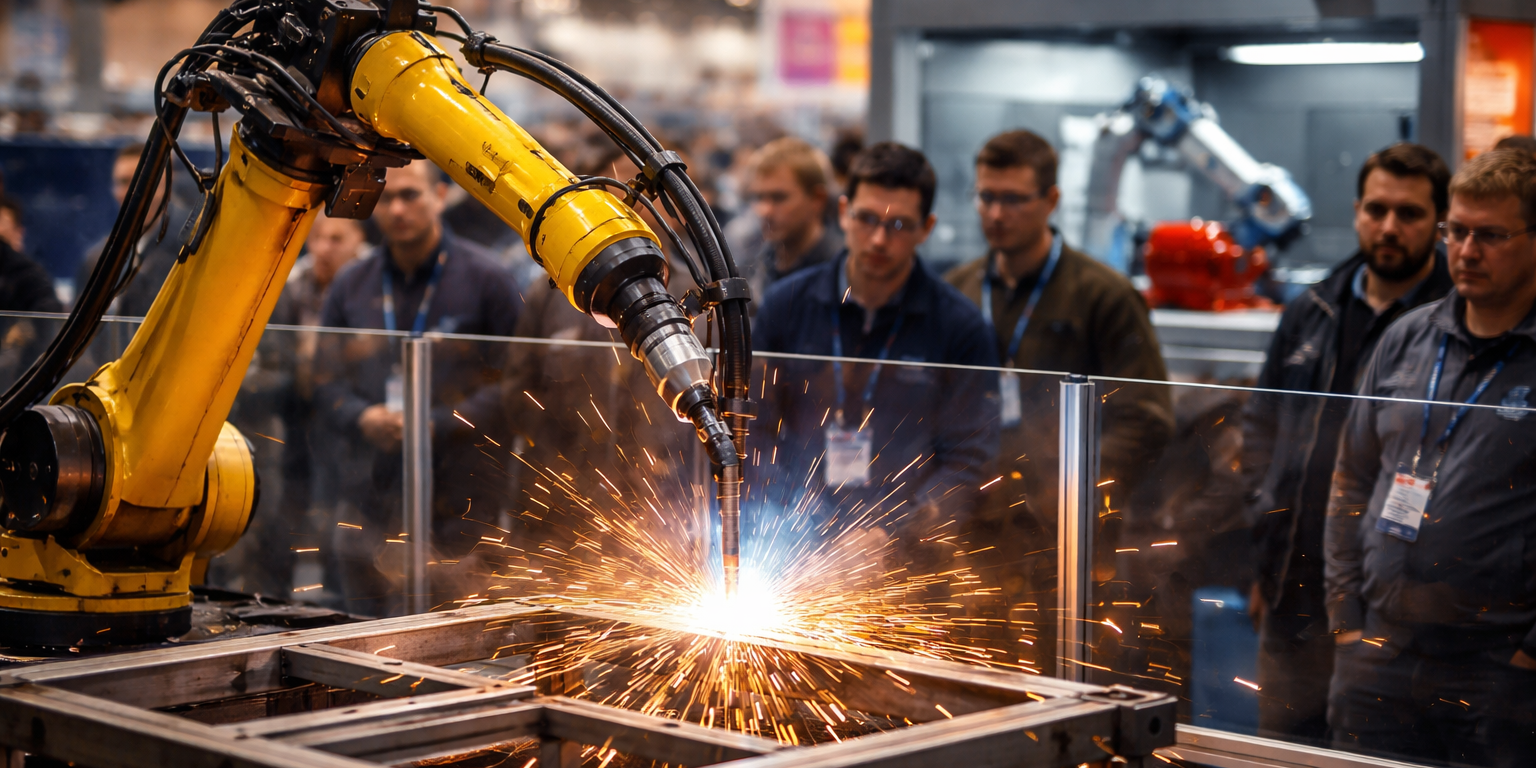
RobCo builds what it describes as autonomous industrial robotics, and its pitch is aimed squarely at the part of the market that large integrators have historically ignored. Its systems are modular, assembled from standardized arms and components that a plant can configure for a given task, with software handling programming that once required specialist engineers and weeks of commissioning. The target customer is the mid-sized manufacturer running short production runs, where a traditional robot cell costs too much to design and too much to reprogram when the product changes. Labor shortages across European and North American factories have made that customer far more willing to buy than it was five years ago.
The broader backdrop is a market that has spent two years fixated on humanoids while quietly funding less glamorous machines that already ship. Capital has poured into companies promising general-purpose bipedal workers, yet the revenue today sits largely with arms, mobile manipulators, and cells that do narrow jobs reliably. RobCo's doubling suggests investors are rewarding deployed, repeatable automation alongside the moonshots. Its valuation now sits in the same neighborhood as other industrial software-and-hardware plays that pair robots with learned models, and it raises the bar for competitors such as Universal Robots, a Teradyne subsidiary, and well-funded startups chasing the same flexible-automation niche.
For engineers, the more interesting question is what a $1 billion price tag obligates a company to prove. Modular hardware is easy to demo and hard to scale, because every added configuration multiplies the support burden, the spare-parts inventory, and the edge cases the software must handle. Investors are betting RobCo can turn customer installations into a data advantage, with each deployment improving the models that program the next one. Whether that flywheel spins depends on measurable things: uptime, time to commission a new task, and how many cells a single field engineer can support. Those are the numbers that will justify the valuation, and the company has not yet published them in detail.
What to Watch Watch for whether RobCo follows the secondary with a primary round before year-end 2026, which would show if the new valuation holds when fresh money has to be priced. Track customer announcements and reference deployments in automotive suppliers and metalworking, where modular cells have the clearest payback case. Compare RobCo's pricing and commissioning times against Universal Robots' latest cobot releases and the flexible-cell offerings from Fanuc and ABB at upcoming trade shows. Also follow any hiring signals in field service and software, since scaling support capacity is the real test of a modular model.