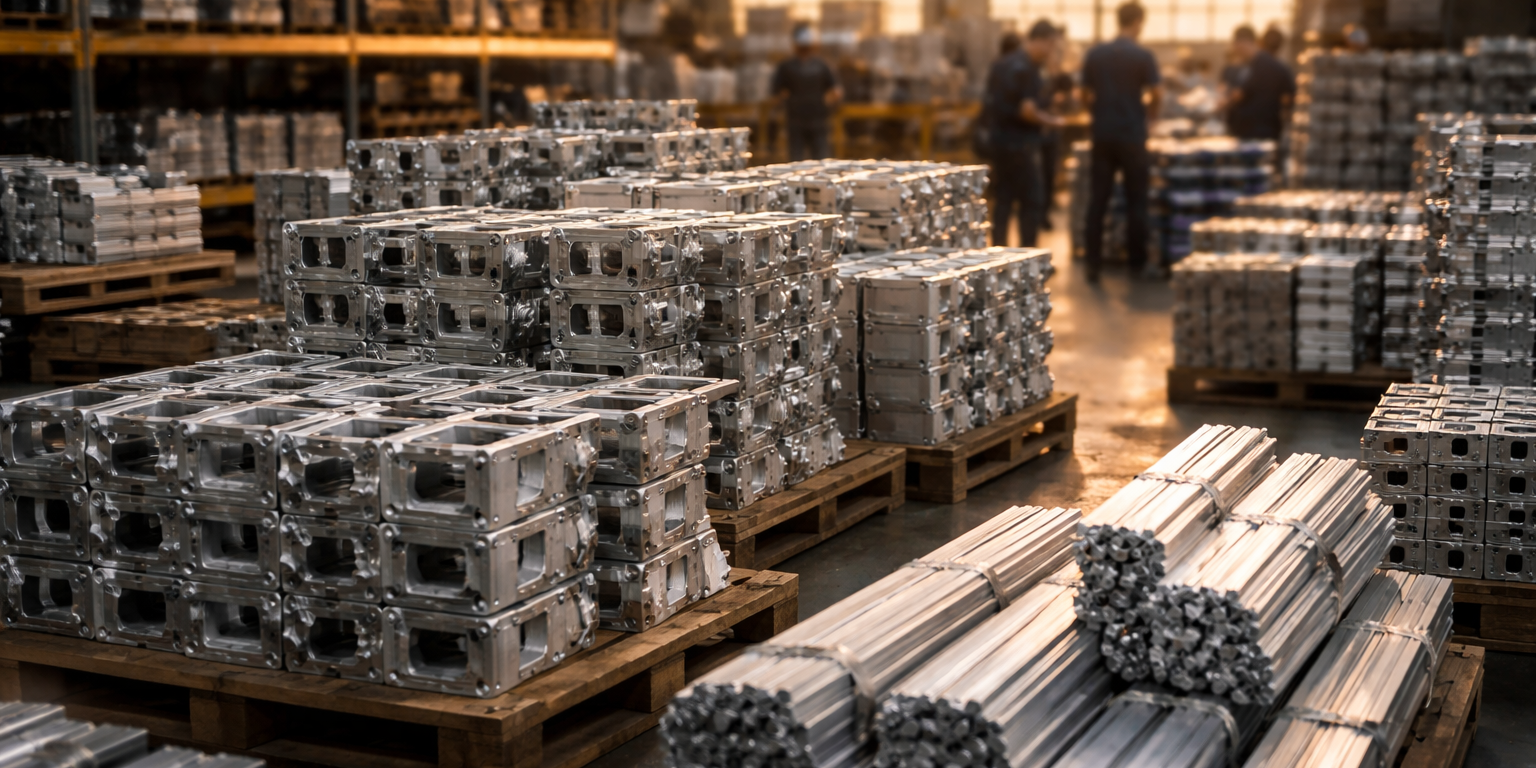
Aluminum supply chains, not software or sensors, now represent the binding constraint for robotics companies racing to manufacture humanoids and collaborative machines at scale. MES Inc., a Columbus-based sourcing firm that works with Fortune 500 equipment makers, issued the warning as the worldwide population of industrial robots surpassed five million operating units in September 2026. The company specifically identifies castings, extrusions, and forgings as the components where lead times have stretched beyond acceptable thresholds for companies moving from hundreds of prototypes to thousands of production units per quarter.
The timing matters because multiple well-funded robotics startups have announced production targets for late 2026 and throughout 2027 that depend on secured aluminum component capacity. MES Inc. has spent the past eighteen months analyzing supply chains for actuator housings, structural chassis members, and articulated joint assemblies across humanoid, mobile manipulation, and collaborative robot designs. What the firm found surprised even veterans of high-volume manufacturing: while electronic components and servo motors have established global supply networks with predictable lead times, the specialized aluminum parts that form a robot's skeleton remain largely dependent on job shops and mid-tier foundries with limited spare capacity. A typical humanoid robot contains between forty and sixty custom aluminum components, each requiring dedicated tooling. Companies ordering their first 5,000-unit production run discover that suppliers need nine to fourteen months to procure tooling, validate samples, and ramp to volume, not the four to six months assumed in most business plans.
MES Inc. operates as a liaison between OEMs and contract manufacturers, primarily in automotive, aerospace, and industrial equipment sectors. The firm began tracking robotics supply chain dynamics in 2024 when several automotive clients asked about sourcing components for collaborative robots they planned to deploy in their own factories. That work expanded as venture-backed robotics companies, flush with capital but inexperienced in manufacturing procurement, began approaching MES for help securing suppliers in Asia, Europe, and North America. The company now maintains a database of more than 300 foundries and machine shops across twelve countries that have demonstrated capability to produce robotics-grade aluminum components. Roughly sixty of those suppliers currently have capacity to accept new programs, down from 110 in early 2025. The tightening reflects both growing demand from robotics OEMs and competition from electric vehicle manufacturers, who consume similar aluminum extrusions and castings for battery enclosures and structural members.
The five million robot milestone, reported by industry analysts in late September, represents a 28 percent increase over the installed base at the end of 2024. Traditional industrial robots, the articulated arms that weld car frames and assemble electronics, still comprise approximately 3.8 million of that total. Collaborative robots add another 900,000 units, while mobile robots, humanoids, and other emerging form factors account for the remainder. That balance will shift rapidly if companies like Figure, Apptronik, 1X Technologies, and Agility Robotics meet their stated production goals. Figure alone has discussed manufacturing 10,000 humanoid units in 2027, a figure that would require securing long-term supply agreements for hundreds of thousands of aluminum components annually once production stabilizes. Apptronik's partnership with Mercedes-Benz, announced in 2024, contemplates similar volumes. These numbers dwarf the component volumes that existing robotics-focused suppliers handle today. KUKA, ABB, and FANUC have multi-decade relationships with aluminum suppliers, but those networks were built for annual production measured in tens of thousands of complete robots, not hundreds of thousands.
MES Inc. recommends that robotics companies finalize component designs and secure supplier commitments at least fourteen months before planned production launch dates. The firm also suggests dual-sourcing critical aluminum parts across different geographies to mitigate risks from regional capacity constraints or trade policy changes. Several companies have already adopted this approach. The alternative, waiting until six months before production to issue requests for quotation, consistently results in either unacceptable lead times or premium pricing that undermines unit economics. The situation has created an opening for integrated suppliers who can manage the complete supply chain from raw aluminum stock through finished, inspected components. MES has begun connecting robotics OEMs with suppliers who can coordinate casting, CNC machining, anodizing, and quality inspection under one roof, reducing both lead time and logistics complexity. These integrated providers typically charge 12 to 18 percent more than traditional job shops, but compress total cycle time by four to seven weeks.
What to Watch: Monitor whether Figure AI, Apptronik, and Sanctuary AI disclose aluminum component suppliers or announce manufacturing partnerships with firms like Ryobi Die Casting or Gibbs Die Casting during Q4 2026. Track lead time data from aluminum futures markets and specialty foundries for signs of easing capacity constraints in Q1 2027. Watch for Tesla to announce suppliers for Optimus structural components if the company moves toward external production rather than vertical integration. Pay attention to any Chinese robotics manufacturers establishing aluminum component facilities in North America or Europe to bypass supply chain risks.