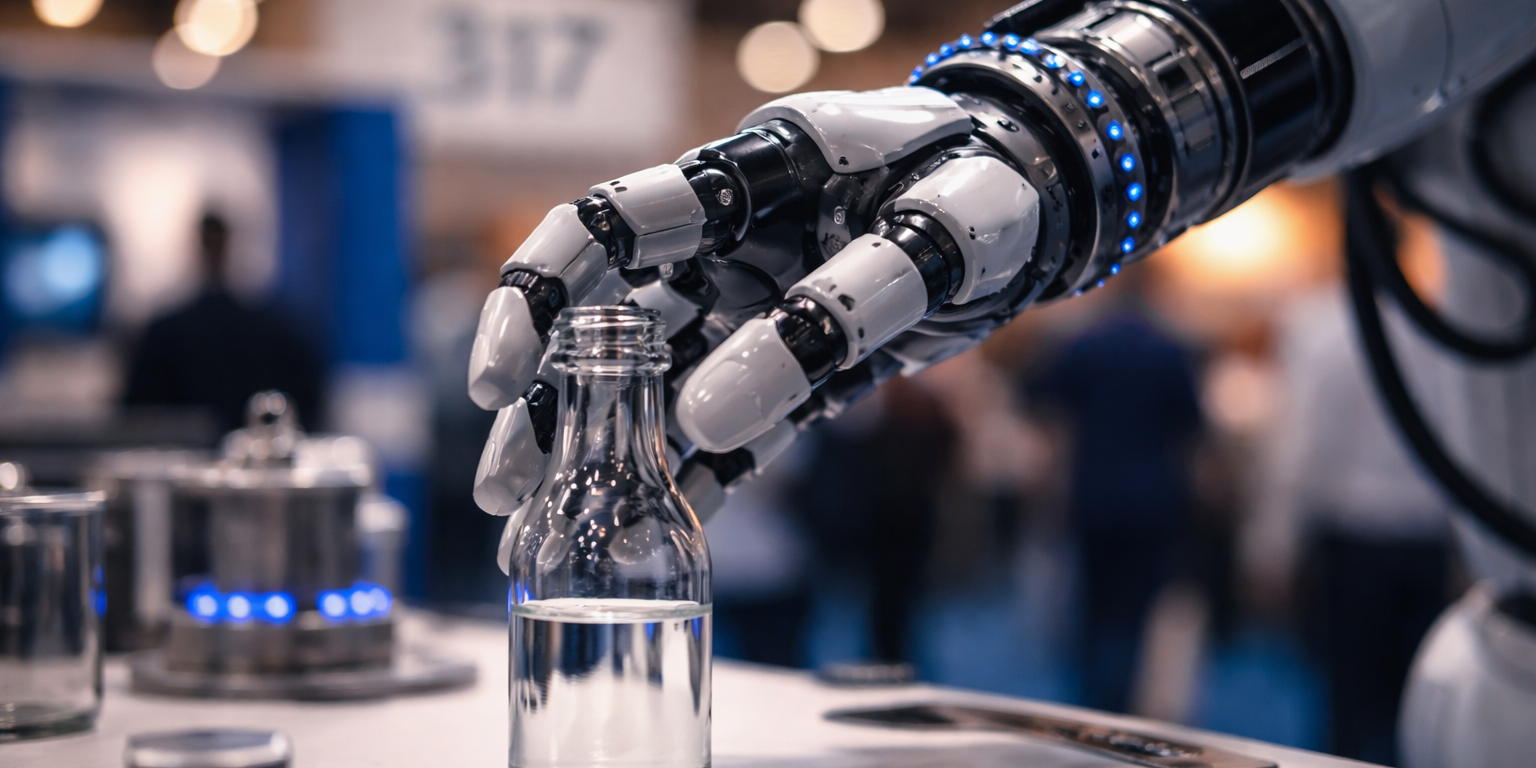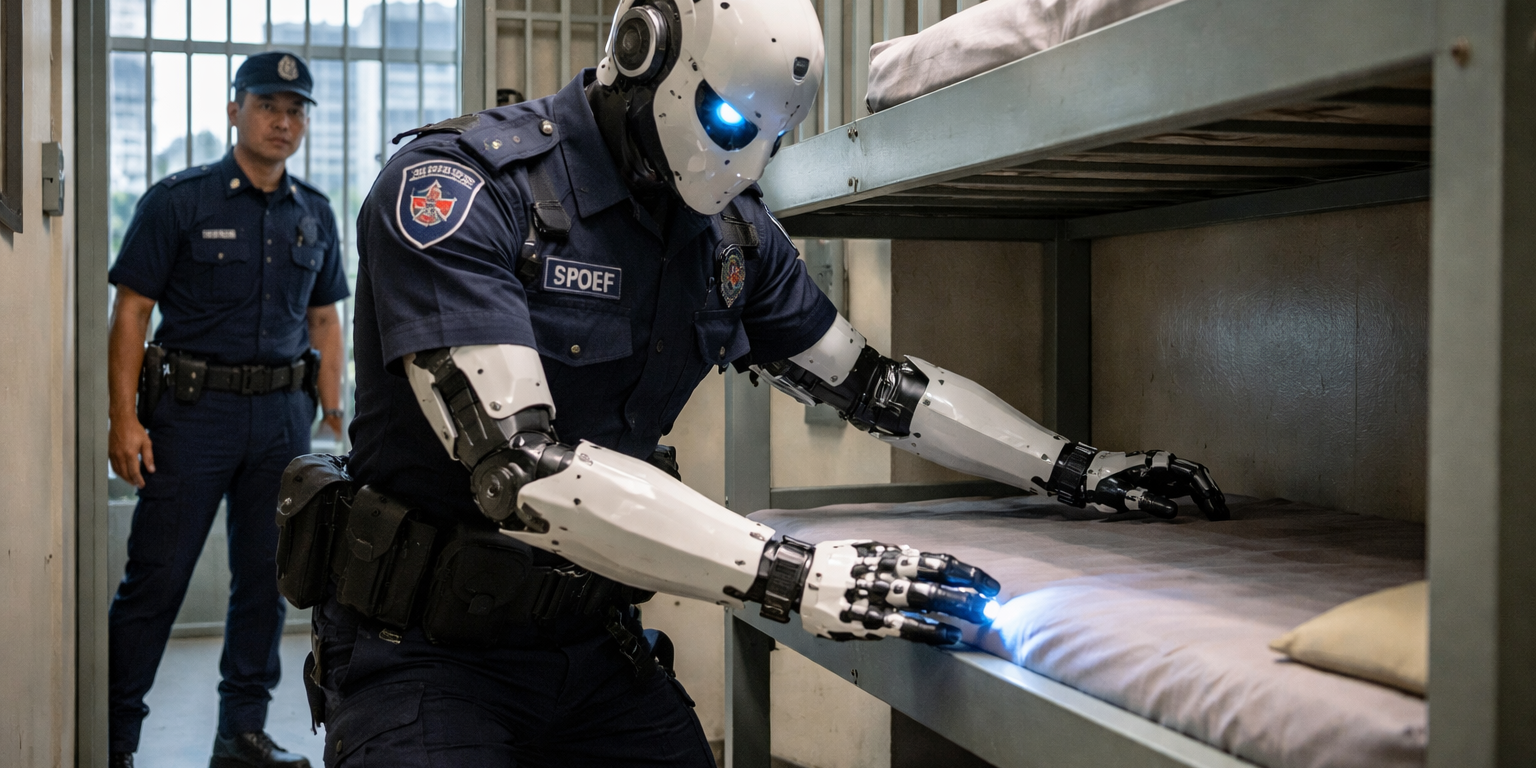
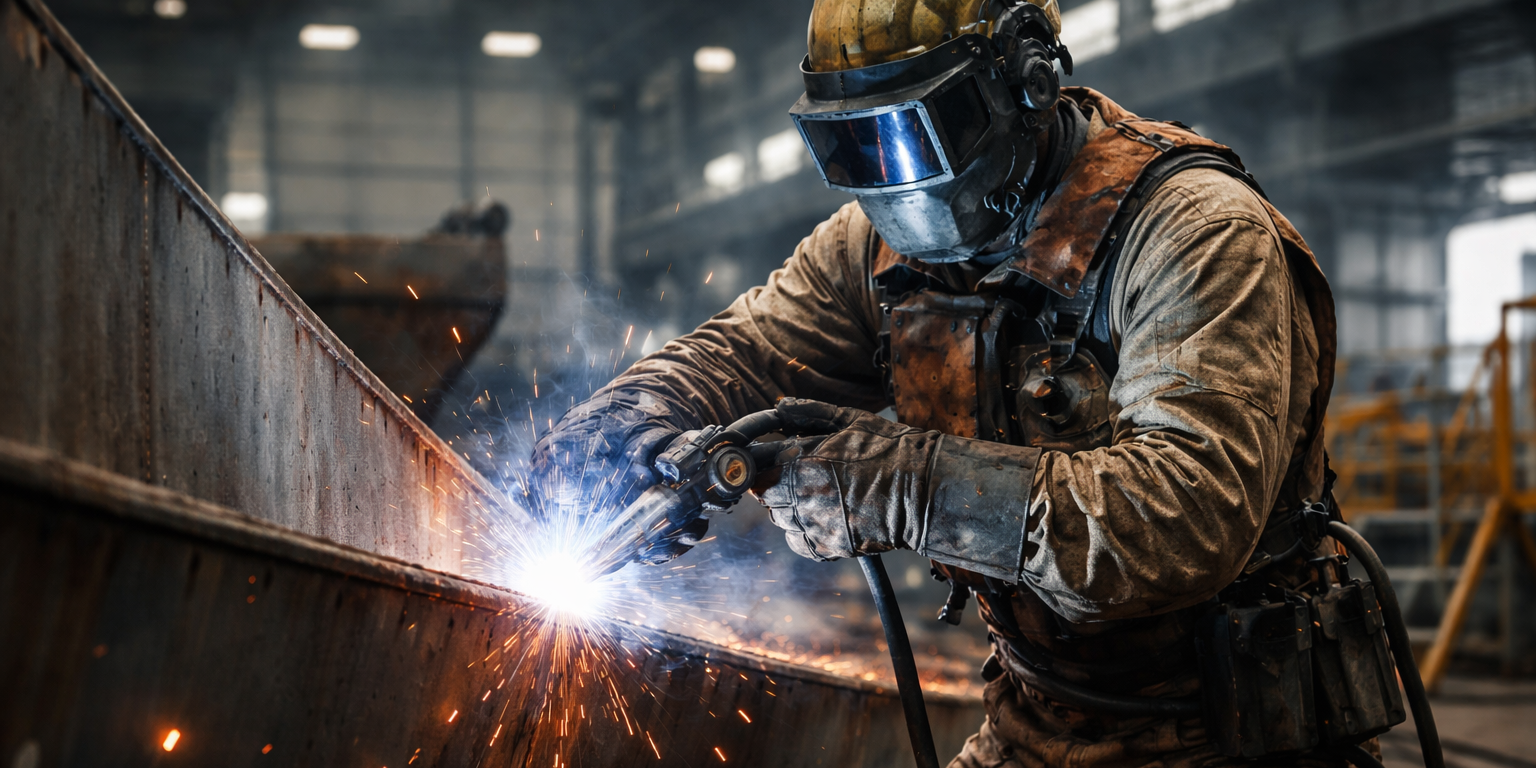
A humanoid robot now performs production welding at a Texas shipyard, marking one of the few instances where a bipedal machine has displaced YouTube demonstrations for revenue-generating industrial work. Persona AI, founded by former NASA roboticist Nic Radford, selected welding as its initial commercial application after determining the economics justify deploying humanoids that cost substantially more than dedicated welding automation. The choice mirrors history: Unimation's PUMA robots first commercialized industrial robotics in automotive welding six decades ago.
Radford left NASA's Johnson Space Center in 2024 after leading development of the Valkyrie humanoid, bringing with him a conviction that general-purpose humanoids would remain economically unviable for years. Persona AI's thesis diverges sharply from competitors like Figure AI and 1X Technologies, which position their humanoids as eventually capable of thousands of tasks. Instead, Radford's team identified welding as a job where labor scarcity, safety hazards, and quality requirements create immediate willingness to pay humanoid-level prices. Shipyards face particular pressure: the American Welding Society projects a shortage exceeding 400,000 welders by 2027, with maritime fabrication especially affected as experienced workers retire. Persona AI declined to disclose the per-unit cost of its humanoid or the contract value with its Texas shipyard customer, which the company would not name publicly. Industry analysts estimate purpose-built humanoids currently cost $150,000 to $250,000 per unit, substantially higher than conventional six-axis welding robots that start near $50,000 but require fixed installations and cannot navigate ship hulls.
The technical challenge extends beyond welding itself. Shipyard environments demand mobility across uneven surfaces, through narrow passages, and up inclined structures where wheeled or tracked robots fail. Persona AI's humanoid uses vision systems to identify weld seams, plan torch paths, and adjust technique for varying joint geometries and metal thicknesses. The robot operates semi-autonomously: human supervisors designate sections to be welded, and the humanoid executes the work while monitoring weld pool characteristics and adjusting parameters in real time. Radford's team focused development on MIG and flux-core arc welding, the dominant processes in steel ship construction, rather than attempting to master the full range of welding techniques a human might learn over decades. This specialization contradicts the general-purpose rhetoric common in humanoid robotics but aligns with Persona AI's argument that economic deployment requires excellence in specific, high-value tasks rather than mediocrity across broad capabilities.
The welding application surfaces a persistent debate in robotics: whether humanoid form factors make economic sense when specialized machines often outperform them in single tasks. Fanuc, ABB, and Yaskawa sell thousands of dedicated welding robots annually at price points humanoids cannot match. Persona AI counters that shipyards already employ humans precisely because existing automation cannot navigate the workspace or adapt to the variability inherent in one-off vessel construction. The humanoid form factor matters not for its resemblance to workers but because it matches the physical constraints of environments designed for human bodies. Radford has stated publicly that Persona AI will expand into additional marine construction tasks—grinding, painting, inspection—once welding operations prove reliable, leveraging the mobility and dexterity already embedded in the platform. Whether this sequential task expansion justifies the premium over specialized automation will likely determine if other shipyards follow the Texas facility's lead. The broader humanoid industry watches closely: if Persona AI cannot make economics work in an application with severe labor shortages and willingness to pay for safety improvements, prospects dim for humanoids in less constrained environments.
What to Watch: Persona AI has indicated plans to deploy additional units at the same Texas shipyard by fourth quarter 2026, providing the first public data on multi-robot utilization rates and maintenance requirements in a production setting. Monitor whether competitors like Apptronik or Sanctuary AI announce similar task-specific deployments rather than general-purpose pilots, which would validate Radford's specialization strategy. The American Welding Society's annual conference in March 2027 will likely feature sessions on robotic welding labor economics, offering insight into whether other shipbuilders view humanoids as viable or whether conventional automation vendors respond with mobility upgrades that undercut the humanoid value proposition.