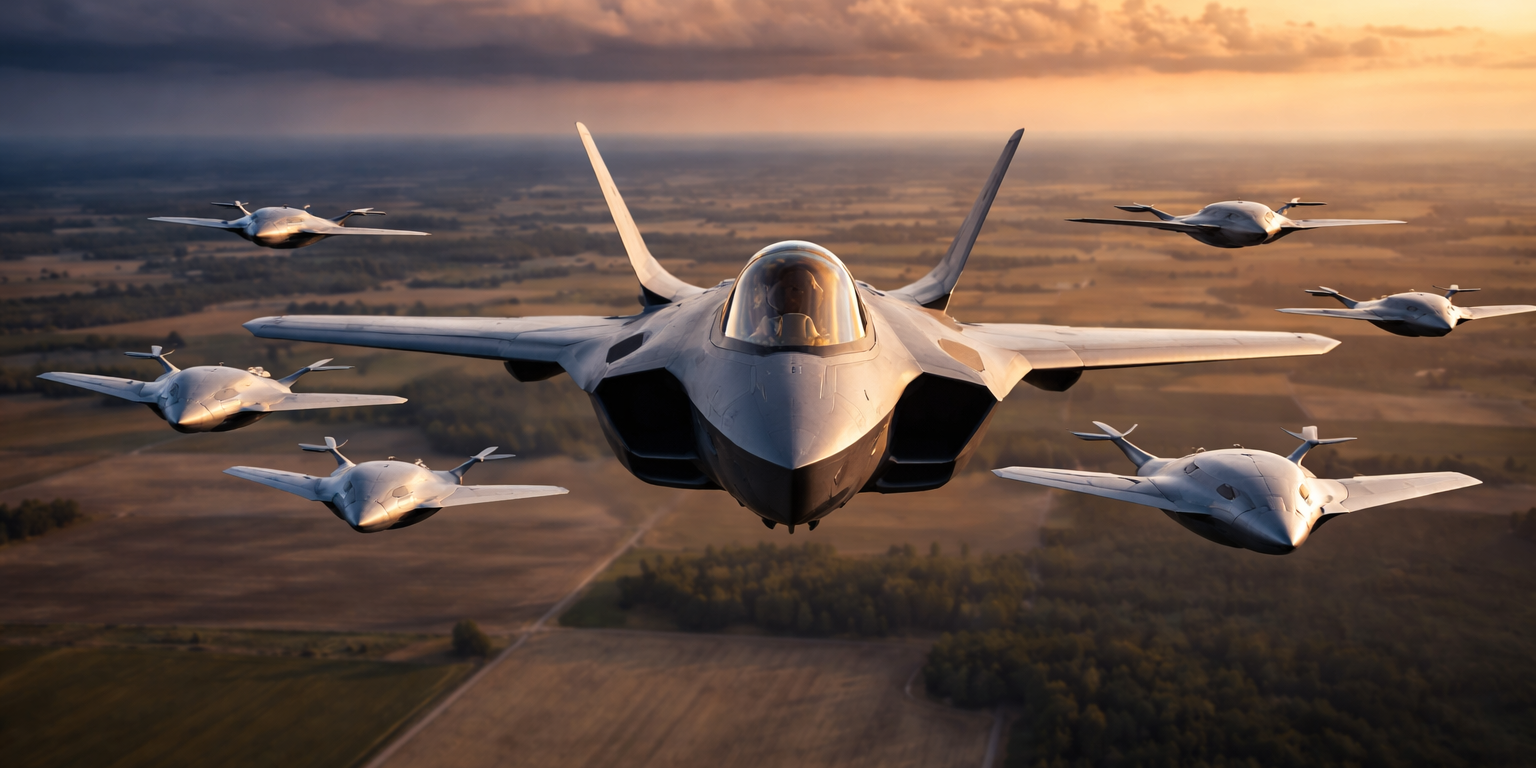

The Defense Department committed $54 billion to an autonomous warfare procurement structure that eliminates approval bottlenecks which have delayed military robotics deployment for more than a decade. The Defense Advanced Warfighting Group operates with pre-approved spending authority across five years, allowing program managers to sign multi-year contracts for autonomous ground vehicles, unmanned aerial systems, and AI-enabled platforms without congressional review at each increment. Defense officials familiar with the initiative said the funding model borrows from rapid counter-drone acquisitions used in recent conflicts, now scaled to cover autonomous systems across all military branches. The allocation represents the Pentagon's clearest acknowledgment that traditional procurement timelines cannot match the pace of commercial robotics development or the autonomous capabilities fielded by near-peer militaries.
Current DOD acquisition processes require 10 to 15 years from initial concept to fielded system, a timeline that has left military units operating equipment designed for threats and technologies from previous decades. Congressional oversight requirements force major programs through multiple approval stages, each adding months or years before contracts can proceed. DAWG restructures this pipeline by securing blanket authorization for autonomous warfare spending, removing the need to justify each contract phase separately. The model resembles Special Operations Command's acquisition authority, which has enabled faster technology integration for two decades, but applies that framework to conventional forces at unprecedented budget scale. Program managers can now commit to development roadmaps that span multiple budget cycles without restarting procurement paperwork when fiscal years change.
The $54 billion allocation over five years establishes dedicated funding streams that exceed the combined annual revenue of the ten largest defense robotics contractors, a group that includes Lockheed Martin's autonomous systems division, Northrop Grumman's unmanned platforms unit, and smaller specialists like Shield AI and Skydio. For manufacturers, the shift from one-off contracts to predictable multi-year agreements changes business planning fundamentally. Companies building autonomous systems can now invest in production capacity and workforce expansion with confidence that Pentagon demand will persist beyond single procurement cycles. Defense analysts tracking industry response noted that several mid-tier robotics firms have already begun expanding manufacturing facilities in anticipation of DAWG contract announcements, expected to begin in the second quarter of this year. The initiative specifically targets platforms that can meet accelerated delivery schedules, favoring companies with existing production lines over those proposing entirely new designs requiring years of development.
DAWG's structure addresses a capability gap that has widened as commercial robotics firms iterate products every 12 to 18 months while military systems remain in development for a decade or longer. The funding mechanism allows DOD to purchase autonomous systems closer to commercial development cycles, potentially fielding technology that remains relevant when it reaches operational units. Defense officials told reporters the initiative will prioritize systems that integrate with existing military infrastructure rather than requiring entirely new support ecosystems, a requirement that favors evolutionary improvements over radical redesigns. This approach mirrors procurement strategies used by allied militaries in Europe and the Indo-Pacific, where autonomous systems acquisitions have accelerated over the past three years in response to changing threat environments. Industry observers noted that DAWG's emphasis on rapid integration could disadvantage traditional prime contractors whose business models depend on lengthy development programs with extensive customization, while benefiting smaller firms that adapt commercial platforms for military use.
What to Watch: Contract announcements are expected to begin in the second quarter of 2025, with initial awards likely targeting autonomous ground vehicles for logistics and reconnaissance missions. Watch for production capacity expansions from mid-tier robotics manufacturers, particularly those with existing commercial platforms that can be adapted for military specifications. Monitor whether DAWG's pre-approved spending authority survives the next congressional budget cycle without additional oversight requirements being imposed, as legislative resistance to reduced review could undermine the initiative's core purpose.