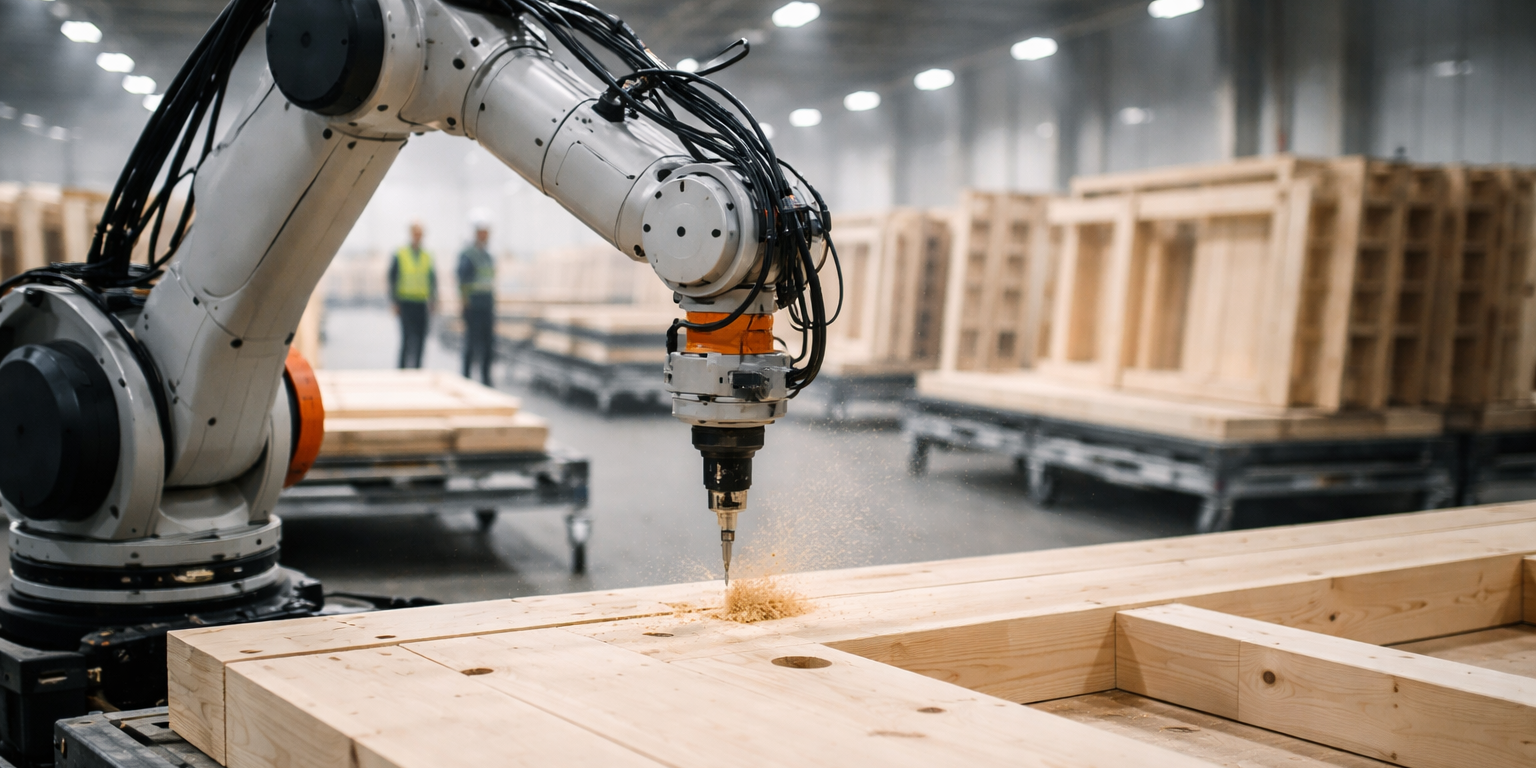
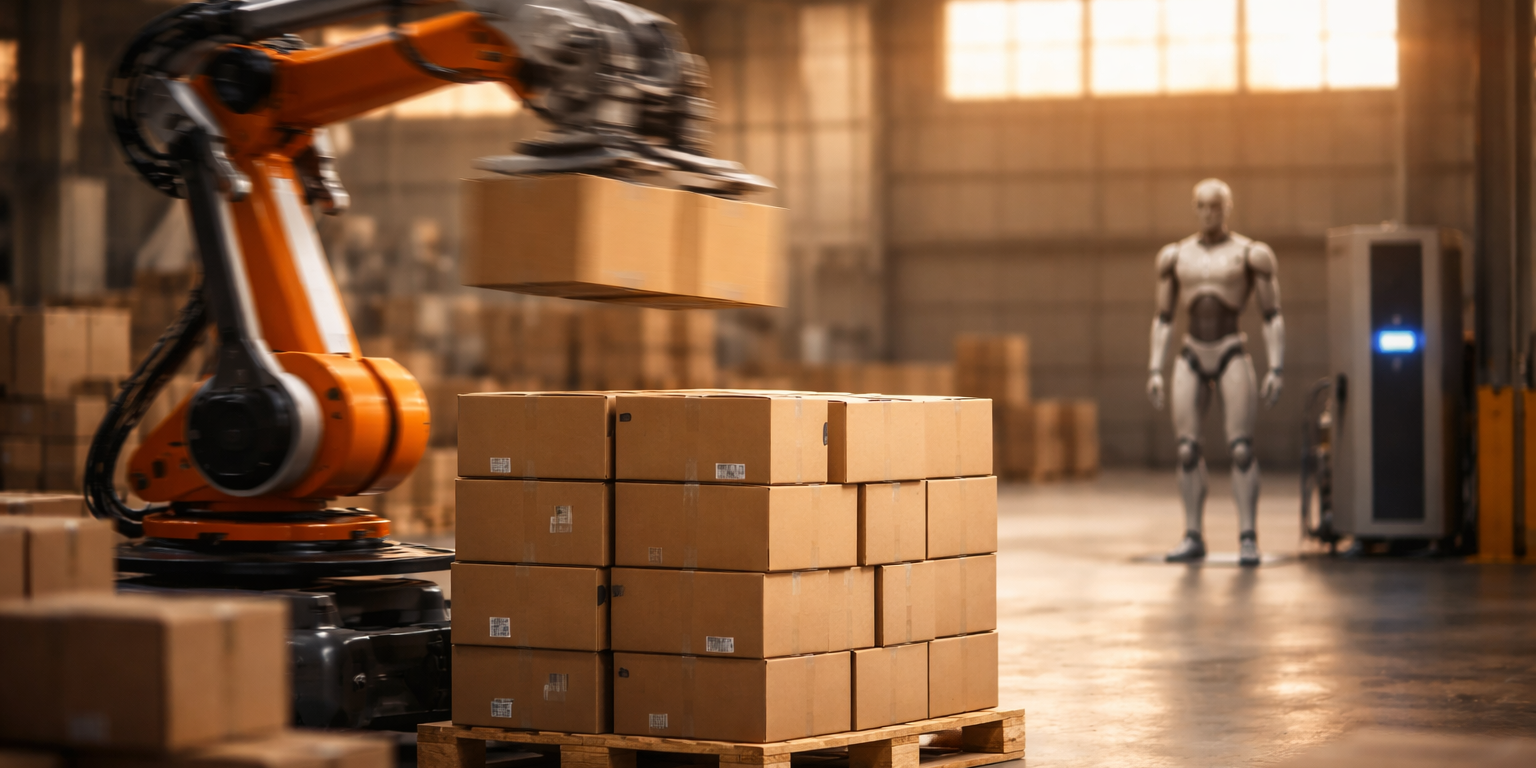
Packaging robots moved 47 billion units through warehouses and distribution centers in 2025, a category that generated $8.3 billion in equipment sales while humanoid platforms shipped fewer than 12,000 commercial units across all manufacturers combined. The disparity illustrates a tension familiar to anyone who watched the internet boom: the companies selling server racks and fiber optic cable made money years before consumer web services turned profitable. Robotics appears to be following the same script, with the most immediate returns concentrated in unglamorous but essential automation tasks rather than headline-grabbing humanoid deployments.
The packaging automation sector breaks into three distinct segments, each addressing specific pain points that businesses will pay to solve immediately. High-speed case packing systems from manufacturers like Schneider Packaging Equipment and Brenton Engineering handle repetitive boxing tasks at speeds exceeding 200 units per minute, replacing human workers in roles that cause repetitive strain injuries and high turnover. Palletizing robots, dominated by established players including FANUC, ABB, and KUKA, stack finished goods onto shipping pallets with precision that reduces product damage and maximizes truck capacity. The newest category, collaborative packaging systems from vendors like Locus Robotics and RightHand Robotics, works alongside human employees in mixed environments where full automation isn't economically justified. None of these systems walk on two legs or manipulate objects with human-like dexterity, but they solve problems that cost businesses measurable money today.
The economics explain why packaging automation attracts less attention but more revenue. A palletizing cell typically costs between $85,000 and $140,000 installed, pays for itself within 18 to 24 months through labor savings and reduced injury claims, and operates three shifts without breaks or benefits. Contrast that with humanoid platforms, which currently cost between $60,000 and $250,000 per unit depending on capability, require extensive integration work to handle even simple tasks, and still cannot match human workers in adaptability or problem-solving when something goes wrong. Businesses making capital allocation decisions in 2026 and 2027 face a straightforward choice: deploy proven packaging automation that delivers immediate ROI, or experiment with humanoids that might become cost-effective within five to seven years. Most choose the former, which is why packaging robot installations grew 22 percent year-over-year in 2025 while humanoid deployments remain concentrated in pilot programs and demonstration projects.
The picks-and-shovels analogy extends beyond equipment sales into the supporting infrastructure that makes packaging automation work. Machine vision systems from Cognex and Keyence enable robots to identify products and verify proper placement, a capability that commanded $1.9 billion in sales last year. End-of-arm tooling manufacturers like Schmalz and Piab supply vacuum grippers, mechanical fingers, and adaptive graspers that actually touch the products, generating another $680 million in revenue from a component category most observers overlook. Software platforms from vendors including Path Robotics, Vention, and Rapid Robotics reduce integration time from weeks to days, addressing the engineering bottleneck that historically limited packaging automation to Fortune 500 companies with in-house robotics teams. The entire ecosystem thrives on solving incremental problems for businesses that need packaging done correctly and efficiently, not on delivering science fiction visions of general-purpose robots.
What to Watch: Several major food and beverage companies are expected to announce packaging automation expansions before year-end 2026, with Nestlé, PepsiCo, and Mondelēz International all operating pilot programs that could scale to dozens of facilities. The National Robotics Week conference in April 2027 will feature a dedicated packaging automation track for the first time, signaling industry recognition of the category's commercial importance. Watch for acquisition activity as established industrial automation giants like Rockwell and Siemens pursue smaller packaging robotics startups to fill portfolio gaps, following the pattern that consolidated machine vision and motion control sectors over the past decade.