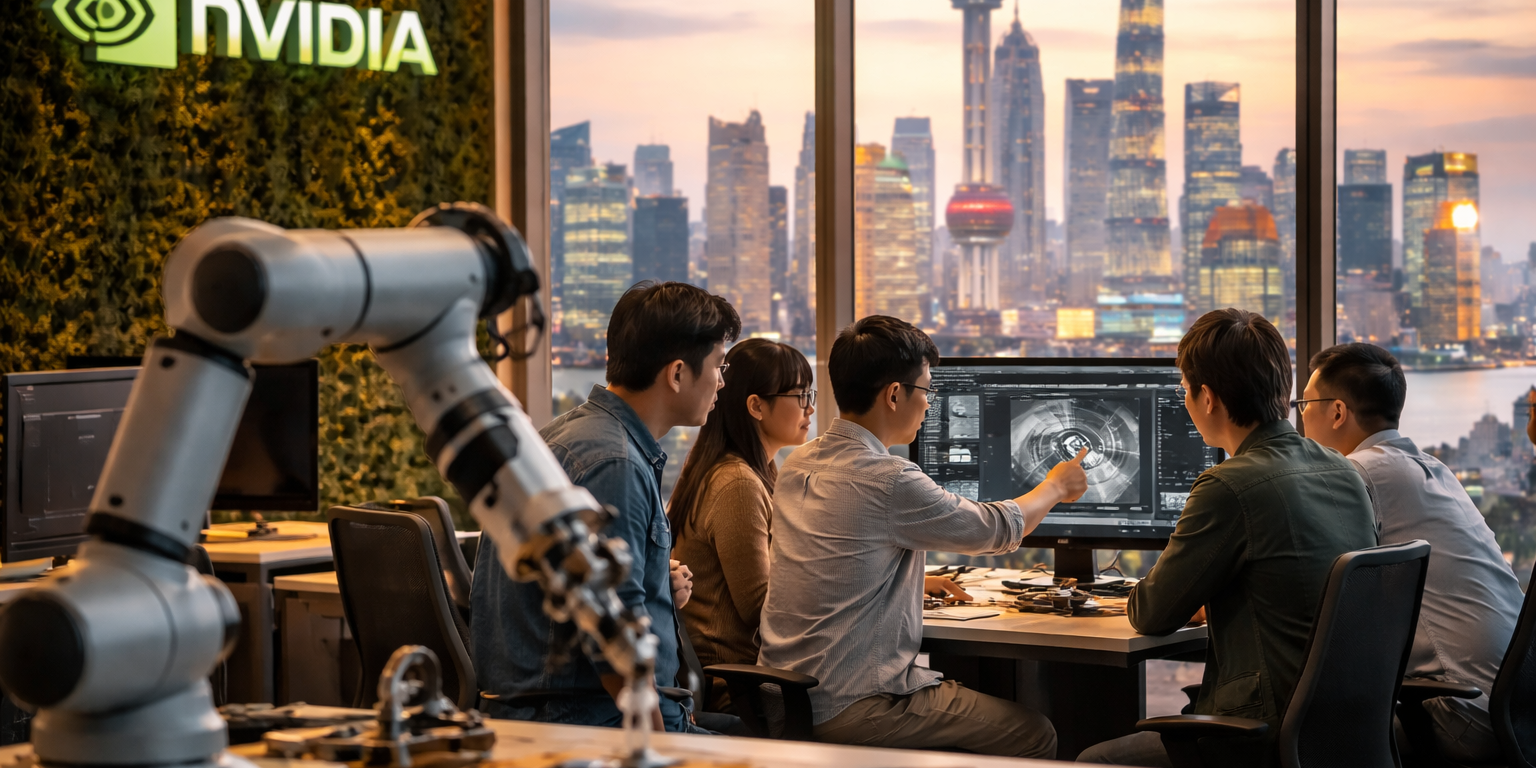
NVIDIA has posted dozens of robotics engineering positions across Beijing, Shanghai, and Shenzhen, expanding its embodied AI capabilities in China as the region's robotics sector enters a period of rapid commercialization. The roles span four technical domains: embodied AI research, simulation development, deployment engineering, and solution architecture. The embodied AI team will work on dexterous manipulation systems and human body modeling, two capabilities central to the next generation of warehouse automation and collaborative robots now entering pilot deployments across Chinese factories and fulfillment centers.
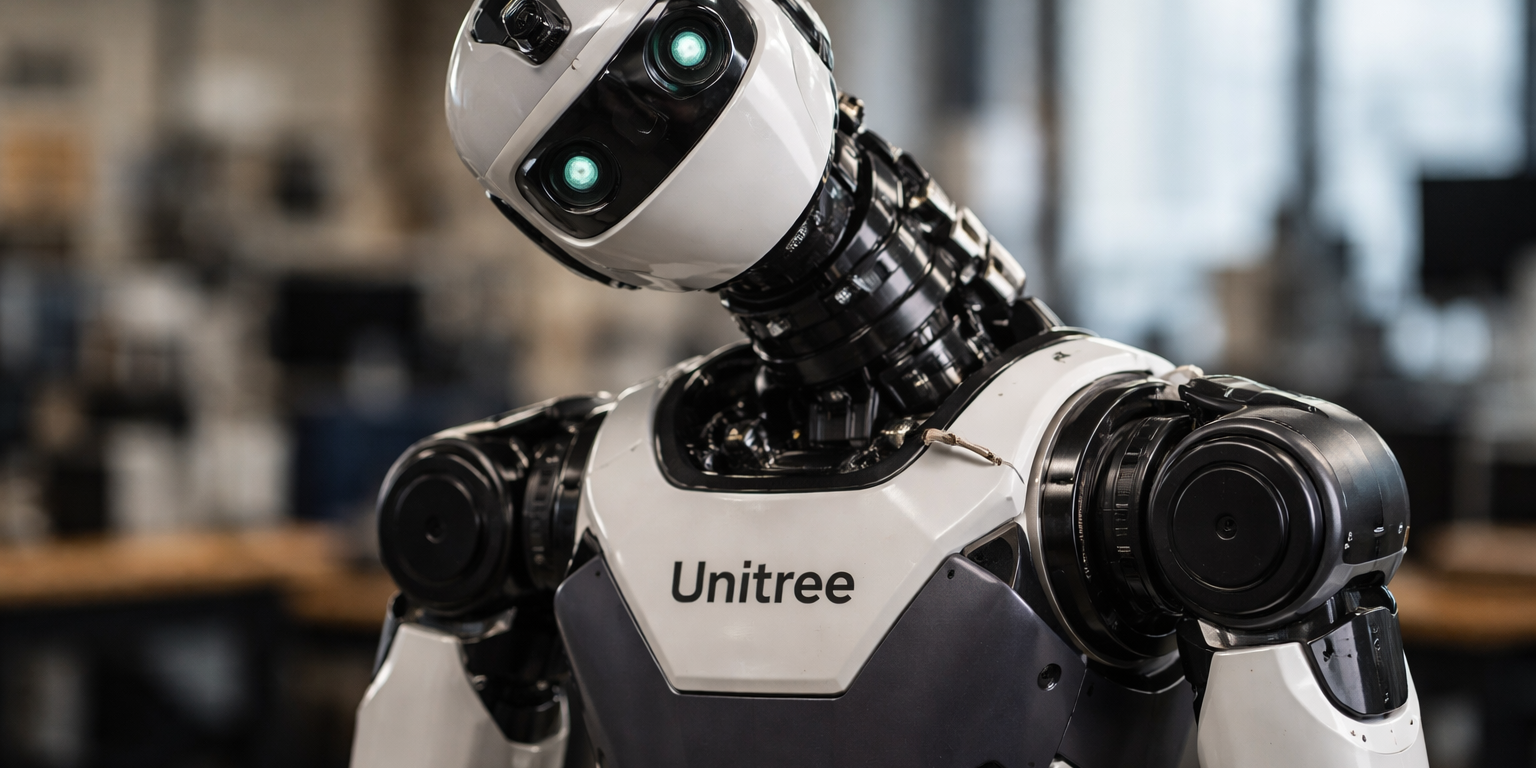
The recruitment timing aligns with broader shifts in how NVIDIA engages with the Chinese robotics market. Over the past eighteen months, multiple Chinese humanoid robot makers including Fourier Intelligence, Unitree Robotics, and UBTECH have adopted NVIDIA Jetson modules and Isaac Sim for training and deployment. Those partnerships have created demand for local engineering support, particularly as companies move from prototype demonstrations to production systems that must handle real-world variability. The simulation roles NVIDIA is filling will likely support Isaac Sim integration with Chinese robotics frameworks, enabling faster iteration cycles for manipulation tasks that require synthetic data generation at scale. Deployment engineers, meanwhile, will work directly with manufacturing clients to optimize inference performance on NVIDIA hardware in environments where latency and power consumption directly impact throughput.
Dexterous manipulation remains one of the most commercially valuable unsolved problems in robotics. While mobile robots have achieved reasonable reliability in structured warehouse environments, picking and placing objects with variable geometry, weight distribution, and surface properties still requires human workers in most facilities. NVIDIA's focus on manipulation hiring suggests the company sees near-term revenue opportunities in industries like electronics assembly, pharmaceutical packaging, and food processing, where labor costs are rising and turnover rates exceed 40 percent annually in some regions. Human body modeling, the second technical focus area mentioned in the job postings, serves dual purposes: improving human-robot collaboration safety systems and enabling better motion prediction for robots operating in shared spaces. Both capabilities feed into NVIDIA's Omniverse platform, which Chinese automotive suppliers and logistics providers have begun using for digital twin simulations of assembly lines and distribution centers.
The geographic distribution of roles—Beijing for research-heavy positions, Shanghai and Shenzhen for deployment and solution architecture—mirrors China's robotics industry structure. Beijing hosts the majority of university AI labs and government-backed research institutes working on embodied intelligence. Shanghai's Lingang Special Area has attracted robotics manufacturers seeking proximity to automotive and semiconductor clients. Shenzhen remains the hub for hardware iteration and supply chain access, with component lead times measured in days rather than weeks. By staffing all three cities, NVIDIA positions itself to support the full development cycle from algorithm research through volume production. The solution architecture roles, in particular, will interface with systems integrators who customize robotics deployments for specific factory layouts and product SKUs. These integrators have become increasingly important as Chinese manufacturers move beyond off-the-shelf AMRs toward bespoke manipulation cells tailored to individual production lines.
NVIDIA's China expansion occurs against a backdrop of export restrictions that have reshaped the AI hardware landscape. While high-end GPUs face export controls, Jetson modules and other edge AI products remain available for robotics applications. The company has designed China-specific product variants that comply with current regulations while delivering sufficient compute for manipulation tasks, visual odometry, and real-time path planning. Chinese robotics companies have responded by architecting systems around available NVIDIA hardware, creating a mutually reinforcing ecosystem. Several humanoid robot developers now design their perception and control stacks specifically to run on Jetson Orin, accepting its constraints as a known quantity rather than pursuing alternative chip architectures with less mature software toolchains. This dynamic gives NVIDIA leverage in the Chinese robotics market that extends beyond raw hardware sales into developer mindshare and training infrastructure.
What to Watch: Monitor whether NVIDIA's simulation team in Beijing publishes new Isaac Sim features optimized for Chinese robotics frameworks, particularly integration with ROS 2 distributions used by Fourier and Unitree. Track deployment announcements from major Chinese logistics operators during the third and fourth quarters of 2026—several are evaluating humanoid robots for warehouse operations and will require the kind of on-site optimization support these new hires will provide. Watch for Chinese robotics startups announcing funding rounds in the next 90 days that specifically cite NVIDIA partnerships, as local venture firms view such relationships as validation of technical viability.