Blattner Company, the renewable energy contractor building some of North America's largest solar farms, has awarded Built Robotics a $75 million contract to deploy autonomous construction equipment across its project pipeline. The deal expands a partnership that began with pilot deployments and now positions Built's systems as standard equipment on Blattner job sites. Financial terms disclosed put this among the largest single contracts awarded to a construction robotics vendor, reflecting a shift in how major contractors procure autonomous systems—not as trials, but as essential capacity.
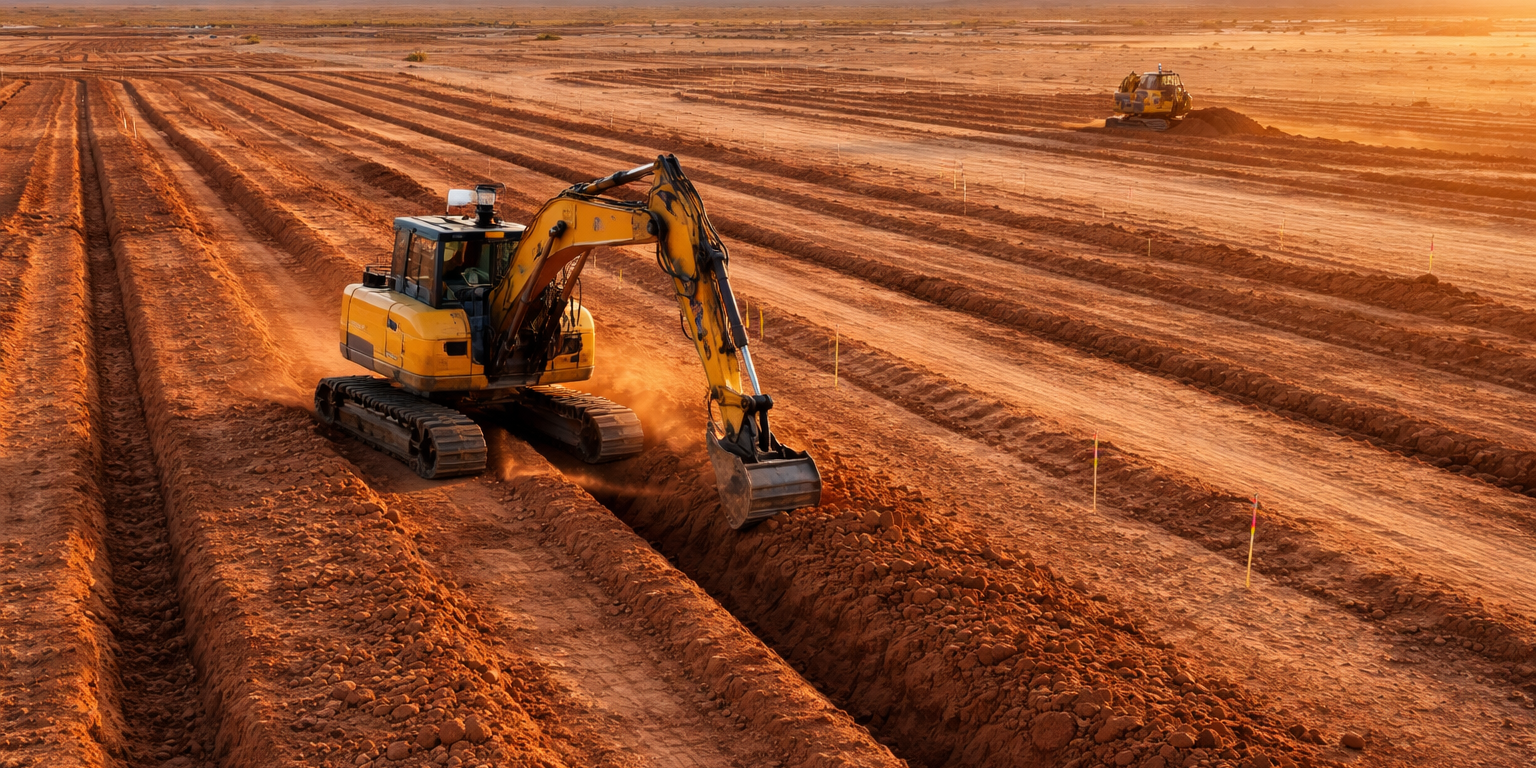
Built Robotics retrofits conventional excavators, bulldozers, and track loaders with sensors, compute, and autonomy software that handle grading, trenching, and site preparation tasks without human operators in the cab. The company has focused on solar construction since 2019, when it recognized that repeatable earthwork across hundreds of acres made an ideal application for autonomy. Blattner operates as the engineering, procurement, and construction partner for utilities and independent power producers, often managing sites that span thousands of acres and require moving millions of cubic yards of dirt to precise grade specifications before panels go in. Labor shortages have constrained the pace of solar development, particularly in remote locations where housing skilled operators proves difficult. Blattner's CFO noted in a statement that the contractor views autonomous equipment as a solution to throughput bottlenecks, not a cost-cutting measure—distinguishing this deployment from earlier automation efforts focused solely on labor arbitrage.
The $75 million figure encompasses hardware, software subscriptions, and on-site support across multiple projects through 2028. Built does not sell machines outright; customers either lease equipment directly from Built or retrofit their existing fleets, then pay recurring fees for the autonomy stack and remote monitoring services. Industry sources estimate Built operates several dozen machines in the field today, suggesting this contract will more than double the company's deployed base. Blattner has not specified how many sites will receive autonomous equipment, but the contractor typically manages 15 to 20 large solar projects simultaneously, with individual sites often requiring 12 to 18 months of construction activity. The deal structure allows Blattner to shift machines between projects as work phases complete, a flexibility that matters given the uneven cadence of utility-scale development driven by interconnection queue timing and offtake agreement closures.
Built Robotics raised a $64 million Series C in early 2024, led by Tiger Global, bringing total funding to roughly $140 million. The company has positioned itself narrowly—excavation autonomy for large civil projects—rather than pursuing the broader construction robotics market that includes bricklaying, welding, or high-rise applications. CEO Noah Ready-Campbell, a former Google engineer, has argued publicly that construction autonomy succeeds when it targets high-volume, low-mix work, the opposite of the customization that defines most building projects. Solar farms fit that profile. Each site differs in topography and soil, but the task set remains consistent: clear vegetation, cut and fill to grade, compact subgrade, install posts. Built's software learns site-specific soil behavior and adjusts blade pressure and speed in real time, but the task sequence itself does not vary. That predictability has allowed Built to push past the pilot trap that ensnared earlier construction robotics ventures, which struggled to generalize across job types. Blattner's willingness to commit $75 million suggests the technology has crossed a reliability threshold where downtime and edge-case failures no longer derail schedules.
The renewable energy construction sector faces pressure to accelerate timelines as utilities and corporate buyers race to meet decarbonization commitments. The U.S. solar pipeline alone exceeds 150 gigawatts in active development, but interconnection delays and labor constraints have stretched project timelines. Autonomous earthmoving addresses one constraint but does not solve permitting or grid connection issues. Still, contractors capable of delivering sites faster gain competitive advantage in bid processes, and Blattner's investment in Built reflects a belief that autonomy provides differentiation. Other major solar contractors, including Mortenson and McCarthy, have tested autonomous equipment on select sites but have not announced commitments at this scale. The construction industry has historically underinvested in technology compared to other sectors, with equipment manufacturers like Caterpillar and Komatsu moving cautiously on autonomy due to liability concerns and dealer channel resistance. Built bypasses that channel entirely by working directly with contractors, a model that accelerates deployment but limits scale unless partnerships like this one materialize.
What to Watch: Built Robotics has not disclosed plans for geographic expansion beyond North America, but the Blattner contract may fund international moves if projects arise in Australia or Europe, where Blattner also operates. Caterpillar and Komatsu have both hinted at autonomy product launches for mid-2026; how those offerings compare in capability and cost to Built's retrofit approach will determine whether Built's first-mover advantage holds. Finally, track whether other renewable contractors follow Blattner's lead with multi-year commitments—if they do, the construction robotics market just got materially larger.