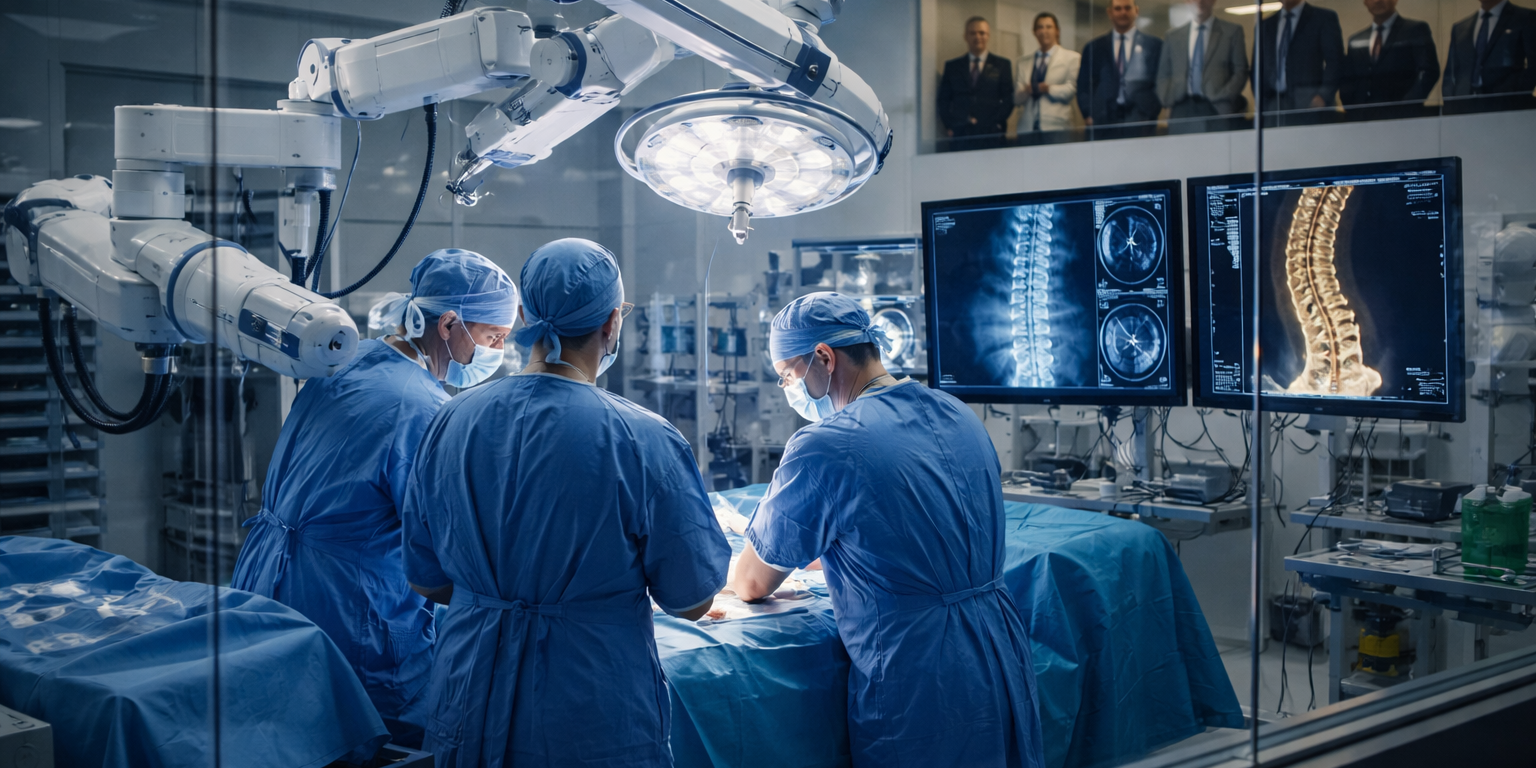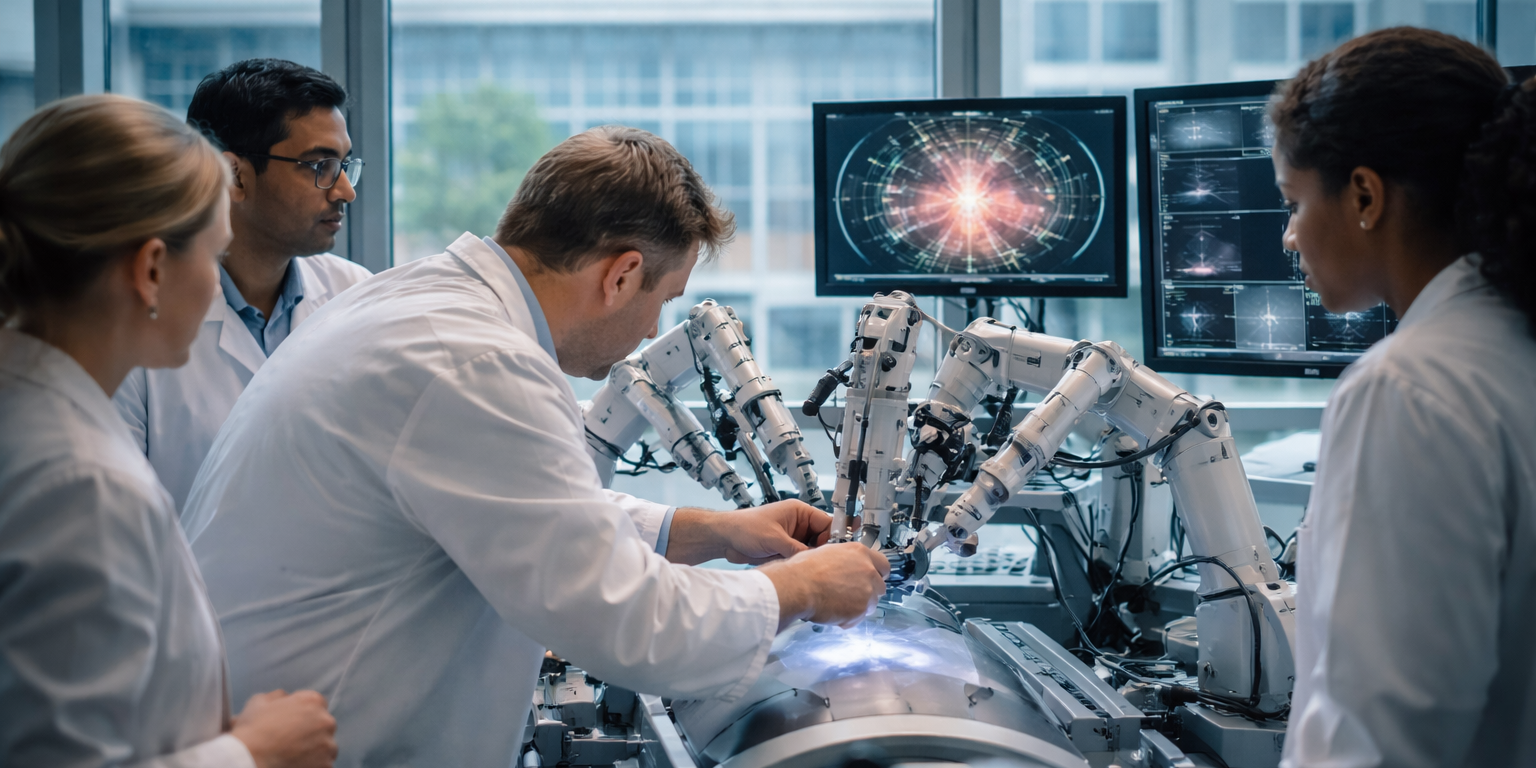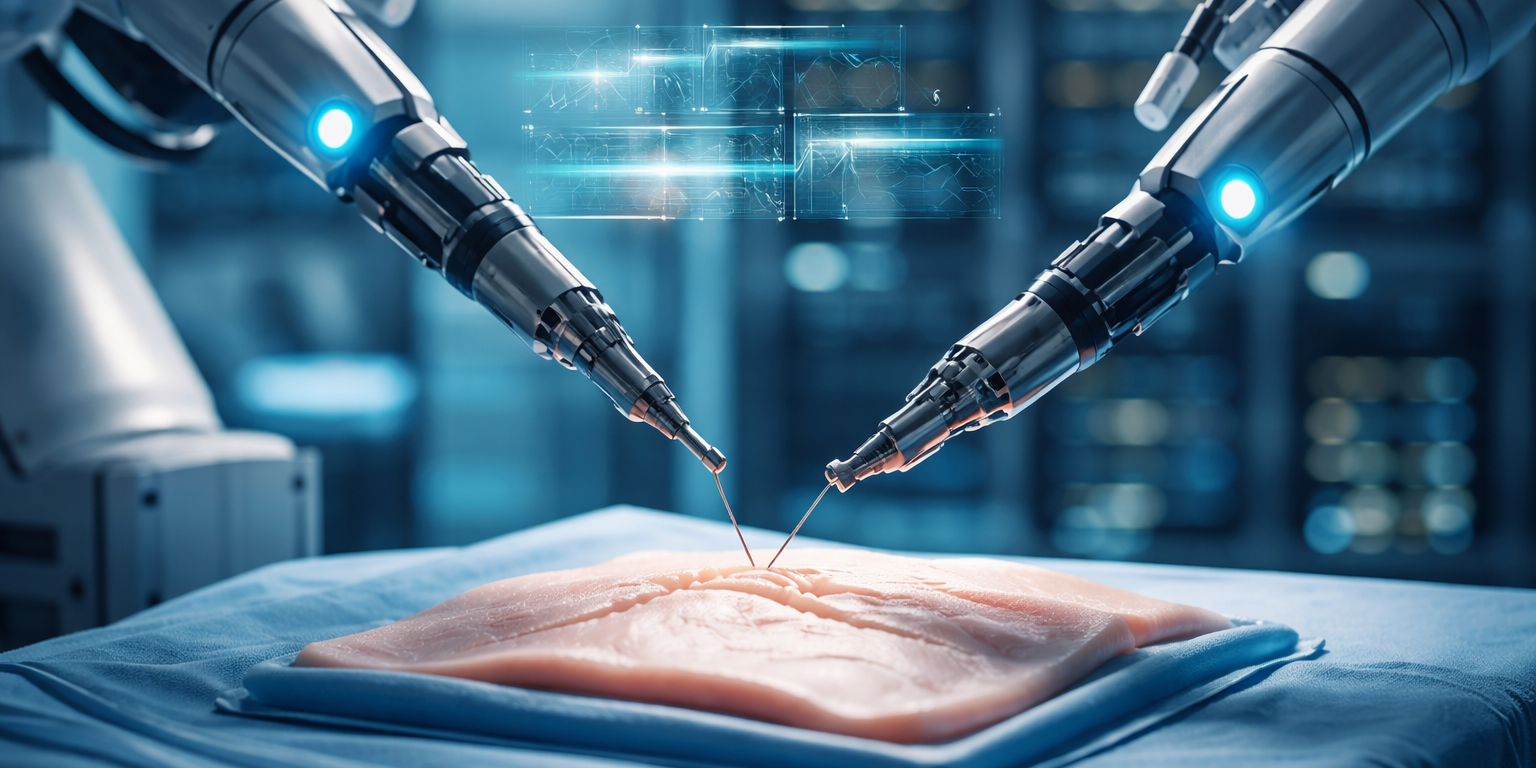
A surgical robot trained itself to perform tissue manipulation in 118 seconds. The achievement comes from NVIDIA's newly open-sourced simulation platform, designed to solve the practice problem that has kept autonomous surgical systems out of operating rooms despite years of hardware advances. The simulator, built on NVIDIA's Isaac Sim framework, creates photorealistic physics environments where robotic arms can rehearse suturing, cutting, and grasping soft tissue millions of times without touching a patient. Training time dropped from weeks of supervised practice to minutes of unsupervised simulation. The release marks a deliberate shift in surgical robotics development strategy, moving the training burden from scarce operating room hours to abundant GPU cycles.
Surgical robotics companies have long understood that hardware is the easy part. Building a robot arm with sufficient dexterity costs money and engineering time, but the physics are well understood and the components are available. Teaching that arm to operate on human tissue is a different problem entirely. Supervised learning requires an expert surgeon to guide the system through thousands of repetitions, and each repetition consumes expensive time in a facility equipped for sterile procedures. Reinforcement learning offers an alternative, but traditional approaches require the robot to learn through trial and error on physical materials that approximate human tissue, and those materials degrade, need replacement, and still don't capture the full variability of real anatomy. The cost per training hour runs into thousands of dollars when facilities, materials, and expert supervision are factored in. NVIDIA's platform eliminates most of that cost by moving the learning process into software, where attempts cost only compute time and failures carry no consequence beyond a reset command.
The simulator incorporates soft-body physics models that represent tissue deformation, tearing thresholds, and fluid dynamics at a fidelity sufficient for transfer learning to physical systems. NVIDIA trained its reference models using reinforcement learning algorithms that ran on clusters of RTX 6000 Ada GPUs, each simulation instance taking advantage of hardware-accelerated ray tracing to render realistic visual feedback for vision-based control systems. The company reports that skills learned in simulation transferred to physical robots with minimal fine-tuning, a critical validation that simulated experience translates to real-world performance. Several unnamed surgical robotics companies participated in early testing of the platform, and NVIDIA has made the core simulation environment available under an open-source license, allowing developers to customize surgical scenarios, instrument models, and tissue properties for specific procedures. The decision to open-source the platform rather than commercialize it directly reflects NVIDIA's broader strategy of enabling an ecosystem that drives demand for its GPU hardware.
The implications extend beyond training efficiency. Accelerated simulation enables surgical robotics developers to test edge cases and rare complications that would be difficult or unethical to practice on physical systems. A simulator can generate anatomical variations, unexpected bleeding, instrument failures, and patient movement at will, building robustness into autonomous systems before they enter clinical trials. Regulatory pathways for autonomous surgical systems remain uncertain in most jurisdictions, but the ability to demonstrate millions of successful simulated procedures could influence how regulators assess safety and efficacy. Several academic medical centers have begun exploring partnerships with robotics companies to validate simulation-trained systems in supervised clinical settings, with trials expected to begin in late 2026 or early 2027. The commercial opportunity remains substantial despite regulatory uncertainty. The global surgical robotics market exceeded fourteen billion dollars in 2025, dominated by teleoperated systems like Intuitive Surgical's da Vinci platform, but autonomous and semi-autonomous systems represent the next phase of development, promising to reduce surgeon workload and expand access to specialized procedures in underserved regions.
What to Watch: NVIDIA will present detailed benchmark results at the International Conference on Robotics and Automation in Atlanta in September 2026, including transfer learning success rates across different surgical tasks. Several surgical robotics startups are expected to announce simulation-trained systems entering FDA or CE Mark approval processes before year-end 2026. Monitor whether Intuitive Surgical or Medtronic adopt the NVIDIA platform for next-generation autonomous features, as major incumbent adoption would validate the simulation-first training approach and accelerate industry-wide investment in GPU-based development infrastructure.