
A surgical team at Nicklaus Children's Hospital in Miami closed a congenital heart defect through incisions measured in centimeters rather than inches, marking Florida's entry into a small group of pediatric centers performing robotics-assisted cardiac surgery. The atrial septal defect repair, completed in late August 2026, required no chest-splitting incision and no manual rib spreading, distinguishing it from the standard open-heart approach that has defined pediatric cardiac surgery for decades. Fewer than ten pediatric hospitals nationwide currently offer robotic assistance for this specific congenital defect, according to data from the Congenital Heart Surgeons' Society.
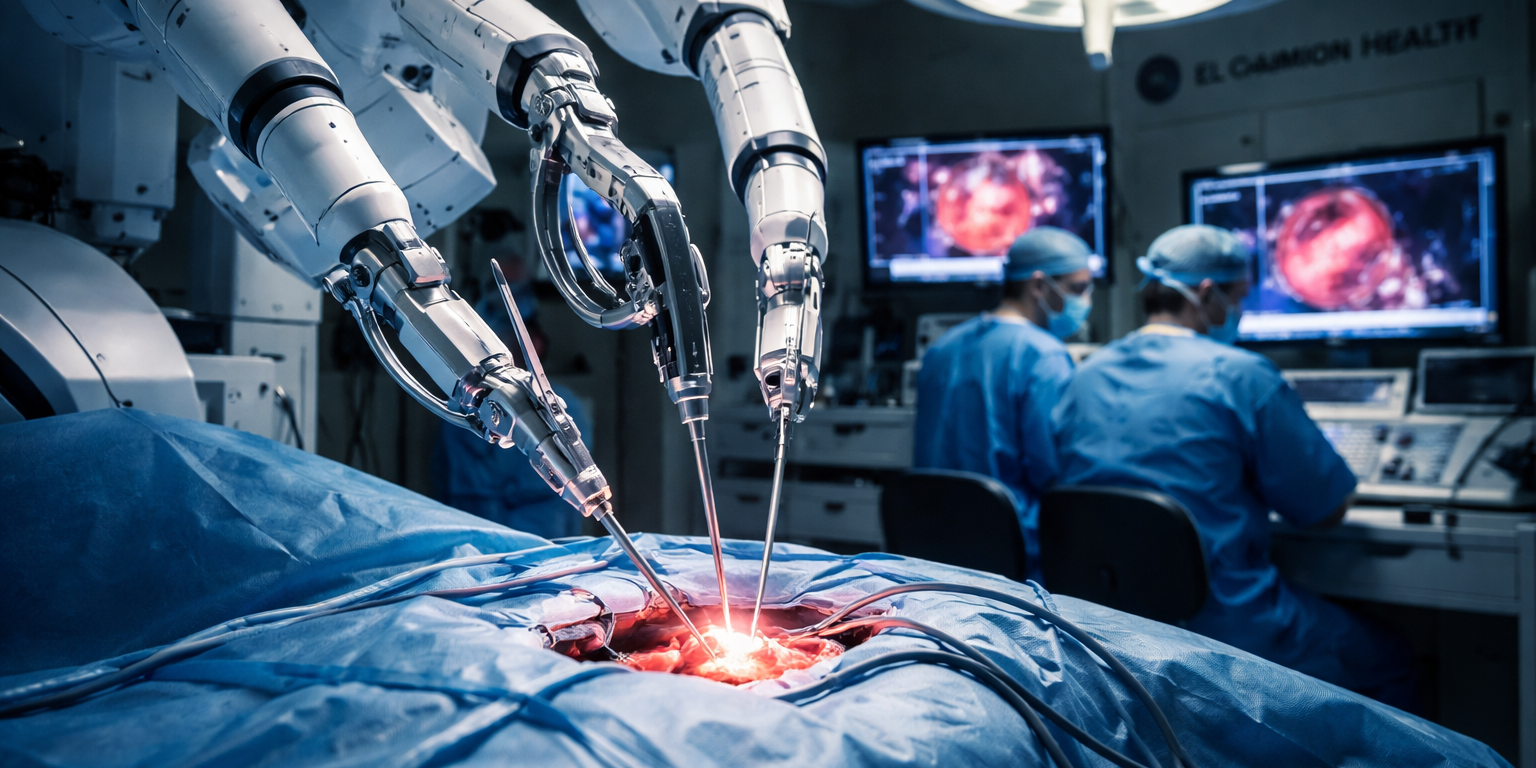
The procedure addresses a hole between the heart's upper chambers, a defect that occurs in roughly one of every 1,500 live births and accounts for 6 to 10 percent of all congenital heart disease cases. Traditional repair requires a sternotomy—a vertical incision through the breastbone—followed by mechanical retraction of the ribcage and several weeks of restricted physical activity during bone healing. The robotic approach substitutes several small port incisions, typically three to five openings of 8 to 12 millimeters each, through which the surgeon maneuvers wristed instruments with seven degrees of freedom. Recovery time drops from six to eight weeks to roughly two to three weeks, and patients avoid the prominent vertical scar that often carries psychological weight for adolescents and young adults. The Nicklaus team used a da Vinci surgical system, the dominant platform in robotic-assisted surgery with an installed base exceeding 8,500 units globally as of mid-2026. Intuitive Surgical, the system's manufacturer, reported 2.5 million robotic procedures performed worldwide in 2025, though pediatric cardiac applications remain a fraction of that volume.
The technical challenge lies in working within a space roughly the size of a walnut in younger patients. Surgeons navigate around major vessels and coordinate instrument movements in three dimensions while viewing a high-definition, magnified 3D image of the surgical field. The learning curve is steep. Most pediatric cardiac surgeons complete 20 to 30 supervised robotic cases before operating independently, and the procedure adds 30 to 45 minutes to operative time compared to open repair during a surgeon's first year with the technology. Nicklaus Children's Hospital, which performs more than 1,000 cardiac surgeries annually and holds a Level 1 Children's Surgery Center verification from the American College of Surgeons, began planning its robotic cardiac program in early 2025. The hospital invested in surgeon training, simulation hours, and coordination protocols between the surgical team, anesthesiologists, and perfusionists who manage the heart-lung bypass machine. The first case took approximately four hours from incision to closure, within the expected range for an inaugural robotic ASD repair.
Broader adoption remains limited by cost, training infrastructure, and case volume requirements. A da Vinci system carries a capital cost between $1.5 million and $2.5 million depending on configuration, plus annual service contracts approaching $200,000 and per-procedure instrument costs of $2,000 to $3,000. Hospitals need sufficient case volume to justify the investment, creating a concentration effect where a small number of high-volume pediatric cardiac centers develop robotic capabilities while smaller programs continue with open techniques. Johns Hopkins All Children's Hospital in St. Petersburg began robotic-assisted pediatric cardiac surgery in 2024, making it one of the earliest adopters in the southeastern United States. Boston Children's Hospital, Texas Children's Hospital, and Children's Hospital of Philadelphia have established robotic programs with multi-year track records, publishing outcomes data that show equivalent or superior results compared to open repair for selected defect types. The procedure selection matters considerably. Atrial septal defects are among the more straightforward congenital repairs, making them logical candidates for robotic assistance. More complex defects involving the ventricles, great vessels, or multiple simultaneous repairs still require open approaches in most cases.
What to Watch: Track whether additional Florida pediatric centers announce robotic cardiac programs by early 2027, particularly Tampa General Hospital and UF Health Shands Children's Hospital, both of which operate high-volume cardiac surgery units. Monitor whether Intuitive Surgical releases pediatric-specific instrument sets or software updates at its annual investor day in November 2026. Watch for outcomes data from the Nicklaus program after the team completes its first 20 robotic cardiac cases, expected by mid-2027, which will indicate whether the Florida results match the complication rates and recovery times reported by established programs.